

Maddy summaryHR 4611 (EACH Act of 2025) requires all federally funded health programs - including Medicaid, Medicare, military health plans, and the Indian Health Service - to cover abortion services without restrictions, repealing the Hyde Amendment's long-standing ban on federal funding for most abortions. This directly affects millions of people enrolled in these programs, particularly low-income women, women of color (including 25% of Black women and 22% of Hispanic women on Medicaid), and young people. The bill mandates coverage in all federally administered health plans and prohibits state or private insurers from restricting abortion coverage in health insurance. It aims to eliminate current federal and state barriers that deny abortion access to people who rely on government health programs.
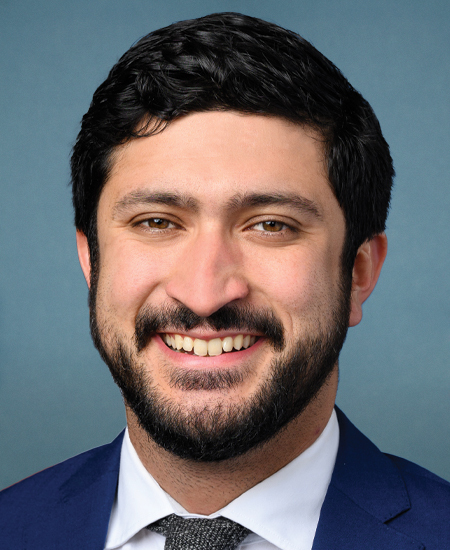
Rep. Greg Casar
Sponsored bills
Maddy summaryThis bill prohibits landlords from charging application fees, tenant screening fees, and excessive late fees on "covered" rental properties - those with federally backed mortgages (like FHA, VA, or USDA loans) or HUD assistance. It caps late fees at 3% of monthly rent after a 15-day grace period and requires landlords to disclose total monthly costs, past tenant litigation, maintenance issues, and rent history for the past decade before signing leases. The law directs regulators like HUD to define "junk fees" and ban reporting unpaid fees to credit agencies. It directly affects renters in federally supported housing by limiting unexpected costs and increasing transparency.
Maddy summaryThe Antisemitism Response and Prevention Act of 2025 aims to combat rising antisemitism through evidence-based policies rather than political weaponization. It requires universities to designate Title VI coordinators to handle civil rights complaints, establishes a National Coordinator to Counter Antisemitism within the Department of Justice, and creates a Hate Crime Reporting Center at the FBI to improve data collection on hate crimes. The bill prohibits using antisemitism accusations to restrict diversity programs, political advocacy, or immigration policies, and ensures nonprofit security grants for Jewish community centers cannot be tied to unrelated political conditions. The legislation authorizes $280 million annually for the Department of Education's Office for Civil Rights and $50 million for the Hate Crime Reporting Center from 2027-2032.
Maddy summaryHCONRES 64 is a congressional resolution directing the President to withdraw U.S. military forces from any hostilities against Venezuela that lack explicit congressional authorization. It applies to ongoing military operations in Venezuela not approved by Congress through a declaration of war or specific law authorizing force. The resolution invokes the War Powers Resolution (50 U.S.C. 1544(c)), requiring the removal of troops within the timeframe specified by that law. This bill does not affect military actions already authorized by Congress but mandates the end of unapproved operations.
Maddy summaryHR 6818, the Part-Time Worker Bill of Rights Act, would expand rights for part-time workers by reducing eligibility requirements for family and medical leave from 12 months to 90 days of employment under the FMLA. The bill prohibits employers from discriminating against part-time workers based on hours worked, requiring equal treatment for benefits, promotions, and scheduling. It mandates that employers obtain written statements from employees about their desired work hours and prioritize offering available work hours to existing employees before hiring new external workers. The bill establishes enforcement mechanisms including civil penalties for violations and allows employees to file private lawsuits for damages, with the Secretary of Labor having investigative authority to ensure compliance. This legislation directly affects part-time workers and employers with more than 15 employees across both private and public sectors.
Maddy summaryThe Schedules That Work Act would require employers in retail, food service, hospitality, cleaning, and warehouse sectors to provide workers with 14 days' advance notice of their schedules and pay predictability wages for last-minute changes. It allows employees to request schedule changes related to caregiving responsibilities, health conditions, education, or other jobs, with employers required to engage in good-faith discussions about such requests. The bill prohibits retaliation against employees who request schedule changes and mandates written notice of schedule changes and predictability pay. It applies to employers with 15 or more employees in covered sectors, aiming to address widespread issues with unpredictable schedules that negatively impact workers' ability to care for family members, maintain housing stability, and access health care.
Maddy summaryThe Fair Competition for Small Business Act of 2025 amends the Clayton Act to allow legal claims for violations of the Sherman Antitrust Act or for violations of the bill's own section (section 2). This technical change would directly affect small businesses and other entities involved in antitrust litigation by expanding the grounds for lawsuits under the Clayton Act. The key mechanism is a modification to the Clayton Act that references the bill's provisions, creating a new basis for claims. The bill does not specify additional substantive rules beyond this amendment.
Maddy summaryHR 6751 would repeal the 2001 Authorization for Use of Military Force (AUMF), a law passed after the September 11 attacks that has been used to justify military operations for over two decades. The bill states Congress finds the AUMF has been interpreted too broadly, conflicting with the Constitution's requirement that only Congress can declare war. It would formally end this legal authority 240 days after the bill becomes law, directly affecting future military actions authorized under the 2001 AUMF. The key provision is the repeal itself, removing the legal basis for ongoing military operations that rely on this specific 2001 law.
Maddy summaryHR 6731, the "Restore Trust in Government Act," requires Members of Congress, the President/Vice President, and their spouses or dependent children to divest certain financial investments during federal service. It defines "covered investments" broadly (including stocks, commodities, and derivatives) but excludes Treasury bonds, municipal bonds, family farm interests, and some Alaska Native Settlement stock. Covered individuals must sell holdings within 90-180 days of taking office or enacting the law, with limited exceptions for qualified blind trusts or spouses’ occupational trading. Violations incur a 10% fee on the investment value and require returning profits, paid to the Treasury. Ethics offices enforce these rules, publish penalty details, and issue divestiture certificates.
Maddy summaryThe ARMAS Act of 2025 transfers control of certain firearms export regulations from the Department of Commerce to the Department of State to better regulate exports to Mexico, Central America, and the Caribbean. It designates specific countries (including Mexico, Guatemala, Honduras, and El Salvador) as "covered countries" requiring stricter export oversight, including mandatory annual reports on firearms exports and end-use monitoring to prevent diversion to criminal groups. The bill requires the Department of State to develop a strategy to disrupt illegal firearm trafficking, including increased participation in the eTrace program for tracking U.S.-sourced firearms and improved data sharing with foreign governments. Based on findings that U.S.-sourced firearms are commonly used in crimes in these regions, the act aims to reduce the flow of weapons that fuel violence and crime.