Maddy summaryHR 563 requires the Bureau of Alcohol, Tobacco, Firearms and Explosives (ATF) to destroy all firearm transaction records from discontinued businesses within 90 days of the law's enactment. It also amends a federal law to prevent future registration of such transactions by removing language that required these records to be delivered to the Attorney General. The bill mandates that the ATF submit a report to Congress detailing how many records were destroyed. This legislation directly affects ATF record-keeping procedures, not individual gun owners or firearm ownership rights.
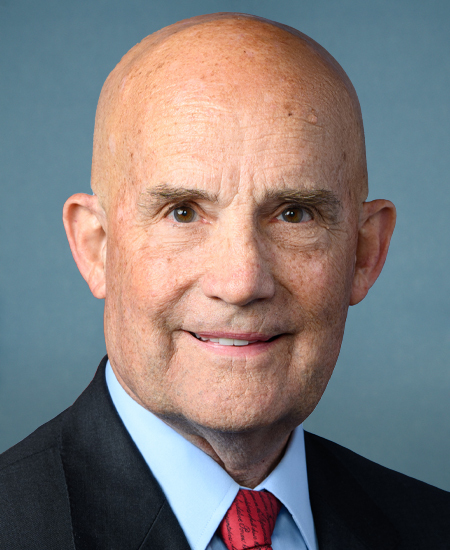
Rep. Keith Self
Sponsored bills
Maddy summaryHJRES 21 is a joint resolution disapproving a rule issued by the Department of Homeland Security (DHS) that aimed to modernize the H-2 visa program. The rule, published in the Federal Register (89 Fed. Reg. 103202), proposed updated requirements, oversight procedures, and worker protections for the H-2 program, which allows U.S. employers to hire foreign workers for temporary agricultural or non-agricultural jobs. This resolution directs Congress to reject the rule, stating it "shall have no force or effect" if passed. It directly affects the H-2 visa program’s operational rules and the employers and foreign workers relying on it.
Maddy summaryHJRES 22 is a congressional resolution disapproving a Department of Homeland Security (DHS) rule that aimed to modernize H-1B visa requirements and adjust F-1 student visa programs. This resolution, if passed, would nullify the DHS rule (published in the Federal Register as 89 Fed. Reg. 103054), preventing it from taking effect. The rule would have directly affected H-1B workers, employers seeking these visas, and international students in F-1 programs by changing eligibility rules and program flexibility. As a disapproval resolution, it does not create new policy but formally rejects the existing DHS rule.
Maddy summaryHJRES 23 is a congressional resolution disapproving a specific rule issued by the Department of Homeland Security (DHS). The rule in question would have extended the automatic period allowing certain immigrants to continue working while renewing their employment authorization documents. This resolution, if passed, would cancel that DHS rule, meaning the extension period would not apply to immigrants renewing their work permits. It directly affects non-citizens in the U.S. who are waiting for their work permit renewals to be processed.
Maddy summaryHRES 50 is a symbolic resolution, not a bill with policy changes. It declares that states bordering Mexico have the constitutional right under Article I, Section 10 to defend against "paramilitary, narco-terrorist cartels" and criminal actors at the southern border. The resolution states that states like Texas, Arizona, New Mexico, and California were "invaded" or faced "imminent danger" from these groups from 2021-2024, and that the federal government failed to protect them. It makes no new laws or allocate funds - only asserts a constitutional interpretation for states to act unilaterally. (Note: This is a procedural resolution; no concrete policy change is enacted.)
Maddy summaryHR 551, the "Make the Migrant Protection Protocols Mandatory Act of 2025," would require U.S. border officials to apply the Migrant Protection Protocols (MPP) to all eligible asylum seekers at the southern border, rather than allowing discretion. The bill amends the Immigration and Nationality Act to change the language from "may" to "shall" in Section 235(b)(2)(C), meaning officials must send asylum seekers back to Mexico to await their immigration hearings. This directly affects asylum seekers who would no longer have the option of remaining in the U.S. during processing. The key mechanism is a technical legal change to make the existing MPP policy mandatory for all applicable cases.
Maddy summaryHR 511 (AMERICANS Act) prevents the military from imposing new COVID-19 vaccine mandates without explicit congressional approval. It prohibits adverse actions like discharge or rank reduction against service members who refuse the vaccine based on personal reasons, and requires the military to reinstate separated members to their prior rank with back pay, expunge related records, and retain unvaccinated personnel equally. The bill also eliminates bonus repayment obligations for members separated over vaccine refusal and mandates equal professional development opportunities for unvaccinated service members. It directly affects military personnel impacted by prior vaccine mandates, focusing on policy changes rather than future outcomes.
Maddy summaryHR 422, the "No Subsidies for Wealthy Universities Act," limits how federal research funds can cover indirect costs (like administrative expenses) at universities with large endowments. It prohibits institutions with endowments over $5 billion from using any federal research funds for indirect costs, caps indirect costs at 8% for those with $2-5 billion in endowments, and sets a 15% cap for all other institutions. The bill requires annual collection of endowment data by the National Center for Education Statistics and mandates public reporting of how indirect costs are used. It directly affects research funding for the wealthiest universities, reducing federal support for their administrative operations. The policy applies to new federal research awards starting one year after enactment.
Maddy summaryHR 450, the FORCE Act, prevents the U.S. government from removing Cuba from the State Sponsors of Terrorism list. It requires the President to make a specific determination under the 1996 LIBERTAD Act before Cuba can be removed. The bill directly affects Cuba's international designation status and U.S. foreign policy actions toward the country. It does not change existing law but blocks any removal until the specified determination is made. The provision applies to both the President and the Secretary of State.
Maddy summaryThe FAIR PREP Act of 2025 prohibits the IRS from preparing individual tax returns or refund claims, except for the existing IRS Free File Program and certain qualified return preparation services. It clarifies that the IRS may still provide fillable tax forms with automated calculations and correct mathematical or clerical errors without violating the prohibition. The bill also bans the IRS from developing or operating new electronic tax preparation services after enactment without explicit new congressional authorization. This directly affects how the IRS delivers tax filing assistance, preserving current free options while restricting new government-run tools.