

Maddy summaryHR 1387, the COST Act, requires federal agencies and recipients of federal funds (including states, local governments, and research grantees) to publicly disclose the percentage and dollar amount of federal funding versus non-federal funding for any program, project, or activity. This disclosure must appear in all public communications describing the initiative (except short social media posts), detailing both the federal share and the non-federal share of costs. Recipients must also certify compliance in progress reports, and the Office of Management and Budget must annually review a sample of communications for adherence and publish findings. The bill establishes a public system for anonymously reporting non-compliant communications, with reports requiring specific details about the program and the noncompliant material.
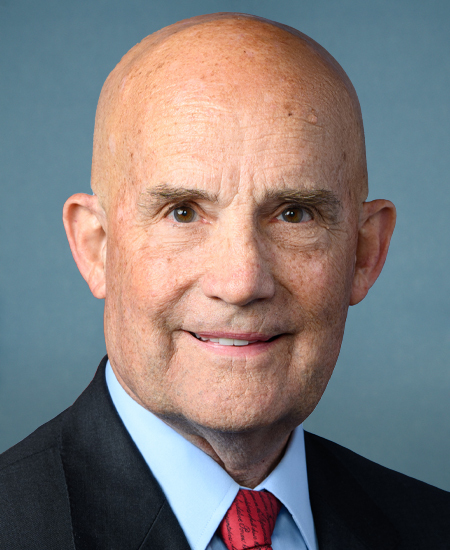
Rep. Keith Self
Sponsored bills
Maddy summaryThis bill amends the Food and Nutrition Act of 2008 to clarify that households must meet existing income and resource criteria to receive food assistance benefits. It directly affects households applying for or receiving SNAP (Supplemental Nutrition Assistance Program) benefits under the Food and Nutrition Act. The key provision explicitly states that eligibility requires compliance with current income and asset standards, reinforcing existing rules rather than creating new restrictions. The amendment takes effect one year after enactment, with existing benefit certifications unaffected if they began before that date.
This concurrent resolution declares that Congress should not impose any new performance fee, tax, royalty, or other charge relating to the public performance of sound recordings on a local radio station for broadcasting sound recordings over the air, or on any business for such public performance of sound recordings.
Maddy summaryHR 1301, the Death Tax Repeal Act, would eliminate the federal estate tax and generation-skipping transfer tax for estates of individuals dying on or after its enactment date. It directly affects individuals inheriting significant assets, as it removes taxes on estates exceeding $10 million (adjusted for inflation) and repeals taxes on large transfers between generations. The bill modifies the gift tax by establishing a $10 million lifetime exemption with annual inflation adjustments, replacing previous tax brackets. It applies to estates, gifts, and transfers occurring on or after the bill's effective date.
Maddy summaryThe Officer John Barnes Act requires the Bureau to notify claimants of their eligibility for benefits within 270 calendar days after receiving a claim. This affects individuals or organizations applying for benefits under the Omnibus Crime Control and Safe Streets Act of 1968 by setting a specific deadline for the Bureau's decision. The key provision amends existing law to add this timeframe, ensuring timely responses without altering eligibility criteria. The bill focuses solely on streamlining the claims process through a defined administrative deadline.
No Asylum for Criminals Act of 2025 This bill bars an individual who has been convicted of a felony or misdemeanor from receiving asylum, with limited exceptions. Specifically, the Department of Homeland Security may designate political offenses committed outside of the United States that shall not be considered a crime for this purpose. Currently, an individual shall be barred from receiving asylum for only certain types of criminal convictions, such as if the individual is convicted for (1) an aggravated felony, or (2) a particularly serious crime and as a result deemed a danger to the United States.
Maddy summaryHR 1232, the National Right-to-Work Act, would make union membership voluntary for workers in most private-sector jobs by removing legal requirements for employees to join a union or pay dues as a condition of employment. It directly affects workers in unionized workplaces covered by the National Labor Relations Act (including most private employers) and railroad workers covered by the Railway Labor Act. The key change eliminates provisions that allowed "union security agreements" (requiring dues or membership), meaning workers could no longer be forced to pay union fees to keep their jobs. This bill does not change other labor rights or create new programs - it only modifies existing laws to allow workers to opt out of union membership and financial obligations.
Maddy summaryThis bill requires the U.S. State Department to report to Congress within 90 days on all U.S. funding provided to UNRWA (the UN agency aiding Palestinian refugees) from fiscal years 2020-2024, including monthly breakdowns and how funds were spent. It then prohibits the use of federal funds - directly or indirectly - to support UNRWA starting on the bill’s enactment date. The bill directly affects UNRWA by halting U.S. financial support pending the report, without making any findings about UNRWA’s activities. The key mechanisms are the mandatory funding report and the immediate funding ban.
Security And Fairness Enhancement for America Act of 2025 or SAFE for America Act of 2025 This bill eliminates the diversity visa program. This program provides up to 55,000 visas annually to individuals from countries with low rates of immigration to the United States.
Operation Lone Star Reimbursement Act This bill allows Texas to receive reimbursement for expenses incurred from 2021 through 2025 related to securing the southern U.S. border. Texas must submit these expenses to the Department of Homeland Security (DHS) and the Department of the Treasury. DHS must review the submission within 120 days and determine which expenses are eligible for reimbursement. Treasury must pay such reimbursable expenses within 60 days.