Maddy summaryThe SAFE for America Act of 2023 eliminates the Diversity Immigrant Visa program, commonly known as the "visa lottery," which provided annual visas to individuals from countries with historically low U.S. immigration rates. This change directly affects applicants and participants in the diversity visa program, ending their eligibility for this specific immigration pathway. The bill amends key sections of immigration law (Sections 201, 203, and 204 of the Immigration and Nationality Act) to remove references to the diversity program and adjust visa allocation procedures. The changes take effect October 1, 2023, permanently ending this visa category.
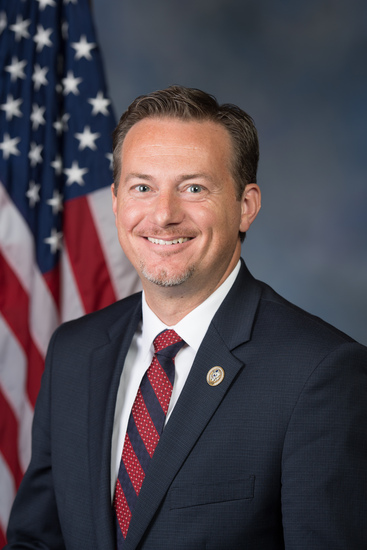
Rep. Michael Cloud
Sponsored bills
Maddy summaryThis bill would require the U.S. to withhold funding for the UNRWA (United Nations refugee agency for Palestinians) unless the State Department certifies UNRWA staff, materials, and facilities comply with specific conditions. Key conditions include confirming no ties to terrorism or anti-Israel rhetoric (like denying Israel's right to exist or promoting BDS), no misuse of UNRWA resources for terrorist activities, and adherence to international financial audits. It also caps U.S. contributions to UNRWA at levels comparable to Arab League countries and mandates annual reports to Congress on phasing out UNRWA support. These changes directly affect U.S. foreign aid decisions for Palestinian refugees in Jordan, Lebanon, Syria, Gaza, and the West Bank.
Second Chance at Life Act of 2023 This bill requires abortion providers to disclose information about the possibility of reversing a medication abortion. This is a procedure that uses a medication regimen to terminate a pregnancy, typically with a two-drug protocol. Providers must inform patients that it may be possible to reverse the effects of a medication abortion after taking the first drug. They must also let patients know that more information and assistance is available on the Department of Health and Human Services (HHS) website. At least 24 hours before the procedure, the provider must share this information with the patient in person or by telephone. The provider must also include the information in written discharge instructions after the first drug is dispensed. The bill sets out an exception to these notification requirements when an abortion is necessary to resolve a physical injury or condition that threatens the life of the woman. The provider must document the circumstances giving rise to the exception in the patient's medical file. Furthermore, providers must post signs with this information in their offices or facilities, and HHS must maintain information about reversing medication abortions on its website.
Maddy summaryHR 998, the 287(g) Program Protection Act, strengthens the federal program allowing state and local law enforcement agencies to collaborate with U.S. Immigration and Customs Enforcement (ICE) on immigration enforcement. The bill requires the Department of Homeland Security (DHS) to enter written agreements with any state or local agency that requests them - without arbitrary denial, with 180 days' notice to Congress if denied - and to process requests within 90 days. It gives participating agencies flexibility to choose enforcement models (like jail or task force operations) and prohibits federal programs from replacing 287(g) agreements. The bill also adds strict rules preventing DHS from terminating agreements without compelling reasons and requires annual reports on program performance, including removal statistics and compliance.
Maddy summaryThis bill authorizes a single Congressional Gold Medal to honor all U.S. Army Dustoff crews who served during the Vietnam War (1962-1973). It recognizes their critical role in evacuating nearly 900,000 wounded personnel, including U.S., South Vietnamese, and allied forces, under extreme combat conditions. The medal, designed with input from the Secretary of Defense, will be presented to the U.S. Army Medical Department Museum for permanent display. Duplicate bronze medals may be sold to cover costs, but the primary action is the commemorative recognition of these crews' service.
Maddy summaryThis bill requires the Office of Management and Budget to audit unspent funds from major pandemic relief packages - including the CARES Act, American Rescue Plan, and related bills - within 30 days of enactment. It mandates a report listing all unobligated funds remaining under these laws. The unspent amounts would then be automatically returned to the Treasury’s general fund for deficit reduction, with no further congressional action needed. The bill directly affects how the federal government handles leftover pandemic relief funds, focusing on accounting and fiscal responsibility rather than new program benefits.
Maddy summaryHJRES 24 is a congressional disapproval resolution targeting a District of Columbia law. It formally rejects the D.C. Council's approval of the "Local Resident Voting Rights Amendment Act of 2022" (D.C. Act 24-640), which would have granted voting rights to D.C. residents in local elections. The resolution prevents this D.C. law from taking effect by disapproving the Council's action under the District of Columbia Home Rule Act. This is a procedural measure affecting D.C. residents' local voting rights, not a new federal policy.
Maddy summaryHR 185 ends a Centers for Disease Control and Prevention (CDC) rule requiring foreign travelers entering the U.S. by air to show proof of a COVID-19 vaccination. The bill takes effect immediately upon enactment, terminating the specific requirement outlined in the CDC’s April 2022 order (and any similar future orders). It also prohibits federal funding from being used to enforce this rule. This change directly affects foreign air travelers entering the United States, removing a vaccination proof requirement for their entry. The bill does not impact domestic travel, other entry methods, or vaccination requirements for U.S. citizens.
Maddy summaryThis bill requires states receiving Medicaid funds for family planning services to submit standardized abortion data to the CDC annually. Specifically, states must report 10 mandatory data points (including maternal age, gestational age, race, ethnicity, procedure type, and survival status) by December 31 of the prior year, starting two years after enactment. Failure to submit accurate data or submitting false information could result in loss of Medicaid funding for family planning services in the following fiscal year. The law aims to create uniform national abortion data collection, addressing current gaps where some states report no data at all. The CDC will maintain a standardized surveillance system and publish annual reports by the third year following the data year.
Maddy summaryThe Retain Skilled Veterans Act (HR 939) amends federal law to restrict appointments of retired military members to specific high-level positions within the Department of Defense (DoD). It limits such appointments to roles classified at or above GS-14 (a high pay grade) in the DoD’s excepted or competitive service, removing a prior exception that allowed broader "management" appointments. This change directly affects retired veterans seeking senior DoD roles, requiring them to qualify for the highest-level positions under this rule. The bill ensures these appointments apply only to defined senior roles, not routine or lower-level positions.