This resolution honors and recognizes the patriotism and contributions made by generations of veterans service organizations, veteran advocacy groups, and volunteers and commends the members of such organizations for their dedicated service to members of the Armed Forces, veterans, their families, and their communities. The resolution also encourages the people of the United States to promote awareness of the contributions and dedication of members of veterans service, organizations, veteran advocacy groups, and volunteers to members of the Armed Forces, veterans, and their families. Additionally, the resolution calls on citizens to follow the example of such groups and volunteer support and services to those who have served the country.
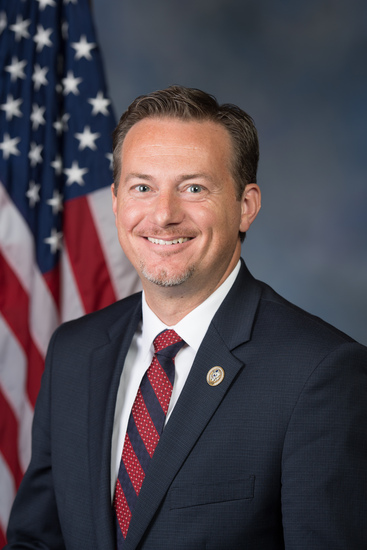
Rep. Michael Cloud
Sponsored bills
Maddy summaryHR 5130, the "Finish It Act," requires the Department of Defense to use stored border wall construction materials (valued at approximately $300 million) for building permanent barriers along the U.S.-Mexico border within 30 days of the bill's enactment. It mandates that states receiving materials certify they will use them exclusively for border barriers, with penalties for unused materials (requiring repayment of the original cost) and imposes a 1% budget cut for every two days of delay in implementation. The bill also demands a detailed report from the Department of Defense within 90 days, including internal communications about storage costs and contracts with private landowners. This legislation directly affects the Department of Defense and border states, focusing on redirecting existing resources rather than creating new funding or construction.
Maddy summaryHR 5084 designates the U.S. Postal Service facility at 1106 Main Street in Bastrop, Texas, as the "Sergeant Major Billy D. Waugh Post Office." This bill updates all official federal references - including laws, maps, and documents - to use the new name for the location. It directly affects the Bastrop post office and federal records referencing it, without altering postal services or policies. The change is purely ceremonial and procedural, honoring Sergeant Major Billy D. Waugh through the facility's name.
Maddy summaryThe Healthy SNAP Act of 2023 changes what foods SNAP recipients can buy by updating the program's definition of eligible "food." It explicitly excludes soft drinks, candy, ice cream, and prepared desserts like cakes or cookies, while requiring the USDA Secretary to designate specific nutrient-rich foods that address dietary gaps and promote health. The bill mandates the Secretary to review and update these designated foods every five years based on nutrition science and public health needs, and allows states to substitute culturally appropriate, nutritionally equivalent foods with approval. This directly affects the 40 million SNAP participants nationwide by altering their purchasing options under the program.
Maddy summaryThis bill directs the U.S. Treasury to mint commemorative coins marking the Marine Corps' 250th anniversary in 2025. It authorizes three coin types: $5 gold coins (max 50,000), $1 silver coins (max 400,000), and half-dollar coins (max 750,000), with surcharges of $35, $10, and $5 respectively. The surcharge proceeds will fund the Marine Corps Heritage Center's educational programs, with no net cost to taxpayers as the Treasury must recover all minting costs through the surcharges. The coins can only be issued during 2025, and the Treasury must ensure all costs are covered before distributing funds to the Heritage Foundation.
Maddy summaryHR 4860, the PROTECT the Second Amendment Act, prevents landlords in specific federally assisted housing from banning or restricting residents' lawful possession of firearms in their private units or during travel between units and common areas. It directly affects tenants in housing funded by HUD or USDA programs, including public housing, Section 8 vouchers, and housing for veterans or people with disabilities. The bill prohibits landlords from imposing firearm bans or additional conditions on residents who lawfully carry firearms within their dwelling units or while moving through common areas to reach their units. This changes current policies in these housing programs by explicitly allowing firearm possession where state law permits.
Maddy summaryHR 4726 terminates the requirement that aliens (non-citizens) must be vaccinated against COVID-19 to obtain visas, adjust to permanent residency, or naturalize as U.S. citizens. The bill immediately ends this mandate upon enactment and prohibits federal funding for any administration or enforcement of the vaccination rule. It specifically targets requirements set by the CDC and DHS under existing public health laws. This change directly affects non-citizens applying for visas, green cards, or U.S. citizenship who previously faced this vaccination condition. The policy shift removes a specific health-related barrier from three key immigration processes.
Maddy summaryThis bill cancels a 2016 rule requiring new truck drivers to complete specific training programs. It removes the Federal Motor Carrier Safety Administration's mandate for minimum training standards for entry-level commercial drivers. The repeal directly affects trucking companies and new drivers who would no longer need to follow these training requirements. The change eliminates a specific regulatory obligation without creating new policies or funding.
Maddy summaryThis bill prohibits the General Services Administration (GSA) from considering the legality or availability of abortion when acquiring, constructing, leasing, or entering into agreements for federal buildings or properties. It directly affects GSA's decisions regarding federal real estate, ensuring that such actions are not influenced by state abortion laws. The law amends specific sections of Title 40 (including building acquisition, construction, and leasing rules) to explicitly ban this consideration. It does not change abortion laws or apply to non-federal properties.
Maddy summaryThe Freeing Americans Detained Abroad Act requires the State Department to create a public website listing resources (like legal and medical assistance) for U.S. citizens detained or kidnapped overseas and their families. It mandates training for all overseas Foreign Service officers on identifying arbitrary detention cases, connecting families to aid, and coordinating with the Special Presidential Envoy for Hostage Affairs. Each diplomatic post must designate a "hostage affairs officer" to track cases, ensure monthly embassy meetings for detained citizens, provide legal/medical support, and manage a trust account for their needs. The bill also requires the State Department to report to Congress within 180 days on training completion, designated officers, and detention case numbers by country. This directly affects U.S. citizens held abroad and their families by standardizing and improving the government's response.