Maddy summaryHouse Joint Resolution 147 seeks to disapprove an Occupational Safety and Health Administration (OSHA) rule that would have established a process for workers to designate a representative to accompany OSHA inspectors during workplace safety inspections. The rule, published in the Federal Register on April 1, 2024, aimed to formalize this "walkaround" representative process during inspections. Under a federal disapproval procedure (Chapter 8 of Title 5, U.S. Code), this resolution would invalidate the rule if passed. As a result, the designated representative process would not take effect, meaning OSHA inspections would proceed without this specific worker representation mechanism.
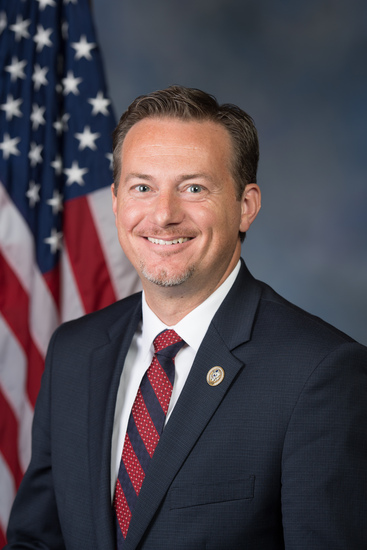
Rep. Michael Cloud
Sponsored bills
Maddy summaryHR 8421 would abolish the Federal Reserve Board of Governors and all Federal Reserve Banks, ending the U.S. central banking system as currently structured. The bill requires a one-year wind-down period during which the Fed Chairman manages employee compensation, asset liquidation, and debt settlement, with all assets transferred to the Treasury and liabilities assumed by the Secretary of the Treasury. It repeals the Federal Reserve Act and mandates a joint Treasury-OMB report to Congress within 18 months detailing implementation progress. This bill directly affects the Federal Reserve System's operations and structure, not the general public or financial markets.
Maddy summaryHR 8434 designates the United States Postal Service facility at 107 North Hoyne Avenue in Fritch, Texas, as the "Chief Zeb Smith Post Office." This bill changes the official name of the physical post office location for all federal references, including laws, maps, and documents. It directly affects the postal facility in Fritch by establishing its new official designation. The bill has no policy or funding impact - it is purely a ceremonial naming resolution.
Maddy summaryThe Cost Estimates Improvement Act (HR 8341) requires the Congressional Budget Office (CBO) and Joint Committee on Taxation (JCT) to include, to the extent practicable, the costs of servicing the national debt - such as interest payments - in their budget estimates. This change makes cost analyses more comprehensive by reflecting the full financial burden of government borrowing. The bill amends the Congressional Budget and Impoundment Control Act of 1974 to add this requirement, directly affecting how the CBO and JCT produce their budget reports. It does not alter spending or tax laws but ensures estimates better account for long-term debt costs when Congress reviews legislation.
Maddy summaryHR 7109, the Equal Representation Act, requires the U.S. Census Bureau to add a citizenship status checkbox to the 2030 and future decennial censuses, asking respondents to identify if they are U.S. citizens, U.S. nationals, lawful residents, or unlawful residents. It then mandates excluding noncitizens (both lawful and unlawful residents) from the population count used to determine each state's number of congressional seats and electoral votes starting with the 2030 census. This bill directly affects how states are apportioned representation in Congress and presidential electoral votes, based solely on the citizen population. The key change is shifting the apportionment base from total population to citizen population alone, using the new census data.
Maddy summaryThis bill designates the U.S. Postal Service facility at 2395 East Del Mar Boulevard in Laredo, Texas, as the "Lance Corporal David Lee Espinoza, Lance Corporal Juan Rodrigo Rodriguez & Sergeant Roberto Arizola Jr. Post Office Building" to honor these three military service members. It changes the official name of the building for all government references, maps, and records, but does not alter postal services or create new policy. The bill was enacted on May 7, 2024, following passage by both the House and Senate.
Maddy summaryThe VA Abortion Transparency Act of 2024 requires the Department of Veterans Affairs (VA) to submit quarterly reports to Congress detailing abortions facilitated by the VA. These reports must include the total number of abortions broken down by type (surgical vs. medication), location (VA facility vs. non-VA provider), patient category (veteran vs. dependent), gestational age, legal justification, and Veterans Integrated Service Network. The reports also must detail all related costs, including staff training, infrastructure, and funding sources (such as the Cost of War Toxic Exposures Fund), while excluding any patient identifiers. This bill directly affects the VA's reporting obligations to Congress regarding its abortion-related activities.
Maddy summaryHR 8147 repeals the Corporate Transparency Act, which required certain businesses (typically those with more than 20 employees) to report beneficial ownership details to the Treasury Department. This bill eliminates the requirement for companies to disclose who ultimately owns or controls them, directly affecting business owners and financial institutions that previously submitted this information. The bill also makes minor technical changes to Title 31 of the U.S. Code to remove references to the repealed provisions. The repeal would end the existing financial transparency reporting obligation for covered entities.
Maddy summaryThis bill would reform the U.S. patent system by reverting to a "first-to-invent" system (replacing the current "first-to-file" system), abolishing inter partes and post-grant review proceedings, and ending automatic publication of patent applications after 18 months. It would restore patents as private property rights with a presumption of validity, strengthen remedies for patent infringement including a presumption of irreparable harm for injunctions, and eliminate fee diversion to fully fund the U.S. Patent and Trademark Office. The bill aims to protect inventors' rights and encourage innovation by making the patent system more favorable to patent holders. It would also reverse several Supreme Court decisions that have limited patentability for software and scientific discoveries.
Maddy summaryHR 8019, the Selena Commemorative Coin Act, authorizes the U.S. Mint to produce three commemorative coins honoring singer Selena Quintanilla-Perez: $5 gold coins (50,000 maximum), $1 silver coins (400,000), and half-dollar coins (750,000). The coins must feature her image and be sold at face value plus surcharges ($35, $10, and $5 per coin respectively), with all surcharges directed to the Friends of the Corpus Christi Museum of Science and History for museum operations and a Selena exhibit. The coins will be minted in 2029 and are legal tender, but the bill does not create new government programs or affect public policy. This is a ceremonial coin authorization, not a substantive legislative change.