COVID-19 EIDL Fraud Statute of Limitations Act of 2022 This bill establishes a 10-year statute of limitations for criminal charges and civil enforcement against a borrower who engages in fraud with respect to certain COVID-19 economic injury disaster loan programs.
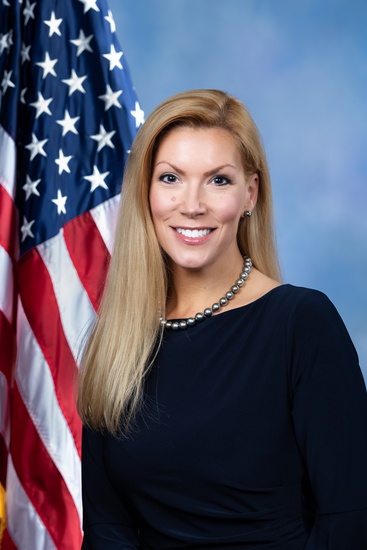
Rep. Beth Van Duyne
Sponsored bills
Restore Protections for Dialysis Patients Act This bill specifies that private health insurers may not limit, restrict, or condition benefits for renal dialysis services for individuals with end-stage renal disease as compared to other types of benefits for other medical conditions under Medicare secondary payer rules.
Emergency Care Improvement Act This bill permanently allows for coverage under Medicare and Medicaid of services that are provided by freestanding emergency centers. The bill takes effect January 1, 2023, or the first day after the end of the COVID-19 public health emergency, whichever is first.
The LTCH Access and Stability Act This bill waives the Medicare site-neutral payment rate for inpatient services at long-term care hospitals for an additional 12 months after the end of the COVID-19 public health emergency. The Centers for Medicare & Medicaid Services must report on the effects of this waiver on hospital admissions and overall access to services, among other information.
Fairness for Responsible Borrowers Act This bill generally prohibits the Departments of Education, Justice, or the Treasury from taking any action to cancel or forgive the outstanding balances, or portion of balances, of covered loans. Covered loans refer to Federal Family Education Loans, Federal Direct Loans, Federal Perkins Loans, and loans under the Health Education Assistance Loan Program. The prohibition does not apply to targeted federal student loan forgiveness, cancellation, or repayment programs carried out under the Higher Education Act of 1965.
This resolution condemns the terrorist attacks and violence carried out by ISIS-Mozambique in the Cabo Delgado Province and urges the government of Mozambique to take actions to counter violent extremism and protect its citizens.
Fostering Innovation and Research to Strengthen Tomorrow Act This bill doubles the rate of the tax credit for increasing research expenses and the alternative simplified research tax credit. It also increases the credit rate for taxpayers with no research expenses during a specified three-year period and the amount of the credit that certain small businesses may apply against payroll tax liabilities.
Housing Supply Expansion Act This bill modifies the federal prevailing wage rates that apply to federally assisted housing and requires the Department of Labor to review and revise its process for determining prevailing wage rates. Specifically, the bill applies the prevailing wage rate for residential construction to all housing projects that receive assistance under specified federal statutes. (Under current law, the residential construction prevailing wage rate applies to the construction, alteration, or repair of single-family homes or apartment buildings up to four floors in height.)
Citizen Ballot Protection Act This bill allows a state to include on its mail voter registration application form a requirement that the applicant provide proof of U.S. citizenship.
Ensuring Children Receive Support Act This bill requires the Department of State to revoke passports for certain individuals who fail to make child support payments. Under current law, if the Department of Health and Human Services certifies that an individual owes more than $2,500 in child support, the Department of State must refuse to issue the individual a passport and may revoke a previously issued passport. Under the bill, State must revoke the previously issued passport.