

Maddy summaryThe Regulatory Accountability Act (HR 3525) establishes new requirements for federal agencies creating regulations. It requires agencies to consider multiple alternatives for "major rules" (defined as those likely to cause $100 million or more in annual economic effect), conduct detailed cost-benefit analyses, and provide clear explanations of how benefits justify costs. The bill extends public comment periods for major rules (to 90 days), mandates transparency by making rulemaking information accessible to the public, and requires agencies to develop frameworks for assessing the effectiveness of major rules over time. This bill applies to all federal agencies that issue regulations, with specific requirements for rules likely to have significant economic impacts.
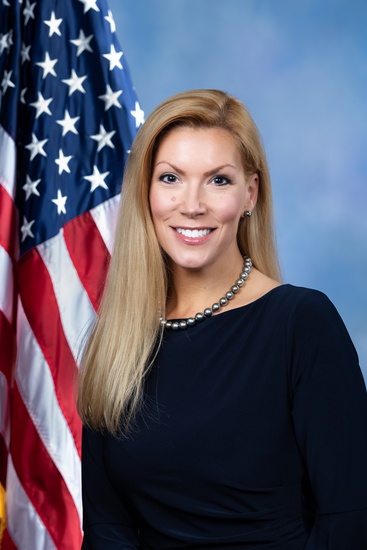
Rep. Beth Van Duyne
Sponsored bills
Maddy summaryHR 3526, the Uplifting First-Time Homebuyers Act of 2025, increases the maximum amount first-time homebuyers can withdraw penalty-free from retirement accounts. It amends the Internal Revenue Code to raise the limit from $10,000 to $50,000 for qualified first-time homebuyer distributions. This change directly affects individuals using retirement savings to purchase their first home, allowing them to access significantly more funds without incurring the usual 10% early withdrawal penalty. The provision applies to taxable years beginning after December 31, 2024.
Maddy summaryHR 3518 would deny federal funding to graduate medical schools that require certain diversity, equity, and inclusion (DEI) policies. Specifically, schools must certify they do not compel students or staff to affirm specific beliefs about race, gender, or systemic racism; require "diversity statements" for admission or employment; establish DEI offices; or discriminate based on race in programs. This affects graduate medical schools at institutions of higher education seeking federal financial aid, including student loan programs. The bill permits schools to teach about medical conditions related to race or collect demographic data, but prohibits policies mandating DEI-related pledges or offices.
Maddy summaryHR 3523 requires the Treasury Secretary to designate foreign organizations engaged in fraud against U.S. citizens or lawful permanent residents as "Foreign Financial Threat Organizations" (FFTOS). This directly affects foreign entities that deceive U.S. residents into sending money or assets through fraudulent schemes. Key mechanisms include freezing the assets of designated FFTOS, blocking their communication with U.S. residents, and subjecting them to penalties similar to terrorist designations. The bill mandates annual reports to Congress detailing designations, assets seized, and funds returned to victims.
Maddy summaryHR 513, the Offshore Lands Authorities Act of 2025, reverses multiple existing presidential protections that blocked oil and gas leasing on offshore federal lands. It nullifies 8 specific presidential withdrawals (including areas in the Arctic, Atlantic, Gulf of Mexico, and Pacific) and restricts future presidential actions by limiting withdrawals to 150,000 acres per action, capping them at 20 years, and requiring Congressional approval for cumulative withdrawals exceeding 500,000 acres. The bill mandates that before any withdrawal, the Secretary must complete four assessments covering mineral resources, economic/energy value, revenue impacts, and national security. It also establishes a fast-track process for Congress to disapprove withdrawals within 20 days, with limited debate (10 hours) on the resolution.
Maddy summaryHR 3501 would require Medicare providers to screen beneficiaries aged 65 and older for cognitive impairment during annual wellness visits and initial preventive physical exams, using tools approved by the National Institute on Aging. The screening must be documented in the patient’s medical record. This change applies to visits starting January 1, 2026, and aims to support early detection of conditions like Alzheimer’s through standard preventive care. The bill directly affects Medicare beneficiaries, providers, and caregivers by integrating cognitive screening into routine preventive services.
Maddy summaryHR 2243, the LEOSA Reform Act, updates the Law Enforcement Officers Safety Act to clarify and expand firearm carry rights for qualified current and retired law enforcement officers. It modifies training requirements to allow officers to meet standards set by their former agency, their state, any local agency in their state, or a certified instructor within the state. The bill also adds exceptions for transportation property and public spaces when applying state laws, and permits qualified officers to carry concealed firearms in certain federal facilities (Security Level I/II civilian public access facilities). These changes aim to provide clearer, more flexible standards for firearm carry while maintaining existing safety frameworks.
Maddy summaryHR 3392, the STOP Screwworms Act, requires the U.S. Department of Agriculture to build modular facilities for rearing sterile New World screwworm flies within 180 days of enactment. These facilities will disperse sterile flies into at-risk agricultural areas - identified based on migratory patterns and suitability for dispersal - to prevent infestations that threaten livestock. The bill authorizes $300 million in funding for construction, operation, and annual reporting to Congress on threat assessments and effectiveness. It directly affects livestock producers and agricultural regions vulnerable to screwworm fly migration, using sterile insect technique as a preventive measure.
Access to Prescription Digital Therapeutics Act of 2025 This bill provides for Medicare and Medicaid coverage of prescription digital therapeutics (i.e., software applications that are used to prevent, manage, or treat medical conditions). The Centers for Medicare & Medicaid Services must establish a Medicare payment methodology for payments to manufacturers that takes into account certain factors (e.g., ongoing use); manufacturers must report specified information about private payors, subject to civil penalties.
Maddy summaryHR 3277, the Ensuring Lasting Smiles Act, requires group health plans and health insurance issuers to cover medically necessary outpatient and inpatient treatments for congenital anomalies or birth defects primarily affecting the eyes, ears, teeth, mouth, or jaw. This includes reconstructive procedures, dental/orthodontic support during treatment, and follow-up care, but excludes purely cosmetic surgery not tied to a medical diagnosis. Cost-sharing (like copays) for these services must not be stricter than for other medical benefits. The law takes effect for plan years beginning January 1, 2026, and mandates insurers to provide notice about this coverage to beneficiaries.