

Maddy summaryHR 6056, the International Human Rights Defense Act of 2025, establishes a permanent Special Envoy at the State Department to lead U.S. foreign policy efforts addressing discrimination and violence against LGBTQI+ people globally. The bill requires the U.S. government to develop and update a biannual global strategy to prevent criminalization and violence against LGBTQI+ individuals, mandate detailed reporting on such abuses in annual country reports, and ensure all U.S. foreign assistance programs include inclusive nondiscrimination policies. This legislation directly affects U.S. foreign policy implementation, federal agencies receiving funding, and LGBTQI+ communities facing persecution worldwide. The bill aims to coordinate U.S. government efforts across departments and with international partners to advance LGBTQI+ rights globally through concrete policy mechanisms.
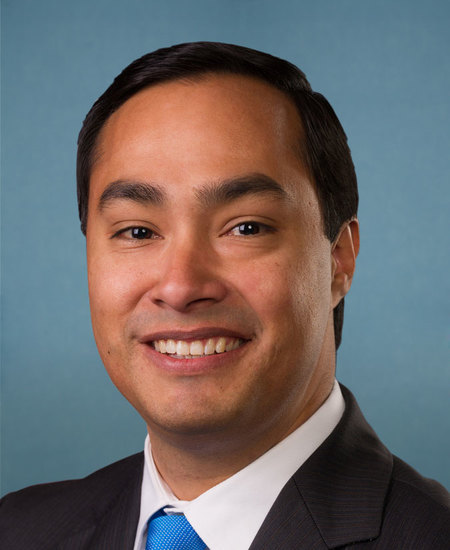
Rep. Joaquin Castro
Sponsored bills
Maddy summaryHRES 863 is a symbolic House resolution honoring veterans from Texas, recognizing the state's status as home to nearly 1.6 million veterans - the highest in the U.S. - including over 203,000 women veterans and 11 House members who are veterans. The resolution does not create new laws or alter policies but expresses the House's commitment to supporting veterans through existing VA programs, particularly addressing challenges like mental health care, homelessness, and job transitions. It emphasizes Texas's significant military legacy, including over 22,000 Texan lives lost in World War II and 102 Medal of Honor recipients. As a commemorative resolution, it has no binding effect but serves as a formal acknowledgment of Texas veterans' service.
Maddy summaryThis bill prohibits the Department of Veterans Affairs (VA) from requiring veterans to pay copayments for hospital care or medical services under specific circumstances. It bans copayments for all veterans receiving care, prevents retroactive billing for care received within two years if the VA failed to process claims on time, and caps copayments at $2,000 for errors caused by VA staff or systems. Veterans affected by VA processing errors or billing mistakes would no longer face these charges. The bill also grants the VA authority to waive copayments without requiring veterans to submit a formal request.
Maddy summaryThis bill prevents states from redrawing congressional district maps more than once per decade. It prohibits states from changing district boundaries after their initial post-2020 census redistricting until the next census, unless a court orders it or state law specifically requires it. The law directly affects all states responsible for creating congressional maps, aiming to limit frequent redistricting cycles. It applies to all redistricting occurring after the 2020 census. The bill does not alter how states conduct elections for state or local offices.
Maddy summaryHRES 824 is a ceremonial House resolution recognizing the religious and historical significance of Diwali, the festival of lights. It acknowledges Diwali’s meaning across Hindu, Sikh, and Jain traditions - symbolizing light over darkness, good over evil, and marking spiritual milestones like Guru Hargobind’s release and Lord Mahavira’s Nirvana. The resolution expresses respect for Indian-Americans and the global Indian diaspora, highlighting Diwali’s role in U.S. religious diversity. As a non-binding recognition, it does not create new laws, policies, or funding, but formally honors the cultural observance.
Maddy summaryThis resolution formally recognizes the vital role of Spanish-language media in serving over 41 million U.S. residents who speak Spanish at home. It affirms that access to Spanish-language news and entertainment is essential for community engagement, combating misinformation, and supporting democratic participation. The House resolution specifically commends Spanish-language media professionals and encourages policies that sustain this media sector, which provides culturally relevant information on elections, health, and civic life. As a symbolic gesture (not a law), it has no direct policy changes but highlights the sector's importance to Latino communities and national inclusivity.
Maddy summaryHCONRES 56 is a symbolic congressional resolution recognizing the persistent wage gap faced by Latina women in the U.S. It specifically highlights that, as of 2024, Latina workers earn just 58 cents for every dollar paid to White, non-Hispanic men working full-time year-round. The resolution designates October 8, 2025, as "Latina Equal Pay Day" to raise awareness about this disparity, which affects over 14 million Hispanic women in the labor force. It does not create new laws or policies but formally acknowledges the economic impact of this gap on Latina families and the broader economy.
Maddy summaryHRES 797 is a non-binding resolution expressing concern about the rising number of book bans in U.S. schools and libraries. It cites PEN America data showing 6,870 book bans affecting 3,751 titles between July 2024 and June 2025, with books about race, LGBTQ+ experiences, and marginalized communities disproportionately targeted (e.g., *The Handmaid’s Tale*, *Maus*, *This Book Is Gay*). The resolution calls on schools to follow best practices for book challenges, protect students’ access to diverse materials, and return books removed from military schools under recent executive orders. It directly addresses students, educators, librarians, and authors impacted by censorship, emphasizing that such bans threaten free expression and democratic values.
Maddy summaryHRES 786 is a symbolic resolution designating September 30, 2025, as "Impact Aid Recognition Day" to commemorate the 75th anniversary of the Impact Aid program. It does not create new policies or funding but formally recognizes the program's history and purpose. The resolution highlights that Impact Aid reimburses local schools for revenue losses due to tax-exempt federal properties (like military bases or tribal lands), serving over 8 million students across 1,100 school districts. It emphasizes bipartisan support for the program since its 1950 establishment and its role in ensuring equitable education access for federally connected children. The resolution has no binding effect beyond the symbolic recognition.
Maddy summaryThis bill adds Medicare coverage for multi-cancer early detection screening tests (blood or biological tests analyzing cell-free DNA) starting January 1, 2028. It directly affects Medicare beneficiaries aged 68 and older (starting in 2028, with the age limit increasing by 1 year annually), requiring tests to be FDA-cleared and deemed reasonable/necessary by the Secretary for early cancer detection across multiple organ sites. Payment will initially match current stool DNA test rates before 2031, then shift to a lower rate or new payment system after 2031, with limits preventing more than one test per year. The bill explicitly states it does not alter coverage for existing cancer screenings like breast, colorectal, or prostate cancer tests.