

Maddy summaryHRES 932 is a symbolic resolution passed by the House of Representatives that condemns six specific members of Congress (including Senators Kelly and Slotkin and Representatives Crow, Deluzio, Goodlander, and Houlahan) for allegedly making statements that encouraged military and intelligence personnel to disobey orders from the President. The resolution claims these lawmakers falsely suggested the administration issued "illegal orders" and undermined the military chain of command, violating the Uniform Code of Military Justice (UCMJ). It does not create new laws or policies but formally denounces the lawmakers' statements as "dangerous and seditious rhetoric." As a procedural resolution, it has no binding effect on military conduct or policy.
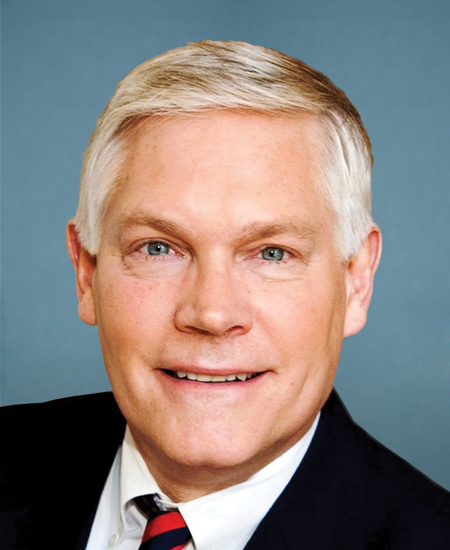
Rep. Pete Sessions
Sponsored bills
Maddy summaryThis bill designates the Museum of the Blind People’s Movement (currently located at the National Federation of the Blind Jernigan Institute in Baltimore, Maryland) as the National Museum of the Blind People’s Movement. It formally recognizes the museum, operated by blind individuals, as the first national institution dedicated to preserving and showcasing the history of blind people’s contributions and struggles in the U.S. The museum already collects artifacts, documents, and literature documenting the blind community’s collective achievements and civil rights efforts since the 1940s. The bill’s key provision is this official congressional designation, elevating the existing museum as a national platform for education and awareness about blind people’s movement.
Maddy summaryThis bill (HR 6469) requires the U.S. State Department, in coordination with the FCC and Treasury, to submit a report within 120 days of enactment assessing internet access options in Iran. The report must evaluate the feasibility of using direct-to-cell wireless technology to expand internet access there, including technical, security, and regulatory considerations. It also analyzes how drone-based systems and signal jamming could affect such technology, surveys Iranian telecom providers (including state ownership and foreign investment), and examines broader implications for communications freedom. The bill does not enact new policy but mandates a government review of potential technological solutions.
Maddy summaryHRES 925 is a non-binding resolution condemning the Iranian government's ongoing persecution of the Baha'i religious minority. It directly affects Baha'is in Iran, who face systemic discrimination, imprisonment, denial of education and employment, and violence due to their faith. The resolution calls on Iran to immediately release Baha'i prisoners, end hate propaganda targeting them, and reverse policies banning their access to education and jobs. It also urges the U.S. President and Secretary of State to demand Iran's compliance and use existing sanctions authorities against officials responsible for human rights abuses against Baha'is.
Maddy summaryThe Independence Investment Fund Act (HR 6412) establishes a Treasury Department fund to invest in U.S. companies developing critical and emerging technologies, prioritizing biotechnology. The fund makes seed-to-mid-stage equity investments (typically $1 million to $10 million per company) to strengthen national security and economic security while aiming for financial self-sustainability through returns. It requires an advisory board to set investment strategy and a supervisory board to approve investments, with annual reporting to Congress on progress toward goals. The bill authorizes $975.5 million for fiscal year 2025 (including $300 million for biotech), directing investments away from foreign entities of concern and toward companies vulnerable to adversarial foreign capital.
Maddy summaryThis bill grants posthumous U.S. citizenship to noncitizens who served honorably in the U.S. military during World War II while enlisted in the Philippines and died between September 1, 1939, and December 31, 1946. It amends the Immigration and Nationality Act to include these veterans under specific eligibility criteria: they must have died from service-related injuries or diseases, and met enlistment requirements during that historical period. The bill removes barriers by clarifying that the standard naturalization requirements (section 319(d)) and related provisions (section 1703 of the 2004 Defense Act) do not apply to this group. This allows descendants to petition for citizenship on behalf of qualifying deceased service members through a certification from the relevant military department.
Maddy summaryHR 5749, the Official Time Reporting Act, requires federal agencies to report annually on how they use "official time" - when union-represented employees perform union duties during work hours. Agencies must submit detailed data to the Office of Personnel Management (OPM) by December 31 each year, including total official time granted, costs, explanations for year-over-year increases, and specific activities covered. OPM then compiles this information into a public report by March 31, showing agency-level breakdowns and comparing data across years. This bill directly affects all federal agencies with union-represented employees, mandating transparency about official time usage and associated costs. The reporting aims to provide clear, standardized data for public accountability without changing existing official time policies.
Maddy summaryThis bill suspends payment limits for agricultural subsidies for the 2025 crop year, removing caps on payments to farmers. It also establishes a new option for farmers to receive 50% of their expected 2025 crop payments as an advance by December 1, 2025, if they opt in. The remaining balance is paid later after the marketing year ends, with farmers required to repay any overpayment if the final amount exceeds the advance. The bill directly affects farmers growing covered commodities (like corn, soybeans) who choose to participate in the advance payment program.
Maddy summaryHR 3806, the New World Screwworm Preparedness Act of 2025, requires the U.S. Department of Agriculture to conduct a study on the nation's readiness to prevent and respond to New World screwworm (NWS) infestations. The study must assess current threats, sterile insect production capabilities, surveillance systems, emergency response plans, research needs, and international cooperation, with input from livestock producers, wildlife agencies, and scientists. The Secretary of Agriculture must submit a report to Congress within six months detailing findings and recommendations for improving preparedness. This bill directly affects agricultural stakeholders and wildlife management by mandating a review of existing capabilities, not by changing current policy.
Give Kids a Chance Act of 2025 This bill expands the Food and Drug Administration’s (FDA’s) authority with respect to research on rare pediatric diseases, including by permitting the FDA to take enforcement action against drug sponsors that fail to satisfy pediatric study requirements and by reauthorizing programs that support pediatric research. Specifically, the bill modifies requirements relating to molecularly targeted pediatric cancer investigations to permit research on new drugs in combination with active ingredients that have already been approved, provided certain conditions are met; permits the FDA to take enforcement action against drug sponsors that fail to comply with pediatric study requirements, if such sponsors demonstrated a lack of due diligence in satisfying the requirement; renews the FDA’s authority to award priority review vouchers to sponsors of new products intended to treat rare pediatric diseases through September 30, 2029; and reauthorizes through FY2027 certain funding for the National Institutes of Health to support priority pediatric research. The bill also provides statutory authority for the FDA’s interpretation of the orphan drug exclusivity period. The bill specifies, consistent with FDA regulations, that the seven-year market exclusivity period for drugs for rare diseases or conditions (i.e., orphan drugs) prohibits the approval of the same drug for the same approved use or indication with respect to the disease or condition. (In Catalyst Pharmaceuticals, Inc. v. Becerra , a court rejected the FDA’s interpretation and held that orphan drug exclusivity extends to all uses or indications for the disease or condition.)