

Maddy summaryThe MARA Act of 2026 establishes a new Office of Aquaculture within the National Oceanic and Atmospheric Administration to oversee and promote commercial-scale offshore aquaculture projects in U.S. waters. This new office will coordinate with other federal agencies to streamline the permitting process, develop best management practices based on scientific data, and provide technical assistance and grants to industry stakeholders. The bill authorizes the issuance of permits for demonstration projects that must use native species, minimize environmental risks, and prioritize the safety of existing fishing and navigation activities. Additionally, the legislation mandates two major studies: one by the National Academies to evaluate the scientific basis for regulating offshore aquaculture and another by the Government Accountability Office to assess the economic and regulatory viability of the industry over time.
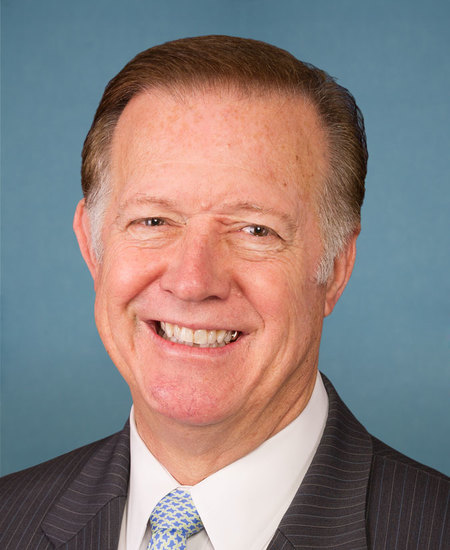
Rep. Randy K. Weber, Sr.
Sponsored bills
Maddy summaryThis bill establishes a temporary funding mechanism for the United States Victims of State Sponsored Terrorism Fund by requiring the Treasury Department to loan $3 billion annually to the fund for fiscal years 2027, 2028, and 2029. The borrowed money must be distributed immediately to victims as part of the annual payment and cannot be saved for future use. Interest on these loans will be set by the Treasury based on market rates and will be repaid only from future fines and penalties collected from state sponsors of terrorism after the fund ends. The authority to make these loans expires on September 30, 2029, and the funds are treated as direct spending rather than new appropriations.
Maddy summaryThe Pipeline Safety Authorization Act of 2026 expands federal oversight of gas and hazardous liquid pipelines by clarifying which smaller rural systems are exempt from regulation and raising maximum civil penalties for safety violations to $3.4 million. It requires the Department of Transportation to establish a confidential voluntary information-sharing system where pipeline operators can safely exchange safety data without fear of it being used in enforcement actions or lawsuits. Additionally, the bill mandates that states adopt specific best practices for preventing excavation damage, such as limiting exemptions for utility locates and requiring positive confirmation before digging begins. The legislation also authorizes funding for these safety programs through 2031 and creates a formal hearing process for enforcement cases involving significant financial costs.
Maddy summaryHR 6213, the Heat Workforce Standards Act of 2025, prohibits the U.S. Department of Labor from finalizing, implementing, or enforcing OSHA's proposed "Heat Injury and Illness Prevention" standard (published August 30, 2024). This bill directly blocks the specific regulatory proposal targeting heat safety in both outdoor and indoor work settings. It does not create new requirements or affect workers; it solely prevents the implementation of the existing OSHA proposal. The bill is procedural, focusing on halting a regulatory action rather than establishing new policy.
Maddy summaryHR 2821, the FDA Modernization Act 3.0, requires the FDA to update regulatory language within one year of enactment. It directs the agency to replace all references to "animal tests" with "nonclinical tests" in 22 specific sections of the Code of Federal Regulations related to drug development and approval processes. The bill also adds a definition for "nonclinical test" into relevant FDA regulations to align with prior legislative changes. This update applies directly to pharmaceutical manufacturers and FDA reviewers who follow these regulatory guidelines during drug development. The changes aim to modernize terminology without altering current testing requirements.
Maddy summaryHR 2715, the *Destruction of Hazardous Imports Act*, expands the authority to destroy imported goods that pose public health risks. It amends the Federal Food, Drug, and Cosmetic Act to allow the Secretary of Health and Human Services to order the destruction of any refused import (not just drugs or devices) if it presents a significant health concern. The bill also prohibits the unauthorized movement, sale, or export of such refused goods. These changes apply to importers of hazardous refused articles 180 days after enactment, with the FDA required to finalize implementing regulations within 90 days.
Maddy summaryThis resolution supports designating July 20, 2026, as "National Moon Landing Day" to honor the historic Apollo 11 mission and the ongoing Artemis program. The bill encourages Americans to celebrate the achievements of NASA astronauts, engineers, and scientists while honoring those who lost their lives during space exploration efforts. It also aims to inspire young people to pursue careers in STEM fields and promote public awareness of the economic and scientific benefits of human spaceflight.
Maddy summaryThis resolution honors the late Senator Lindsey Graham and condemns Omar Suleiman for publicly celebrating Graham's death. It also acknowledges that House Democrats invited Suleiman to serve as a guest chaplain in 2019 and highlights his past statements and affiliations. The measure expresses support for the House Republicans' Sharia-Free America Caucus, which aims to protect constitutional principles from what it describes as an ideology incompatible with American life.
Maddy summaryThe Patients First Act of 2026 modifies how Medicare reimburses physicians and primary care providers to improve access and stabilize payments. It establishes a new hybrid payment model for primary care services from 2027 to 2031, which pays a monthly fee per patient to eligible independent practices while covering specific services like care management and telehealth without cost-sharing for patients. The bill also updates the formula for calculating reimbursement rates to account for high inflation years and requires more frequent updates to the costs used in calculating payments. Additionally, the legislation reforms the performance-based payment system by adding care efficiency measures, creating a task force to recommend new quality metrics, and adjusting penalties for providers who fail to report on certain data.
Maddy summaryHR 7651, the Chloe Cole Act of 2026, prohibits healthcare providers from performing certain medical interventions on minors under 18 aimed at altering physical development to align with gender identity. These "covered interventions" include puberty blockers, hormone treatments, and specific surgeries, but exclude medically necessary care for conditions like disorders of sexual development or traumatic injuries. The bill creates a federal civil lawsuit right for affected minors or their parents against providers who perform such interventions, allowing claims for damages including emotional distress and punitive awards, with strict liability for providers after the law's enactment. It explicitly allows exceptions for legitimate medical treatments and requires providers to prove such exceptions apply if challenged.