No Social Security for Illegal Aliens Act of 2021 This bill prohibits an individual from collecting Social Security benefits based on wages and income earned for services illegally performed in the United States while the individual was an alien.
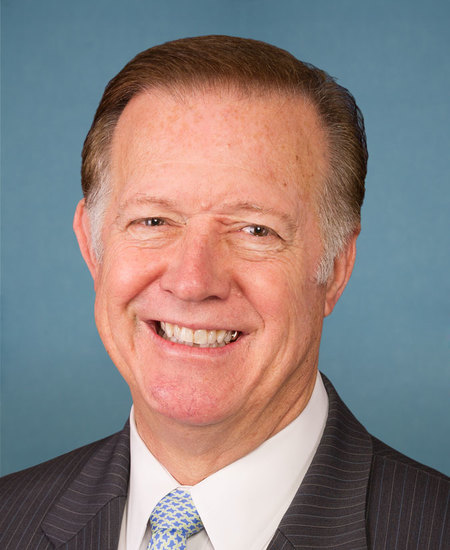
Rep. Randy K. Weber, Sr.
Sponsored bills
No Tax Breaks for Sanctuary Cities Act This bill denies a tax exclusion for the interest on bonds issued by sanctuary jurisdictions. A sanctuary jurisdiction is a governmental entity that has a statute in effect that restricts cooperation with the federal government regarding the citizenship or immigration status of any individual or that prohibits compliance with a request by the Department of Homeland Security with a detainer for, or notification about the release of, an individual.
This bill terminates the Department of Education on December 31, 2022.
Education Freedom Scholarships and Opportunity Act This bill allows individual and corporate taxpayers a tax credit for cash contributions to tax-exempt scholarship-granting organizations for elementary and secondary education expenses. It imposes a cap of $5 billion on the amount of contributions that qualify for a tax credit. The bill directs the Department of Education, in coordination with the Department of the Treasury, to establish, host, and maintain a web portal that (1) lists all eligible scholarship-granting organizations; (2) enables contributions to such organizations; (3) provides information about the benefits of this bill; and (4) enables a state to submit and update information about its programs and scholarship-granting organizations, including information on student eligibility and allowable educational expenses.
This resolution supports the designation of Career and Technical Education Month to celebrate career and technical education across the United States.
Union Accountability Act This bill nullifies the executive order titled Protecting the Federal Workforce , which was issued on January 22, 2021. The order revoked previous executive orders concerning federal-employee collective bargaining and classifications. Specifically, it revoked orders that limited the use of unrestricted grants for union activity, specified objectives for agencies to negotiate collective-bargaining agreements and established the Interagency Labor Relations Working Group, established principles for the removal and discipline of federal employees and other personnel issues, and placed certain executive agency positions under a new schedule in the excepted service instead of the competitive service. The order also instructs agencies to engage in collective bargaining negotiations over certain non-mandatory subjects, and requires the Office of Personnel Management to provide the President with recommendations to promote a minimum wage of $15 an hour for federal employees.
Tax Identity Protection Act This bill directs the Internal Revenue Service to report on the Taxpayer Identification Number Perfection Program, including an explanation of the extent to which program information could be used to identify individuals receiving wages without work authorization.
No Vote, No Raise Act This bill eliminates automatic pay adjustments for Members of Congress.
This bill requires the President, Vice President, and all officers and employees in the executive branch to comply with each executive order that imposes a mandate on the people of the United States. The bill makes an exception with respect to members of the uniformed services.
Free Speech Fairness Act This bill permits a tax-exempt organization to make certain statements related to a political campaign without losing its tax-exempt status. An organization may not lose its tax-exempt status under section 501(c)(3) of the Internal Revenue Code or be deemed to have participated in, or intervened in any political campaign on behalf of (or in opposition to) any candidate for public office, solely because of the content of any statement that (1) is made in the ordinary course of the organization's regular and customary activities in carrying out its exempt purpose, and (2) results in the organization incurring not more than de minimis incremental expenses.