Maddy summaryHR 5926, the Mexican Energy Trade Enforcement Act, requires the U.S. Trade Representative to take specific actions to enforce Mexico's obligations under the USMCA regarding energy trade. It mandates either requesting a dispute resolution panel with Mexico under USMCA rules or demanding Mexico provide non-discriminatory market access for U.S. energy companies during the first USMCA review. The bill directly affects U.S. energy companies operating in Mexico and exporting energy to Mexico, which faced alleged preferential treatment of Mexico's state-owned energy firms (CFE and Pemex). The USTR must report to Congress within 90 days on actions taken under the law.
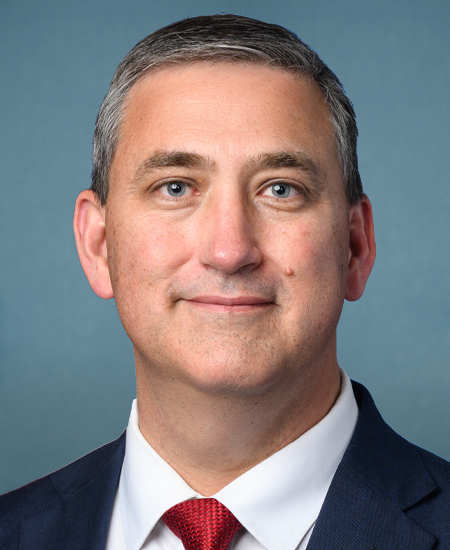
Rep. Nathaniel Moran
Sponsored bills
Maddy summaryThis bill requires semiconductor exporters to offer U.S. companies priority access to advanced chips before exporting them to entities in designated "countries of concern" (like China, Hong Kong, or Macau). Export license applications must include certification that U.S. buyers were given a 15-day right of first refusal, and applications lacking this certification will be denied. It creates an exemption for transactions destined for non-restricted countries where the chips remain under the control of a "trusted U.S. person" meeting security and ownership standards. The law directly affects chip manufacturers, exporters, and U.S. companies seeking to purchase advanced semiconductors for domestic use.
Maddy summaryThis bill streamlines approval for natural gas exports by creating an expedited process under the Natural Gas Act. It removes the requirement for formal approval orders when exporting to Canada or Mexico. Exports to nations under U.S. sanctions or designated by the President/Congress for national security reasons are excluded from the expedited process. The bill directly affects natural gas exporters seeking to expand international sales, primarily changing the application and approval procedures for foreign markets.
Maddy summaryThis bill adds Medicare coverage for multi-cancer early detection screening tests (blood or biological tests analyzing cell-free DNA) starting January 1, 2028. It directly affects Medicare beneficiaries aged 68 and older (starting in 2028, with the age limit increasing by 1 year annually), requiring tests to be FDA-cleared and deemed reasonable/necessary by the Secretary for early cancer detection across multiple organ sites. Payment will initially match current stool DNA test rates before 2031, then shift to a lower rate or new payment system after 2031, with limits preventing more than one test per year. The bill explicitly states it does not alter coverage for existing cancer screenings like breast, colorectal, or prostate cancer tests.
Maddy summaryThis bill would require all states to recognize valid concealed carry permits issued by other states, allowing permit holders to carry concealed handguns (excluding machine guns) in any state that either issues such permits or doesn't prohibit concealed carry. It directly affects law-abiding gun owners with valid permits from their home state, ensuring they can carry in states with similar permit systems or no prohibitions. Key provisions include treating valid permit documents as proof of legal carry (reducing officer stops), shifting the burden of proof to prosecutors if challenged, and allowing civil lawsuits for violations with attorney's fee awards. The bill does not override state laws restricting firearms on private property or government land, nor does it affect federal gun restrictions like those in section 922(q).
Maddy summaryHR 5636, the *Protect Consumers from Reallocation Costs Act of 2025*, prevents the Environmental Protection Agency from shifting renewable fuel obligations from small refineries with extended exemptions to other companies. It directly affects small refineries that have received extended exemptions under the Clean Air Act. The bill requires the EPA to include gasoline or diesel refined by these exempt refineries in the total fuel volume calculations for the year, rather than excluding it or reallocating the obligation. This change ensures small refineries’ production is counted toward overall fuel volume, preventing other entities from bearing their renewable fuel requirements. The law modifies Section 211(o)(9) of the Clean Air Act (42 U.S.C. 7545(o)(9)).
Maddy summaryHR 5580, the Charlie Kirk Commemorative Coin Act, authorizes the U.S. Mint to produce 400,000 $1 silver coins in 2026 to honor Charlie Kirk, founder of Turning Point USA, who died in 2025. The coins must feature Kirk's image on the obverse and "well done, good and faithful servant" on the reverse, with standard minting specifications. They will be sold at face value plus production costs to collectors, with no net cost to the government. This bill has no policy impact beyond commemoration; it affects only the U.S. Mint and coin collectors.
Maddy summaryThe SAVES Act (HR 2605) creates a 5-year pilot program where the Department of Veterans Affairs (VA) awards competitive grants to nonprofit organizations to provide service dogs to veterans with specific disabilities. It directly affects veterans with covered conditions like blindness, mobility impairments, PTSD, traumatic brain injury, or other disabilities deemed appropriate for service dog assistance by the VA. Key provisions include: grants capped at $2 million per nonprofit (with $10 million annually authorized), no fees charged to veterans, VA-provided lifetime veterinary insurance for the dogs, and requirements for nonprofits to train veterans and maintain humane animal standards. The program aims to expand access to service dogs as a support tool for veterans managing qualifying disabilities.
Maddy summaryHR 5507, the Hidden Foster Care Transparency Act, requires states to report detailed data on "hidden foster care arrangements" - situations where children are separated from parents without court oversight or formal foster care placement (e.g., through CPS suggestions for informal family placements). States must track metrics like the number of affected children, types of allegations leading to separations, whether parents received legal help within 72 hours, and how arrangements ended (e.g., reunification or entry into formal foster care). The Secretary of Health and Human Services will compile this data into an annual report for Congress, ensuring standardized national tracking. This bill directly affects children in informal arrangements, their parents, and state child welfare agencies by mandating transparency in practices currently lacking court oversight.
Maddy summaryHR 5493, the USA Workforce Investment Act, creates a federal tax credit for individual taxpayers who donate cash to approved workforce development or apprenticeship training programs. It directly affects U.S. individual taxpayers who contribute to qualifying 501(c)(3) organizations listed under the Workforce Innovation and Opportunity Act. The bill allows a credit of up to $1,700 per year for such donations, with adjustments for state tax credits and a prohibition on double-deducting the same contribution. Unused credit can be carried forward for up to five years.