

This resolution expresses the sense of the House of Representatives that the United States should urge Russia, Ukraine, and other groups involved in the war in Ukraine to implement an immediate cease-fire and engage in negotiations to end the bloodshed, while demanding that Russia withdraw its forces from Ukraine, the Ukrainian oblasts of Donetsk and Luhansk, and the Ukrainian Autonomous Republic of Crimea; the President should direct the U.S. representative to the United Nations to use the voice, vote, and influence of the United States to immediately promote the establishment of an international justice mechanism for Russian war crimes and other crimes against Ukraine, and to prosecute the perpetrators of such serious crimes committed during the period of conflict in Ukraine; and the United States should urge all other interested states to apprehend persons indicted for international crimes, deliver them into the custody of an appropriate justice mechanism for Russian war crimes and other crimes against Ukraine, and provide any and all data and information pertaining to such crimes to that justice mechanism.
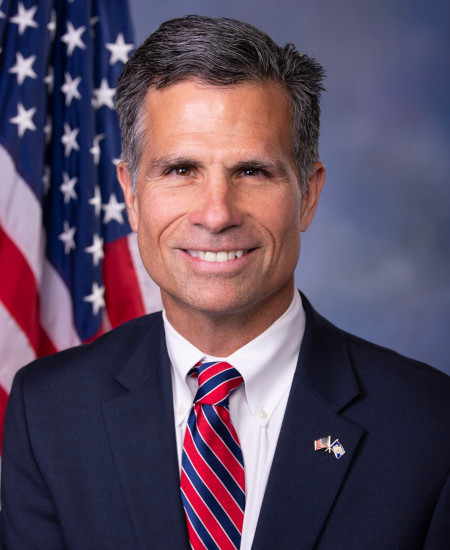
Rep. Daniel Meuser
Sponsored bills
Ban Russian Energy Imports Act This bill declares that a national emergency exists with respect to the aggression of Russia against Ukraine. During this emergency, the President must prohibit the importation of crude oil, petroleum, petroleum products, liquefied natural gas, and coal in which Russia or a Russian national has any interest. The bill exempts products that are already loaded or in transit at the time of this bill's enactment.
Stop the Nosy Obsession with Online Payments Act of 2022 or the SNOOP Act of 2022 This bill modifies requirements for third party settlement organizations to eliminate their reporting requirement with respect to the transactions of their participating payees unless they have earned more than $20,000 on more than 200 separate transactions in an applicable tax period. A third party settlement organization is the central organization that has the contractual obligation to make payments to participating payees (generally, a merchant or business) in a third party payment network. This reverses a provision in the American Rescue Plan Act of 2021 that lowered the reporting threshold to $600 with no minimum on the number of transactions.
No Energy Revenues for Russian Hostilities Act of 2022 This bill prohibits, with some exceptions, the Department of the Treasury from authorizing certain energy-related transactions that would otherwise be blocked by an executive order barring transactions related to specified harmful foreign activities of the Russian government. The bill also revokes a license issued February 28, 2022, by the Office of Foreign Assets Control within Treasury that authorized certain transactions barred by the executive order. The bill allows a waiver from the limitation on an energy transaction if the transaction involves funds owed to a Russian person and the funds are to be used for the sale of agricultural commodities, food, medicine, or medical devices. The bill terminates on the earlier of five years after its enactment, or 30 days after the President reports to Congress that Russia has ceased activities destabilizing the sovereignty and territorial integrity of Ukraine.
This resolution extends warm congratulations and best wishes to the people of Bahrain as they celebrate the 50th anniversary of the independence of Bahrain. The resolution also expresses support for the principles and freedoms upon which the nation of Bahrain is founded, as protected by its Constitution. Finally, the resolution recognizes the importance of the alliance between the United States and Bahrain to the stability of the region and the prosperity of both countries.
This resolution supports reopening the U.S. Capitol Building and House Office Buildings to visitors under the public visitation policies that were in place before the COVID-19 pandemic.
Health Care for Burn Pit Veterans Act This bill updates policies and procedures related to Department of Veterans Affairs (VA) health care and benefits for veterans who have been exposed to toxic substances. Specifically, the bill extends the eligibility period for VA hospital care, medical services, and nursing home care for combat veterans who served after September 11, 2001, and were exposed to toxic substances, radiation, or other conditions, including those who did not enroll to receive VA care during the eligibility period. The VA must incorporate into its existing health care screening a screening to help determine potential exposures to toxic substances during military service. Among other requirements, the VA must also provide annual training to health care and benefits personnel with respect to veterans who were exposed to toxic substances; analyze total and respiratory disease mortality in veterans who served in specified locations on specified dates; conduct an epidemiological study on the health trends of veterans who served in the Armed Forces after September 11, 2001; conduct a study to determine trends in the rates of the incidence of cancer in veterans; publish a list of VA resources for veterans who were exposed to toxic substances, families and caregivers of such veterans, and survivors of such veterans who are receiving death benefits; and report on the data quality of the Individual Longitudinal Exposure Record and its usefulness in supporting veterans in receiving VA health care and benefits.
Protecting Family and Small Business Tax Cuts Act of 2022 This bill makes permanent provisions affecting individual and business taxpayers that were enacted in 2017 by the Tax Cuts and Jobs Act and are scheduled to expire at the end of 2025. The bill makes permanent provisions that reduce individual and capital gain tax rates. The bill increases the standard tax deduction for individual taxpayers. It also increases and modifies the child tax credit and raises the contribution base for the tax deduction of charitable contributions. The bill allows additional contributions to ABLE accounts (tax-exempt accounts designed to enable individuals with disabilities to save and pay for disability-related expenses). It exempts from taxation combat zone benefits of members of the Armed Forces serving in the Sinai Peninsula of Egypt and the moving expenses of servicemembers. Additionally, the bill lowers to $750,000 the amount of mortgage debt eligible for an interest expense tax deduction; excludes from the gross income of student borrowers income attributable to the discharge after 2025 of loan debt due to death or disability; makes permanent the limitation on the tax deduction for state and local taxes and denies a deduction for foreign real property taxes; makes permanent the tax deduction of the income of certain pass-through business entities; repeals the tax deduction for personal tax exemptions and the exclusion of employer-provided bicycle commuter fringe benefits; terminates certain miscellaneous itemized tax deductions; doubles the estate and gift tax exemption amount; and makes permanent the increase of the alternative minimum tax exemption amount for individual taxpayers.
Denying Regulatory Interference with Landowners and Legislatures Now Act or the DRILL Now Act This bill bars the Susquehanna River Basin Commission, the Delaware River Basin Commission, and the Interstate Commission on the Potomac River Basin from finalizing, implementing, or enforcing any regulation relating to hydraulic fracturing unless it is issued by the state in which the regulation is to be implemented or enforced.
DMEPOS Relief Act of 2022 or the DRA of 2022 This bill increases payment adjustments for certain items that were included in Round 2021 of the Medicare Durable Medical Equipment, Prosthetics, Orthotics, and Supplies (DMEPOS) Competitive Bidding Program but for which contracts were not executed. The bill applies to items that are furnished between January 1, 2022, and December 31, 2023, and that were not subject to the unadjusted fee schedule amount as of January 1, 2021. Under the DMEPOS Competitive Bidding Program, the Centers for Medicare & Medicaid Services (CMS) sets payment for certain durable medical equipment under Medicare based on a competitive bidding process with suppliers, rather than the fee schedule amount. The CMS included 16 product categories in Round 2021 of the program but ultimately did not award contracts for 13 of these categories (that were also in previous rounds) as the resulting payment amounts did not achieve expected savings.