Maddy summaryThe Bank Failure Prevention Act of 2025 (HR 1900) streamlines the approval process for bank holding company applications. It requires the Federal Reserve Board to notify applicants within 30 days if their application is complete or needs more information, with a possible 30-day extension for complex cases. The bill mandates that the Board must approve or deny applications within 90 days of submission, automatically granting approval if they miss this deadline. This directly affects banks seeking regulatory approvals for mergers or acquisitions by reducing delays in the review process.
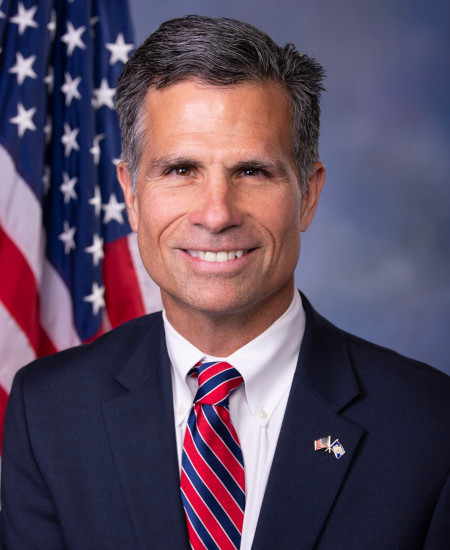
Rep. Daniel Meuser
Sponsored bills
Maddy summaryHR 1804, the 7(a) Loan Agent Oversight Act, requires the Small Business Administration (SBA) Director to submit an annual report to Congress detailing activities of 7(a) loan agents. The report must include data on the number of agents by type, fraudulent loans involving agents, loan purchase rates, referral fees paid (and by whom), risk analysis for top agents, interest rate comparisons, and SBA communication methods with agents. This bill directly affects SBA administrators (who must produce the report) and 7(a) loan agents (whose activities are monitored through the report). It does not change loan terms or create new programs, but instead mandates transparency around agent services and potential risks in the SBA's 7(a) loan program. The bill focuses on improving oversight through detailed reporting, not on altering the loan process itself.
Maddy summaryHR 1286, the Simplifying Forms for Veterans Claims Act, requires the Department of Veterans Affairs (VA) to simplify forms sent to veterans filing claims. Within 30 days of enactment, the VA must hire an independent research center (FFRDC) to assess these forms, working with veterans' groups, legal experts, and the VA itself. The VA must then report the assessment to Congress within 90 days and implement approved changes - like clearer language or better organization - within two years. This directly affects veterans navigating VA claims by aiming to reduce confusion in the application process.
Maddy summaryHR 513, the Offshore Lands Authorities Act of 2025, reverses multiple existing presidential protections that blocked oil and gas leasing on offshore federal lands. It nullifies 8 specific presidential withdrawals (including areas in the Arctic, Atlantic, Gulf of Mexico, and Pacific) and restricts future presidential actions by limiting withdrawals to 150,000 acres per action, capping them at 20 years, and requiring Congressional approval for cumulative withdrawals exceeding 500,000 acres. The bill mandates that before any withdrawal, the Secretary must complete four assessments covering mineral resources, economic/energy value, revenue impacts, and national security. It also establishes a fast-track process for Congress to disapprove withdrawals within 20 days, with limited debate (10 hours) on the resolution.
Maddy summaryHR 3437, the Insurance Data Protection Act, prevents duplicate data collection from insurance companies by requiring federal financial regulators to coordinate with state insurance regulators before gathering data already available through other channels. It reinforces confidentiality by ensuring that sharing nonpublic data with federal regulators does not waive privacy protections under federal or state law, and maintains existing confidentiality agreements. The bill also establishes that data shared with regulators can only be provided to state regulators through new agreements that comply with privacy laws. This directly affects insurance companies (as "covered entities"), federal financial regulators, and state insurance regulators. The key change is creating a formal process to avoid redundant data requests while strengthening data privacy for the insurance industry.
Maddy summaryThis bill changes the governance structure of the Consumer Financial Protection Bureau (CFPB) from a single Director to a 5-member commission. The commission would require at least 2 members with private sector financial experience and at least 1 member with State bank supervision experience, all appointed by the President with Senate confirmation. The bill updates references to "Director" throughout various laws to "Commission" or "Chair" to reflect this new structure. These changes aim to create a more balanced leadership model for the Bureau while maintaining its regulatory authority over consumer financial products and services.
Maddy summaryThis bill creates a federal tax credit for businesses that purchase and use retreaded tires manufactured and sold within the United States. The credit equals 30% of qualified retreaded tire expenses, up to $30 per tire, and applies to tires placed in service after December 31, 2025, through 2028. It also requires federal agencies to select retreaded tires from the GSA schedule when available, instead of new tires, and mandates updates to federal procurement rules within one year. The policy directly affects U.S. tire retreading businesses, commercial vehicle operators, and federal procurement offices.
Maddy summaryHRES 364 is a non-binding resolution urging local communities to support nonprofits that provide resources to Gold Shield Families. These families include relatives of fallen first responders - such as police officers, firefighters, EMTs, and emergency dispatchers - who died while serving in the line of duty. The resolution does not create new laws but encourages community engagement with existing support organizations. It aims to assist these families during their time of hardship and grief by promoting the use of available resources.
Maddy summaryHR 3353, the Lieutenant Osvaldo Albarati Stopping Prison Contraband Act, increases penalties for providing prohibited items like phones to prisoners in federal custody, imposing up to two years in prison for violations involving such items. The bill requires the Bureau of Prisons to review and update its policies within one year of enactment to better address contraband possession by inmates, aiming to improve safety for both incarcerated individuals and staff. It specifically amends federal law to clarify penalties for trafficking prohibited objects, including phones, under Section 1791 of Title 18. The legislation directly affects federal prison operations, inmates, and staff by targeting contraband trafficking and mandating policy reforms.
Maddy summaryHR 3277, the Ensuring Lasting Smiles Act, requires group health plans and health insurance issuers to cover medically necessary outpatient and inpatient treatments for congenital anomalies or birth defects primarily affecting the eyes, ears, teeth, mouth, or jaw. This includes reconstructive procedures, dental/orthodontic support during treatment, and follow-up care, but excludes purely cosmetic surgery not tied to a medical diagnosis. Cost-sharing (like copays) for these services must not be stricter than for other medical benefits. The law takes effect for plan years beginning January 1, 2026, and mandates insurers to provide notice about this coverage to beneficiaries.