Maddy summaryHR 2965, the Small Business Regulatory Reduction Act of 2025, requires the Small Business Administration (SBA) to ensure that the cost to small businesses from federal agency rulemaking (including new rules, modifications, or repeals) does not exceed zero starting in fiscal year 2026. It mandates the SBA’s Office of Advocacy to annually report to Congress on all federal rules affecting small businesses, broken down by the issuing agency. The bill applies to all federal agencies, not just the SBA, and focuses on controlling regulatory costs for small businesses. No new funding is provided to implement these requirements.
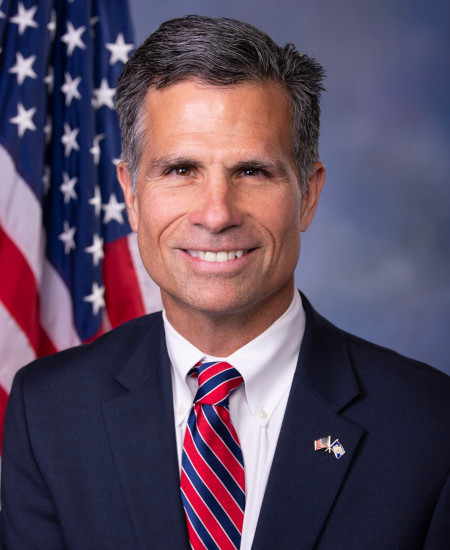
Rep. Daniel Meuser
Sponsored bills
Maddy summaryThis bill establishes a new interagency Task Force to dismantle foreign scam operations targeting Americans, particularly through "pig butchering" scams in Southeast Asia. The Task Force, chaired by the Secretary of State, will coordinate efforts across multiple agencies to shut down scam centers, impose sanctions on perpetrators, and support victims of trafficking. It requires a detailed strategy within 180 days and annual reports to Congress on progress, including sanctions imposed and funds recovered. The bill authorizes $30 million for these efforts in fiscal years 2026-2027, focusing on countries like Cambodia, Laos, and Burma where scam centers operate with forced labor.
This bill reduces the required aggregate market value of voting and non-voting common equity shares for an issuer of securities to qualify as a well-known seasoned issuer. A well-known seasoned issuer is allowed to make expedited public offerings of securities through automatic shelf registrations.
Give Kids a Chance Act of 2025 This bill expands the Food and Drug Administration’s (FDA’s) authority with respect to research on rare pediatric diseases, including by permitting the FDA to take enforcement action against drug sponsors that fail to satisfy pediatric study requirements and by reauthorizing programs that support pediatric research. Specifically, the bill modifies requirements relating to molecularly targeted pediatric cancer investigations to permit research on new drugs in combination with active ingredients that have already been approved, provided certain conditions are met; permits the FDA to take enforcement action against drug sponsors that fail to comply with pediatric study requirements, if such sponsors demonstrated a lack of due diligence in satisfying the requirement; renews the FDA’s authority to award priority review vouchers to sponsors of new products intended to treat rare pediatric diseases through September 30, 2029; and reauthorizes through FY2027 certain funding for the National Institutes of Health to support priority pediatric research. The bill also provides statutory authority for the FDA’s interpretation of the orphan drug exclusivity period. The bill specifies, consistent with FDA regulations, that the seven-year market exclusivity period for drugs for rare diseases or conditions (i.e., orphan drugs) prohibits the approval of the same drug for the same approved use or indication with respect to the disease or condition. (In Catalyst Pharmaceuticals, Inc. v. Becerra , a court rejected the FDA’s interpretation and held that orphan drug exclusivity extends to all uses or indications for the disease or condition.)
Maddy summaryThe HUD Transparency Act of 2025 requires the Inspector General of the Department of Housing and Urban Development (HUD) to testify annually before specific congressional committees. Each October 1, the IG must report on six key areas: fraud prevention efforts, audit capabilities, program improvements, efficiency recommendations, resource sufficiency for HUD’s mission, and ongoing oversight activities. This bill directly affects HUD’s Inspector General and Congress, mandating structured, annual accountability reporting. It creates a concrete mechanism for Congress to monitor HUD’s oversight effectiveness without altering HUD’s programs or funding. The law focuses on transparency in existing oversight processes, not new policy changes.
Maddy summaryThis bill updates securities laws to expand exemptions for retirement plans used by charities and educational institutions. It specifically modifies definitions in the Investment Company Act, Securities Act, and Securities Exchange Act to include 403(b) plans meeting certain conditions - such as being subject to ERISA, having employer fiduciary oversight, or being governmental plans. These changes reduce regulatory hurdles for organizations offering these plans, making it easier to administer retirement benefits for their employees. The bill directly affects charities, schools, and other non-profits that sponsor 403(b) retirement plans.
Maddy summaryHR 6121, the Promoting Physical Activity for Americans Act, requires the Secretary of Health and Human Services to publish science-based physical activity recommendations for the U.S. public every 10 years, starting by December 31, 2029. These reports must include evidence-based guidance for general populations and specific subgroups like children or people with disabilities, and must be updated every 5 years after the first report. Federal agencies must consider these recommendations when developing their own physical activity guidelines, though the bill explicitly states no federal fitness standards established under it will be binding on individuals. The act does not affect existing biomedical research or scientific communication by federal agencies.
Maddy summaryHR 6161, the SEC Data Protection Act, requires the Securities and Exchange Commission (SEC) to establish policies protecting sensitive nonpublic data provided by investment advisers. The bill mandates that within one year of enactment, the SEC create rules addressing when it requests such data, safeguarding it based on sensitivity, restricting access to authorized staff, and preventing unauthorized use or disclosure. These policies must be developed through a notice-and-comment rulemaking process. The law directly affects investment advisers who share proprietary information with the SEC, ensuring their data is handled securely under new federal standards.
Maddy summaryHRES 891 is a ceremonial House resolution supporting the designation of National Rural Health Day, observed annually on the third Thursday of November (November 20, 2025, this year). It recognizes rural health care providers and the challenges rural communities face in accessing care, citing issues like hospital closures and workforce shortages. The resolution does not create new policies, funding, or requirements; it solely expresses the House's support for the day's goals and commitment to improving rural health accessibility. This is a non-binding acknowledgment, not a legislative action with concrete policy changes.
Maddy summaryHRES 826 is a symbolic resolution supporting the designation of October 20-24, 2025, as "Careers in Energy Week." It raises awareness about energy sector job opportunities - spanning traditional and renewable energy fields, technical roles, and STEM education - to encourage students and young professionals to pursue these careers. The resolution does not create new laws or funding but urges educational institutions, industry groups, and communities to host events during this week. It directly affects public awareness of energy workforce pathways, not specific individuals or regulations.