

Special Drawing Rights Oversight Act of 2021 This bill imposes additional restrictions on the U.S. government's authority to vote on Special Drawing Rights (SDR) allocations at the International Monetary Fund (IMF). (The SDR is an international reserve asset maintained by the IMF based on contributions from IMF member countries. SDRs may be exchanged between member countries and may also be exchanged for currencies.) Under current law, U.S. representatives to the IMF may not vote for SDR allocations to the United States beyond an amount authorized by statute unless Congress authorizes such a vote. This bill further reduces the allocation amount that U.S. representatives to the IMF may vote for without congressional approval. Furthermore, U.S. representatives to the IMF may not vote for SDR allocations to a country if the President finds that the country's government has (1) committed genocide in the last 10 years, or (2) repeatedly supported international terrorism.
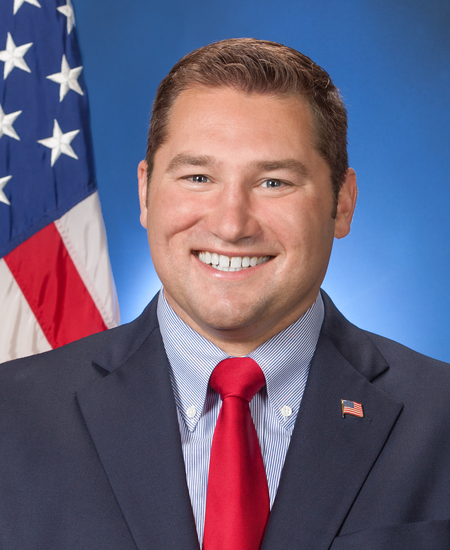
Rep. Guy Reschenthaler
Sponsored bills
No Social Media Accounts for Terrorists or State Sponsors of Terrorism Act of 2021 This bill bars access to certain social media platforms by individuals designated as terrorists or senior officials of a government that is a state sponsor of terrorism. Specifically, the bill requires the President to prohibit providers of social media platforms (i.e., platforms that allow users to generate and share content and that have over 100,000 active users) from making such platforms available to barred individuals or officials. The bill does, however, allow officials to use these platforms solely for legitimate emergency alert purposes. Violations of this prohibition are subject to civil and criminal penalties. In addition, the President may waive the prohibition in the interests of U.S. national security. The Department of the Treasury must report to Congress on (1) the status and impact of the prohibitions of this bill, and (2) efforts to facilitate the free flow of information and access to communications technologies by civil society and democratic activists in Iran, Syria, North Korea, Cuba, and other countries controlled by authoritarian regimes.
Improving College Affordability for our Guard and Reserve Act This bill authorizes all members of the Armed Forces—including reservists or those in the National Guard and regardless of their duty status—to claim independent student status when applying for federal financial aid. Currently, active duty service members and veterans of the Armed Forces may claim such independent student status.
Keep Huawei on the Entity List Act This bill continues export controls on Huawei Technologies Co. Ltd., and it requires the Department of Commerce to designate Honor Device Co. Ltd. for inclusion on the list of entities subject to certain license requirements for exports. The bill prohibits Commerce from removing Huawei (or its subsidiaries or affiliates) from the entity list unless Commerce certifies that Huawei (1) has not engaged in activities that are contrary to U.S. national security or foreign policy interests and is unlikely to do so in the future; and (2) is not owned, controlled, or influenced by the Communist Party of China. Commerce must submit a monthly report identifying and describing all license applications to export, reexport, or transfer (in-country) certain items to Huawei or Honor, as well as whether those applications were approved or denied.
Military Spouses Retirement Security Act This bill allows a small business employer a tax credit for each employee who is a military spouse and eligible to participate in the employer's defined contribution retirement plan.
The COVID-19 Hospital and Health Provider Loan Conversion Act of 2021 This bill establishes and otherwise modifies requirements for the Medicare Accelerated and Advance Payment Program during the public health emergency relating to COVID-19 (i.e., coronavirus disease 2019). The program provides Medicare payments in advance to eligible providers experiencing claims or cash flow disruptions, such as during national emergencies; the program was specifically expanded in response to COVID-19 to encompass more types of providers, subject to certain recoupment and repayment provisions. The bill requires the Centers for Medicare & Medicaid Services to waive recoupment and repayment for providers who meet specified requirements. Among other criteria, providers must not have engaged in surprise billing practices with respect to COVID-19 patients. Providers must still repay any amounts not used for COVID-19 expenses; the bill caps the interest rate on such repayments at 2% upon a demonstration of hardship. The bill also requires private health insurers to treat out-of-network COVID-19 services as in-network for purposes of payment and cost-sharing.
Protecting American Energy Production Act This bill prohibits the President from declaring a moratorium on the use of hydraulic fracturing unless Congress authorizes the moratorium. The bill also expresses the sense of Congress that states should maintain primacy for the regulation of hydraulic fracturing for oil and natural gas production on state and private lands.
Hearing Protection Act This bill removes silencers from the definition of firearms for purposes of the National Firearms Act. It also treats persons acquiring or possessing a firearm silencer as meeting any registration and licensing requirements of such Act. The Department of Justice must destroy certain records relating to the registration, transfer, or making of a silencer. The bill also revises the definitions of firearm silencer and firearm muffler under the federal criminal code and includes such items in the 10% excise tax category.
Concealed Carry Reciprocity Act This bill establishes a federal statutory framework to regulate the carry or possession of concealed firearms across state lines. Specifically, an individual who is eligible to carry a concealed firearm in one state may carry or possess a concealed handgun (other than a machine gun or destructive device) in another state that allows its residents to carry concealed firearms. It sets forth requirements for the lawful concealed carry across state lines. The bill preempts most state and local laws related to concealed carry and establishes a private right of action for a person adversely affected by interference with a concealed-carry right established by this bill.
Main Street Tax Certainty Act This bill makes permanent the tax deduction for qualified business income. (Under current law, the deduction expires after December 31, 2025.) Qualified business income is defined as the net amount of qualified items of income, gain, deduction and loss with respect to any trade or business, excluding capital gains or losses, dividends, interest income, or income earned outside the U.S.