Repealing Big Brother Overreach Act This bill repeals the Corporate Transparency Act. The act requires existing companies and newly created companies to report beneficial ownership information to the Department of the Treasury’s Financial Crimes Enforcement Network for purposes of addressing the financing of terrorism and money laundering.
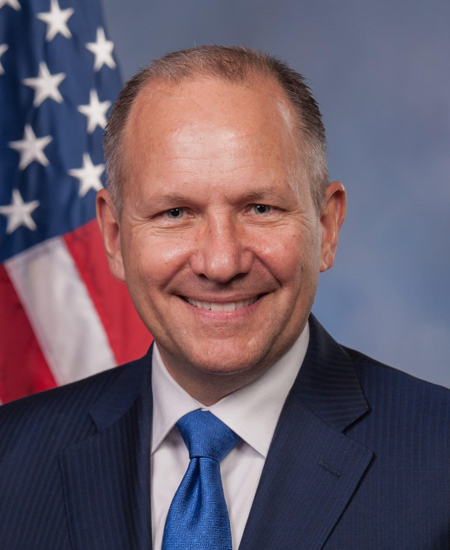
Rep. Lloyd Smucker
Sponsored bills
Maddy summaryThe Protecting Kids from Creeps Act prohibits surrogacy agencies, their employees, and sex offenders from participating in surrogacy agreements, directly affecting fertility clinics, staff, and individuals required to register as sex offenders. The bill mandates severe criminal penalties, including fines and prison sentences of at least 10 to 20 years, for knowingly or recklessly facilitating such agreements, while also stripping convicted agencies of their tax-exempt status and eligibility for federal grants. Any surrogacy agreement formed in violation of these rules is declared legally void and unenforceable, meaning it cannot be used to establish parental rights. In cases where a child is born from an illegal agreement, custody decisions will be made solely based on the best interests of the child under the laws of the state where the surrogate lives, ignoring any prior contracts. Additionally, the Attorney General can pursue civil penalties equal to the compensation received or offered for prohibited conduct.
Maddy summaryThis bill, the Provider Reimbursement Stability Act of 2026, aims to create more predictable payment adjustments for physicians and other healthcare providers under the Medicare program. It directly affects medical practices and providers who receive reimbursement for services through the physician fee schedule. The legislation increases a threshold for certain budget neutrality calculations from $20 million to $54.3 million in 2027, with automatic increases every five years thereafter. It also requires the government to correct payment estimates when actual service usage differs significantly from projections, mandates regular updates to cost calculations for practice expenses, and limits how much Medicare payment rates can change from year to year to a maximum of 2.5 percent.
Maddy summaryThe Smithsonian American Women’s History Museum Act authorizes the creation of a new Smithsonian museum dedicated to women’s history, to be located within the National Mall Reserve in Washington, D.C. If the site is managed by another federal agency, the bill requires that agency to transfer the land after notifying Congress and relevant committees. The museum must ensure exhibits and programs accurately represent diverse women’s experiences by consulting a broad range of experts and community voices. The Smithsonian will submit biennial reports to Congress detailing how the museum meets these representation standards.
Maddy summaryThe CAL Repayment Act requires states to immediately use any federal funds received for unemployment insurance to repay outstanding advances before spending them on other purposes. This rule applies to all states and mandates that they make these repayments within five business days of the funds becoming available. If a state fails to follow this order and uses the money elsewhere first, it must return the full amount to the federal government within five days of being notified. The law takes effect for any unemployment insurance funds awarded after the bill is enacted.
Maddy summaryThis bill, known as the Medicare Payment Integrity Enhancement Act of 2026, allows contractors hired to audit Medicare claims to review them before payments are made. Under current rules, these auditors can only check claims after money has already been sent out, but this legislation would expand their authority to stop improper payments in advance. To support this new role, the bill changes how these contractors are paid by linking their compensation to the amount of money they successfully prevent from being paid out incorrectly. Additionally, it requires the government to create a specific funding plan that transfers money from Medicare trust funds to cover these prepayment review costs. The law also mandates that the health department issue rules within a year to explain exactly how contractor pay and savings calculations will work.
Clergy Act This bill establishes a two-year window for certain members of the clergy and Christian Science practitioners to revoke their exemption from Social Security and Medicare taxes on ministerial earnings. Under current law, such individuals who object to participation in public insurance programs on religious or conscientious grounds may apply to the Internal Revenue Service (IRS) for an irrevocable exemption and will not receive Social Security or Medicare benefits in retirement unless they have qualifying credits from other employment. The IRS must develop a plan to inform members of the clergy and Christian Science practitioners of their eligibility to revoke prior exemptions, pursuant to the bill's changes.
Maddy summaryThe "Accountable Produce is Medicine Act of 2026" mandates the creation of a new pilot program within the Center for Medicare and Medicaid Innovation. This program requires selected healthcare providers to offer a comprehensive set of "Accountable Produce is Medicine services" to eligible Medicare, Medicaid, and CHIP beneficiaries. These services, provided without patient cost-sharing, include healthy foods (like fruits and vegetables), nutrition counseling, care coordination, and remote monitoring for individuals with specific chronic diseases in underserved areas. Participating programs will screen patients, deliver these services for a year, and track health data to evaluate outcomes and cost savings over a period of at least five years.
Maddy summaryThe Senior Citizens’ Freedom to Work Act of 2026 aims to repeal the Retirement Earnings Test (RET) for Social Security beneficiaries. This means that individuals collecting Social Security benefits, including those under the Railroad Retirement program, would no longer have their benefits reduced if they continue to work and earn above a certain income threshold. The bill achieves this by repealing specific subsections of the Social Security Act and making conforming amendments across related benefit provisions. This change directly affects senior citizens and other beneficiaries who choose to remain employed while receiving their benefits, ensuring they receive their full entitlement. The provisions of this act are set to take effect for taxable years ending after December 31, 2026.
Maddy summaryThis resolution expresses support for the Working Families Tax Cuts, a law already enacted in July 2025 that provides various tax benefits to American taxpayers. The bill directly affects individuals and families by recognizing specific provisions that reduce tax liability, including expanded child tax credits, increased standard deductions, and tax relief for tipped workers and overtime pay. Key provisions include making a four-person household earning under $73,000 generally face zero federal income tax, increasing the child tax credit to $2,200 per child, and allowing 529 accounts to cover K-12 and trade school expenses. The resolution also acknowledges tax relief for seniors, auto loan interest deductions for American-made vehicles, and expanded health savings account access. This is a procedural measure that formally acknowledges existing tax policies rather than creating new legislation.