Maddy summaryThe Black Vulture Relief Act authorizes livestock producers and their employees to remove or kill black vultures (Coragyps atratus) that are causing or likely to cause harm to livestock, bypassing standard protections under the Migratory Bird Treaty Act. It prohibits using poison for this purpose and requires annual reports to the U.S. Fish and Wildlife Service about such actions, using a simplified form. The law specifically targets vultures threatening livestock as defined in existing federal agriculture law, with reporting deadlines starting after a form is developed by the Fish and Wildlife Service.
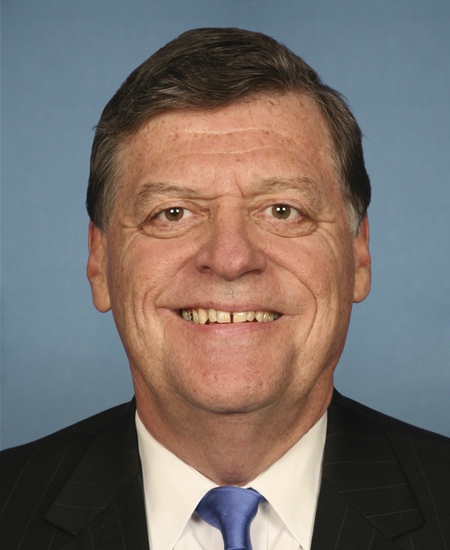
Rep. Tom Cole
Sponsored bills
Maddy summaryThis bill adds Medicare coverage for multi-cancer early detection screening tests (blood or biological tests analyzing cell-free DNA) starting January 1, 2028. It directly affects Medicare beneficiaries aged 68 and older (starting in 2028, with the age limit increasing by 1 year annually), requiring tests to be FDA-cleared and deemed reasonable/necessary by the Secretary for early cancer detection across multiple organ sites. Payment will initially match current stool DNA test rates before 2031, then shift to a lower rate or new payment system after 2031, with limits preventing more than one test per year. The bill explicitly states it does not alter coverage for existing cancer screenings like breast, colorectal, or prostate cancer tests.
Maddy summaryThis bill would require all states to recognize valid concealed carry permits issued by other states, allowing permit holders to carry concealed handguns (excluding machine guns) in any state that either issues such permits or doesn't prohibit concealed carry. It directly affects law-abiding gun owners with valid permits from their home state, ensuring they can carry in states with similar permit systems or no prohibitions. Key provisions include treating valid permit documents as proof of legal carry (reducing officer stops), shifting the burden of proof to prosecutors if challenged, and allowing civil lawsuits for violations with attorney's fee awards. The bill does not override state laws restricting firearms on private property or government land, nor does it affect federal gun restrictions like those in section 922(q).
Maddy summaryThis procedural resolution (HRES 747) directs the House Clerk to formally request the Senate return H.R. 3426 to the House. H.R. 3426 is a bill proposing to amend U.S. Code to limit new courthouse construction under specific circumstances. The resolution itself does not change policy or affect citizens - it is a routine procedural step to advance H.R. 3426 through the legislative process.
Maddy summaryHRES 719 is a House resolution honoring Charles "Charlie" James Kirk, the founder of Turning Point USA who was assassinated on September 10, 2025. The resolution condemns his assassination and all political violence, extends condolences to his family, and calls on Americans to reject violence while promoting civil discourse. It specifically recognizes Kirk's legacy as a defender of constitutional principles and his role in inspiring youth through free speech and faith-based civic engagement. As a commemorative resolution, it does not enact policy changes but formally expresses the House's stance on honoring his life and legacy.
Maddy summaryThis bill reauthorizes the Special Diabetes Program for Indians (SDPI) through fiscal year 2030, extending annual funding of $160 million per year. It directly affects American Indian and Alaska Native communities, which face significantly higher rates of diabetes, by ensuring continued federal support for diabetes prevention and treatment programs. The key provision amends the Public Health Service Act to add $160 million in annual funding for fiscal years 2026 through 2030, with funds remaining available until expended. This reauthorization maintains existing program funding levels without altering eligibility or program structure.
Maddy summaryHR 5428 creates a federal grant program to support medical education for students planning to work in underserved areas. It provides $75 million annually (2026-2028) to accredited public medical schools in states with severe primary care physician shortages, prioritizing schools in states with multiple Indian Tribes and partnerships with tribal organizations or health centers. Grantees must use funds for community-based training, developing primary care programs emphasizing Tribal/rural underserved communities, faculty development, scholarships, and tracking graduates' practice locations. The bill directly affects medical schools and future physicians committed to serving Tribal, rural, or medically underserved communities after residency.
Maddy summaryThis bill establishes advance funding for key tribal programs starting in fiscal year 2026. It requires the Department of the Interior and Indian Health Service to include in each year's budget request sufficient funding for the *next* fiscal year's operations, specifically for accounts like "Operation of Indian Programs," "Contract Support Costs," and "Indian Health Services." The bill mandates annual reports by July 31 each year, assessing resource sufficiency and including workload estimates for the following fiscal year. These changes directly affect tribal programs administered by the Bureau of Indian Affairs, Bureau of Indian Education, and Indian Health Service, ensuring funding for future needs is planned and requested in advance.
Maddy summaryThis bill reaffirms that certain lands taken into trust by the U.S. for federally recognized tribes under the 1934 Indian Reorganization Act remain in trust status. It specifically applies to land taken into trust before the bill's enactment for tribes that were federally recognized at the time the land was acquired. The bill does not create new policy but formally confirms existing trust status for these specific parcels. It directly affects tribes that held federal recognition when their land was taken into trust under the 1934 Act.
Maddy summaryThe TERRA Act enables Indian Tribes to integrate funding from multiple federal programs into comprehensive plans addressing environmental threats and natural disasters, including climate impacts like flooding, erosion, wildfires, and sea level rise. The bill streamlines administrative processes by requiring only a single annual report instead of multiple reports from individual programs and allows tribes to reallocate funds across different services as needed. It establishes a streamlined permitting process for environmental reviews and creates an expedited fee-to-trust process for land acquisitions to support community-driven relocation efforts. The Act aims to reduce bureaucratic barriers while empowering tribes to address environmental challenges through their own community-driven strategies within the federal trust responsibility framework.