

Maddy summaryHR 7770, the Rosie the Riveter Commemorative Coin Act, authorizes the U.S. Mint to produce and sell three commemorative coins honoring women who worked on the U.S. home front during World War II. It specifies $5 gold coins (max 50,000), $1 silver coins (max 400,000), and half-dollar coins (max 750,000), all to be issued between January 1, 2025, and December 31, 2025. Each coin sale includes a surcharge ($35 for gold, $10 for silver, $5 for half-dollar), with all surcharge funds directed to the Rosie the Riveter Trust for maintaining the Rosie the Riveter WWII Home Front National Historical Park and educational programs. The coins will feature designs reflecting the legacy of diverse women workers and must meet specific weight, diameter, and composition standards.
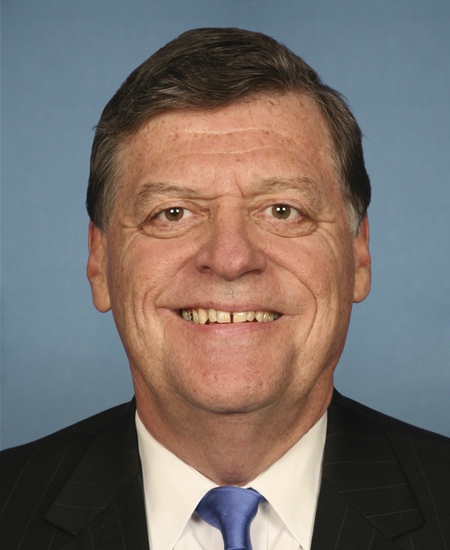
Rep. Tom Cole
Sponsored bills
Maddy summaryHR 6727 establishes the United States Foundation for International Conservation, a nonprofit organization that will provide grants to support long-term management of protected and conserved areas in eligible countries. The Foundation requires a 2:1 cost match from other sources, demands host country and community consent through binding agreements, and prioritizes areas with high biodiversity or species of significant importance. It will be governed by a Board of Directors including government officials and private sector experts, operate for 10 years with $1 million authorized for 2024 and $100 million annually from 2025-2035, and must follow international conservation standards while prohibiting funding for countries supporting terrorism or violating human rights.
Maddy summaryThis bill amends the Fair Credit Reporting Act to protect Native Americans from credit report damage related to certain medical debts. It defines "Native American's medical debt" as debt from health care authorized by the Indian Health Service (IHS) or wrongly charged by the Department of Health and Human Services (HHS), including debts HHS has wrongfully billed. The bill requires credit bureaus to automatically exclude from credit reports: (1) medical debt under one year old, and (2) fully paid or settled debt previously marked as delinquent. It also creates a dispute process where Native Americans can submit proof of HHS liability to have such debts removed from their reports. The changes apply to Native Americans as defined under federal law and take effect 90 days after enactment.
Maddy summaryThe Uyghur Policy Act of 2023 establishes a U.S. Special Coordinator for Uyghur Issues within the State Department to coordinate policy and advocate for the protection of Uyghur cultural, religious, and linguistic identity in Xinjiang. It authorizes $250,000 annually for Uyghur human rights advocates to speak at public diplomacy events in Muslim-majority countries and mandates Uyghur language training for U.S. diplomats. The bill also directs the U.S. government to support United Nations monitoring of Xinjiang human rights issues and oppose efforts to block discussions of Xinjiang at the UN. These provisions focus on diplomatic advocacy and information-sharing, not direct sanctions or enforcement actions against China.
Maddy summaryHR 7366 requires U.S. Customs and Border Protection (CBP) to publish monthly border encounter data on its public portal by the 7th of each month. This affects CBP directly, as it mandates the timely release of data on encounters at the border during the previous month. The bill also includes a penalty: if CBP misses this deadline, funding for the Office of the Secretary of Homeland Security is reduced by 25% for the following month. The law focuses on ensuring transparency in border data reporting through specific deadlines and financial consequences.
Maddy summaryHRES 966 is a symbolic resolution condemning alleged sexual violence committed by Hamas during its October 7, 2023, attack on Israel. It specifically references eyewitness accounts, forensic evidence, and Hamas fighters' admissions of ordering gang rape, sexual mutilation, and assault against Israeli civilians. The resolution calls for international condemnation of such acts as weapons of war, urges nations to criminalize sexual violence, and supports investigations into Hamas' actions. As a non-binding resolution, it does not create new laws or directly affect any individuals but formally expresses the House's position on the issue.
Maddy summaryThe DeOndra Dixon INCLUDE Project Act of 2024 establishes a new National Institutes of Health (NIH) research program focused on Down syndrome, called the INCLUDE Project. It authorizes $250 million annually from 2025 to 2030 to study the biological causes of Down syndrome and related health conditions - such as Alzheimer's disease, heart issues, and autoimmune disorders - to develop better treatments and improve quality of life for individuals with Down syndrome. The NIH must coordinate this research to avoid duplication, provide technical support to grantees, and submit biennial reports to Congress on progress. This initiative directly benefits people with Down syndrome by advancing medical research for their unique health needs, while ensuring funds supplement existing NIH programs.
Maddy summaryThis bill appropriates over $15 billion in supplemental funding for U.S. security assistance to Israel following attacks in Israel. It includes specific allocations such as $5.2 billion for Israel's Iron Dome, David's Sling, and Iron Beam defense systems, as well as funds for military personnel, operations, and equipment across all branches of the military. The bill requires the Secretary of Defense and Secretary of State to submit regular reports to Congress detailing security assistance provided to Israel and designates all funding as "emergency requirements" under federal law. This funding directly supports U.S. security assistance programs with Israel to respond to regional security threats.
Maddy summaryThe JOBS Act of 2023 would expand Federal Pell Grant eligibility to cover certain short-term job training programs that prepare students for high-demand careers. It defines "eligible job training programs" as those offering 150-600 hours of instruction over 8-15 weeks, aligned with in-demand industry sectors, and leading to recognized credentials that help students meet hiring requirements and take licensure exams. The bill would allow students in these programs to receive Pell Grants under standard terms, with the minimum Pell Grant amount reduced from 10% to 5% of the maximum. It also requires accrediting agencies to evaluate these programs and creates data-sharing between Education and Labor departments to track program effectiveness.
Maddy summaryHR 7234, the NACIE Improvement Act, requires the National Advisory Council on Indian Education (NACIE) to include at least one Tribal College or University president in its membership within 180 days of enactment. The bill mandates that NACIE submit its annual report to the Education and Interior Secretaries by June 30 each year, ensuring these departments consider the report when preparing federal budget proposals. This directly affects Tribal Colleges by guaranteeing their representation on NACIE and influences how federal education and tribal funding decisions are shaped through formal budget review processes. The bill does not change funding levels but establishes a procedural requirement for tribal input into federal education budget planning.