

Maddy summaryThe Treat and Reduce Obesity Act of 2023 expands Medicare coverage for obesity treatment by allowing a wider range of healthcare providers - including nurse practitioners, dietitians, psychologists, and community-based counseling programs - to deliver intensive behavioral therapy for obesity, provided they coordinate with primary care providers. It also adds Medicare Part D coverage for medications used to treat obesity or for weight loss management in overweight individuals with related health conditions like diabetes or high blood pressure. These changes directly affect Medicare beneficiaries, particularly older adults (65+), who face higher obesity rates and associated costs, including $50 billion annually in Medicare spending for obesity-related care. The bill requires annual reports to Congress on implementation to improve coordination of obesity care across federal health programs.
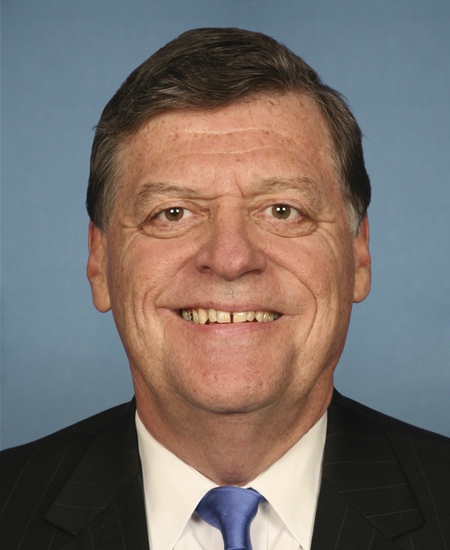
Rep. Tom Cole
Sponsored bills
Maddy summary# Summary of "Disaster Relief Supplemental Appropriations Act, 2025" This comprehensive legislation, approved December 21, 2024, consists of multiple divisions that provide funding for disaster relief, health extensions, agricultural programs, and other matters. ## Key Components: ### DIVISION A: Disaster Relief Supplemental Appropriations Act, 2025 - Allocates substantial funds for recovery from disasters including Hurricanes Helene and Milton - Includes $8.086 billion for the Federal Highway Administration's Emergency Relief Program to repair the Francis Scott Key Bridge damaged by the cargo ship Dali - Provides $12.039 billion for the Community Development Fund to support recovery from major disasters occurring in 2023 or 2024 - Includes funding for child care and development block grants to address disaster-related needs - Contains provisions for military construction, family housing, and medical facilities related to hurricane recovery ### DIVISION B: Health Extensions and Other Matters Act, 2025 - Extends numerous health programs through March 31, 2025: * Community health centers, National Health Service Corps, and teaching health centers * Special diabetes programs for Type I diabetes and for Indians * Medicare programs including increased inpatient hospital payment adjustments, Medicare-dependent hospital program, and telehealth flexibilities * Medicaid programs * Sexual risk avoidance education and personal responsibility education programs ### DIVISION C: Extension of Agricultural Programs - Extends various agricultural programs through September 30, 2025, including: * Commodity programs (2025 crop year) * Dairy margin coverage (through December 31, 2025) * Dairy forward pricing program * Conservation programs ### DIVISION D: Other Matters - Extends the Commodity Futures Trading Commission whistleblower program through March 14, 2025 - Extends protection of facilities from unmanned aircraft through March 14, 2025 - Extends special assessment provisions through March 14, 2025 - Extends national cybersecurity protection system authorization through March 14, 2025 - Extends temporary order for fentanyl-related substances through March 31, 2025 The legislation was passed by Congress on December 20, 2024, and signed into law on December 21, 2024. It represents a significant investment in disaster recovery, healthcare infrastructure, agricultural programs, and other critical government services.
Maddy summary# Summary of the Legislative Document This document is a comprehensive U.S. government bill containing multiple divisions that extend funding, authorize appropriations, and modify existing programs. The bill is structured into the following divisions: ## Division A: Further Continuing Appropriations and Other Extensions Act, 2025 - Extends funding for government operations through fiscal year 2025 - Includes specific appropriations for various departments and programs - Contains provisions for budgetary effects and reporting requirements - Extends certain authorities through September 30, 2025 ## Division B: Disaster Relief Supplemental Appropriations Act, 2025 - Provides $12,039,000,000 for the Community Development Fund for disaster recovery - Allocates funds specifically for recovery from Hurricanes Milton and Helene - Includes $8,086,020,000 for the Federal Highway Administration Emergency Relief Program (including 100% federal share for Francis Scott Key Bridge repair) - Contains detailed requirements for fund allocation, reporting, and use - Includes provisions for environmental reviews and permit adoption ## Division C: Health Extensions and Other Matters Act, 2025 - Extends community health centers funding through March 31, 2025 - Extends Medicare programs including: * Increased inpatient hospital payment adjustment for low-volume hospitals * Medicare-dependent hospital (MDH) program * Add-on payments for ambulance services * Telehealth flexibilities (extending until March 31, 2025) * Acute hospital care at home waiver authorities - Extends Medicaid programs and eliminates certain disproportionate share hospital payment cuts - Extends special diabetes programs for type I diabetes and for Indians ## Division D: Extension of Agricultural Programs - Extends agricultural programs through September 30, 2025 - Details how commodity programs will operate for the 2025 crop year - Includes specific extensions for dairy margin coverage, dairy forward pricing, and payment amounts - Specifies which programs are exempt from extension requirements ## Division E: Other Matters - Extends the Commodity Futures Trading Commission whistleblower program through March 14, 2025 - Extends protection of facilities from unmanned aircraft through March 14, 2025 - Extends the additional special assessment through March 14, 2025 - Extends national cybersecurity protection system authorization through March 14, 2025 - Extends temporary order for fentanyl-related substances through March 31, 2025 - Extends public debt limit through January 29, 2027 This bill represents a comprehensive legislative package that addresses government funding continuity, disaster recovery, health program extensions, agricultural program extensions, and various other legislative modifications.
Maddy summaryThis bill (HR 7516) updates the Indian Health Care Improvement Act to clarify and improve reimbursement for Native American patients who pay out-of-pocket for authorized "purchased/referred care" services through the Indian Health Service (IHS). It requires the IHS to establish procedures within 120 days to reimburse patients within 30 days of receiving documentation (electronically or in-person) for such care. The bill replaces outdated terms like "contract health care" with "purchased/referred care" throughout the law and clarifies that the IHS is not liable to debt collectors for these payments. It directly affects Native American patients who receive IHS-authorized care outside of regular IHS facilities.
Maddy summaryThis bill requires federal agencies to assess whether energy policies and rules disproportionately affect at-risk communities, including low-income, minority, rural, elderly, and Native American communities. Agencies must conduct studies before actions like leasing federal land or issuing new energy rules, and include an "energy poverty statement" certifying the policy won't cause energy poverty. Within one year, the Comptroller General and OMB must jointly report to Congress on how current policies impact these communities and recommend solutions to reduce energy poverty. The law aims to prevent energy poverty by mandating concrete evaluations of policy impacts on vulnerable groups.
Maddy summaryThe FOCA Act of 2023 requires federal agencies to stop mandating or banning contractor agreements with labor organizations (like union contracts) in construction project bids and contracts. It directly affects federal contractors, subcontractors, and agencies managing construction projects funded by the government. The bill prohibits favoring or penalizing contractors based on their labor affiliation status, aiming to promote fair competition and reduce costs. It also mandates updates to federal contracting rules within 60 days of enactment to implement these changes.
Maddy summary# Summary of Comprehensive Legislative Act This document is a lengthy U.S. legislative bill containing multiple titles addressing various policy areas. The main provisions include: **Title I: Commerce Matters (Second Chance Reauthorization Act of 2024)** - Extends and improves reentry programs for formerly incarcerated individuals - Authorizes funding for state/local reentry demonstration projects, family-based substance abuse treatment, educational programs in correctional facilities, and career training - Sets new funding periods from 2025-2029 (replacing previous 2019-2023 periods) **Title II: Youth Poisoning Prevention** - Bans consumer products containing high concentrations (10%+ by weight) of sodium nitrite - Excludes commercial/industrial uses, drugs, devices, cosmetics, food, and food products from the ban - Effective 90 days after enactment **Title III: Consumer Product Safety Standards** - Requires Consumer Product Safety Commission to adopt ANSI/CAN/UL safety standards for batteries in e-bikes and micromobility devices - Establishes reporting requirements for battery-related fires and hazards - Mandates a report to Congress on lithium-ion battery safety within 5 years **Title IV: Foreign Adversary Communications Transparency Act** - Requires FCC to publish a list of entities with foreign ownership (particularly from "covered countries") - Mandates rules to identify entities with foreign ownership holding FCC licenses - Requires annual updates to the published list **Title V: Promoting Resilient Supply Chains** - Establishes a Critical Supply Chain Resilience Working Group - Assigns new responsibilities to Assistant Secretary of Commerce for Industry and Analysis - Requires assessment of critical supply chains, identification of vulnerabilities, and development of contingency plans - Focuses on reducing reliance on certain foreign countries for critical goods **Title VI: Miscellaneous Provisions** - Extends whistleblower program deadlines - Transfers military units (121st Fighter Squadron) - Requires public availability of disaster assistance reports - Transfers administrative jurisdiction of RFK Memorial Stadium Campus to District of Columbia with specific development requirements - Updates various deadlines in multiple laws (e.g., Cybersecurity Protection System, unmanned aircraft regulations) The legislation represents a broad policy package addressing criminal justice reform, consumer safety, national security, supply chain resilience, and government operations, with significant focus on reducing reliance on foreign supply chains (particularly from China), improving safety standards, and supporting reentry programs for formerly incarcerated individuals.
Maddy summaryThis bill requires Medicare Advantage plans to implement electronic prior authorization systems by 2027 and publish detailed data on their approval and denial rates for medical services by 2026. It directly affects Medicare Advantage plans (private insurers offering Medicare coverage) and their enrollees (seniors 65+), mandating transparency about prior authorization decisions, processing times, and appeal outcomes. Key provisions include requiring plans to report annual statistics on request approvals/denials, average processing times, and use of technology, with this data published publicly by the Centers for Medicare & Medicaid Services. The bill also sets timelines for plan responses to prior authorization requests and mandates reports to Congress on implementation and impacts.
Maddy summaryThis bill, HR 6860, protects patients with end-stage kidney disease (ESRD) who require dialysis by preventing health insurance plans from discriminating against them. It amends Medicare rules to prohibit plans from treating dialysis coverage differently than other medical services based on a patient’s ESRD diagnosis, need for dialysis, or any other factor. The bill clarifies that plans can still choose which dialysis providers to include in their networks but cannot deny or limit coverage for dialysis services solely because of the patient’s condition. It ensures Medicare remains the secondary payer for these services as intended, without forcing plans to cover specific providers.
Maddy summaryThis bill imposes U.S. sanctions on foreign individuals and entities that facilitate North Korea's transfer of arms or material support to Russia for use in Russia's invasion of Ukraine. It targets those responsible for such transfers, including foreign financial institutions enabling significant transactions related to these activities, requiring property blocks and visa restrictions. The bill also amends existing North Korea sanctions to explicitly require halting such material support and mandates the President to submit regular reports to Congress on North Korea's involvement and U.S. strategies to counter it.