

Suspending Normal Trade Relations with Russia and Belarus Act This bill suspends normal trade relations with Russia and Belarus. It also permanently authorizes the President to impose visa- and property-blocking sanctions based on violations of human rights. Specifically, the bill authorizes the President to proclaim increases in the rates of duty applicable to products of Russia or Belarus. This authority terminates on January 1, 2024. The President may restore normal trade relations with Russia and Belarus, subject to congressional disapproval. The bill directs the U.S. Trade Representative to (1) condemn the recent aggression in Ukraine, (2) encourage other World Trade Organization (WTO) members to suspend trade concessions to Russia and Belarus, (3) consider steps to suspend Russia's participation in the WTO, and (4) seek to halt the accession process of Belarus.
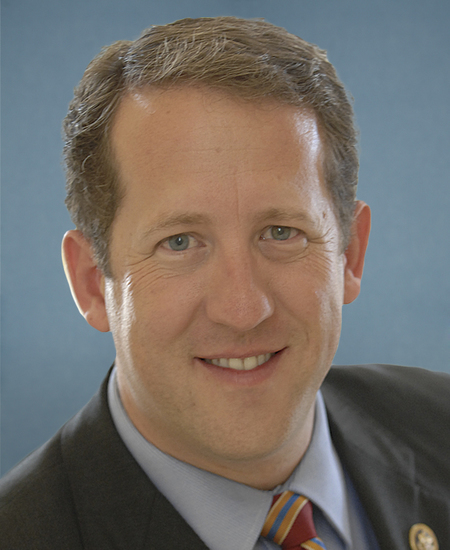
Rep. Adrian Smith
Sponsored bills
Burma Unified through Rigorous Military Accountability Act of 2022 or the BURMA Act of 2022 This bill imposes sanctions pertaining to Burma (Myanmar) and addresses related issues. The President must impose property- and visa-blocking sanctions on certain foreign persons (i.e., an individual or entity), including those that (1) knowingly operate in Burma's defense sector, (2) are responsible for or complicit in undermining Burma's democratic processes, or (3) are senior leaders in Burma's military or government. The Department of the Treasury must prohibit or impose strict conditions on certain accounts used to facilitate transactions for such sanctioned persons. The President may impose sanctions on Myanma Oil and Gas Enterprise if such sanctions would support certain objectives, including reducing the Burmese military's ability to undermine democracy in Burma. Before removing certain foreign persons from a list of specially designated nationals and blocked persons (commonly known as the SDN list), the President must certify to Congress that the person in question has not knowingly engaged in certain activities, such as supporting terrorism. The bill authorizes Department of State and U.S. Agency for International Development activities in Burma and the surrounding region to support democracy activists, humanitarian assistance, and reconciliation efforts. The State Department may (1) continue to assist organizations supporting political prisoners in Burma, and (2) provide assistance to entities investigating crimes against humanity. The President must direct U.S. representatives to the United Nations to vote and advocate for certain actions related to Burma, such as cutting off assistance to Burma's government.
Protecting American Innovation Act This bill establishes certain limitations on modifying trade agreements, including those related to the TRIPS Agreement (i.e., the Agreement on Trade-Related Aspects of Intellectual Property Rights). The TRIPS Agreement contains obligations for World Trade Organization members to protect patents and other intellectual property rights. Specifically, the bill prohibits the President (or any U.S. official, employee, or agent) from negotiating or concluding any withdrawal, suspension, or modification to a trade agreement that adversely affects the rights of the United States or U.S. persons under a trade agreement with China or Russia. Additionally, the bill states that a TRIPS waiver to address the COVID-19 pandemic shall not take effect if (1) the President does not submit required reports from the Department of Commerce and the Department of Defense (DOD), (2) the Commerce report concludes that the TRIPS waiver will not result in an increase in global vaccine access, or (3) the DOD report concludes that the TRIPS waiver would adversely impact U.S. national security. Prior to entering into a negotiation with a trading partner concerning a suspension of or modification to a trade agreement, the bill requires (1) the U.S. Trade Representative to publish certain information in the Federal Register and allow for public comment, and (2) the President to provide written notice and consult with Congress. Further, the President shall not enter into any suspension of or modification to a trade agreement unless the President has complied with such consultation requirements and receives congressional approval.
The Real Emergencies Act This bill denies the President authority to declare a national emergency, an emergency or major disaster, or a public health emergency on the premise of climate change.
This resolution reaffirms unequivocal support for the North Atlantic Treaty Organization (NATO) as an alliance founded on democratic principles. The resolution urges NATO to continue to provide unwavering support to the people of Ukraine as they fight for their sovereignty, territorial integrity, and a democratic future. The resolution calls on the President to use the voice and vote of the United States to adopt a new Strategic Concept for NATO that is clear about its support for shared democratic values and committed to enhancing NATO's capacity to strengthen democratic institutions within NATO member, partner, and aspirant countries. Finally, the resolution calls on the President to use the voice and vote of the United States to establish a Center for Democratic Resilience within NATO headquarters.
Ensuring Lasting Smiles Act This bill requires private health insurance plans to cover diagnosis and treatment of congenital anomalies and birth defects, such as reconstructive services and items. Coverage must include services and items that functionally improve, repair, or restore any body part that is medically necessary for normal bodily functions or appearance, as determined by the treating physician. Coverage limits and cost-sharing requirements for such services and items may not be more restrictive than those applicable to all medical and surgical benefits under the plan.
Supply Chain Disruptions Relief Act This bill modifies the treatment of liquidations of new motor vehicle inventory as qualified LIFO (last in first out accounting method) inventory. It allows new motor vehicle dealers to elect to wait until the end of 2025 to replace their inventory for purposes of determining income attributable to the sale of such inventory during 2020 and 2021.
Maddy summaryHR 7355, the "Stopping Excessive Climate Reporting Act," prohibits public companies from being required under securities laws to disclose certain climate-related information. Specifically, it prevents issuers from having to report greenhouse gas emissions from their own operations (Scope 1 and 2) or their supply chains and consumers (Scope 3 emissions). The bill also removes requirements for independent certification of this emissions data. This directly affects publicly traded companies subject to securities regulations by eliminating these specific disclosure obligations.
This resolution supports the preservation of the stepped-up basis tax rule that allows recipients of inherited assets such as land, equipment, or buildings to adjust the cost basis of the assets to reflect their fair market value. The resolution opposes any efforts to impose new taxes on family farms or small businesses and recognizes the importance of generational transfers of farm and family-owned businesses.
COVID-19 American History Project Act This bill directs the American Folklife Center at the Library of Congress to establish a history project to be known as the COVID-19 American History Project to collect and make publicly available individual stories and records of experiences during the COVID-19 pandemic in the United States. The bill includes a requirement to collect video and audio recordings of personal histories and testimonials of those who were affected by the pandemic. The Librarian of Congress may solicit and accept donations of funds and in-kind contributions to carry out the project, subject to this bill.