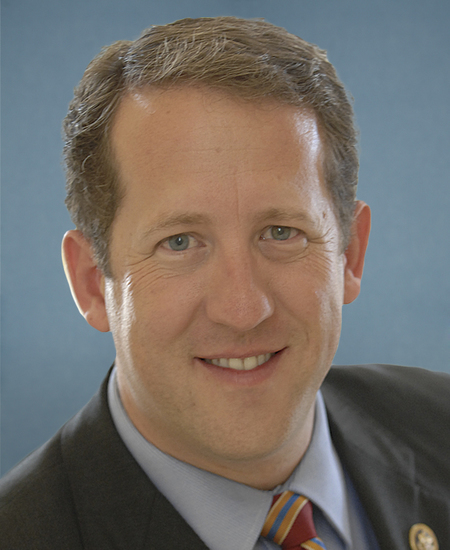
Photo of Adrian Smith
R United States House · District 3 · Nebraska On the 2026 ballot

Rep. Adrian Smith

Compare
Total votes
2,837
all sessions
Attendance
97%
71 missed
Near the chamber average
With party
96%
of cast votes
Higher than 78% of chamber peers
Bipartisan score
2%
crosses aisle rarely
Lower than 79% of chamber peers
Sponsored
880
bills & resolutions
Near the chamber average
Committees
4
assignments
880 bills and resolutions

Sponsored bills

Total
880
Primary
75
Co-sponsor
805
This page
880
matching current filters
Co-sponsor HR 3006
In committee · Delaware House · Co-sponsor
To amend title XVIII of the Social Security Act to limit the coinsurance amount for certain services furnished in an ambulatory surgical center.

Maddy summaryHR 3006 would limit Medicare coinsurance for certain surgical procedures performed in ambulatory surgical centers (ASCs). Specifically, it prevents patients from paying coinsurance exceeding the annual inpatient hospital deductible for those procedures. If the coinsurance amount would surpass the deductible, the Medicare program must reduce the patient's share to match the deductible and reimburse the ASC for the difference. This change applies to services provided on or after January 1, 2026, directly affecting Medicare beneficiaries using ASCs for qualifying surgeries.

In committee Apr 24, 2025 1 co-sponsor
Co-sponsor HR 2307
In committee · Delaware House · Co-sponsor
To establish the Commission on National Agricultural Statistics Service Modernization to modernize the data collection and reporting processes of the National Agricultural Statistics Service, and for other purposes.

This bill establishes the Commission on National Agricultural Statistics Service (NASS) Modernization to study and provide recommendations on modernizing and streamlining data collection at NASS. As background, NASS conducts the Census of Agriculture and provides official statistics on agricultural production and other farm sector indicators. The 11-member commission must include 4 specified members from the Department of Agriculture, 1 member from the Bureau of Labor Statistics, and 6 members appointed by the House and Senate Agriculture Committees. At the request of the commission chair, federal agencies must provide the commission information related to the study. The commission must submit a report to the President and Congress on the results of the study within two years of the bill's enactment. The report must include (1) an inventory of surveys conducted by NASS and their frequency; and (2) recommendations for administrative, regulatory, and legislative changes.

In committee Apr 18, 2025 1 co-sponsor
Primary HR 2891
In committee · Delaware House · Lead sponsor
IRA Charitable Rollover Facilitation and Enhancement Act of 2025

Maddy summaryThis bill repeals a restriction that previously prevented individuals from rolling over funds directly from their Individual Retirement Accounts (IRAs) to donor-advised funds (DAFs) for charitable giving. It directly affects IRA account holders who wish to make tax-advantaged charitable contributions through DAFs. The key provision amends the Internal Revenue Code to remove the specific language barring such rollovers, allowing these transfers to occur without triggering taxable distributions. The change becomes effective after the bill's enactment, streamlining a pathway for donors to support charities via DAFs using IRA assets.

In committee Apr 10, 2025 0 co-sponsors
Co-sponsor HR 2902
In committee · Delaware House · Co-sponsor
SOAR Act of 2025

Supplemental Oxygen Access Reform Act of 2025 or the SOAR Act of 2025 This bill establishes certain requirements with respect to the payment and provision of supplemental oxygen and related services under Medicare. For example, the bill provides for separate payments, indexed to inflation, of oxygen and related equipment, supplies, and services under Medicare (rather than under the competitive acquisition program). It also specifically covers services that are provided by respiratory therapists under Medicare and provides for an additional payment adjustment for these services. Additionally, the bill (1) requires the Centers for Medicare & Medicaid Services to develop an electronic template for providers to use when prescribing oxygen and related equipment, supplies, and services; and (2) establishes certain rights for beneficiaries receiving these items and services, such as the right to choose their suppliers and to receive clear communications and be informed about the services provided.

In committee Apr 10, 2025 1 co-sponsor
Co-sponsor HR 2696
In committee · Delaware House · Co-sponsor
Retirement Savings for Americans Act of 2025

Maddy summaryThe Retirement Savings for Americans Act of 2025 creates a new retirement savings program called the American Worker Retirement Fund to help workers without access to employer-sponsored retirement plans. It requires businesses to automatically enroll qualifying workers (those without existing retirement plans) at a 3% contribution rate, with the option to opt out. The program includes a government match tax credit that provides up to 5% of a worker's income as matching contributions, phasing out for higher earners. The Fund will be managed by a Board and Executive Director, offering multiple investment options and maintaining accounts until retirement or withdrawal.

In committee Apr 7, 2025 1 co-sponsor
Co-sponsor HR 2538
In committee · Delaware House · Co-sponsor
CARE Act of 2025

Maddy summaryThis bill creates a new Medicare payment model (the "Comprehensive Alternative Response for Emergencies Model") that allows Medicare Part B to cover ground ambulance services provided in response to emergency medical calls *without* a full transport. It directly affects Medicare beneficiaries receiving emergency ambulance care and ambulance providers, ensuring they are paid for services like dispatch and initial response that don't include transport. The model requires payment rates to align with standard transport payments, mandates compliance with state protocols, and operates for a 5-year test period. A report by the Comptroller General will evaluate the model's impact on beneficiary access, outcomes, and regional differences after 4 years.

In committee Apr 1, 2025 1 co-sponsor
Co-sponsor HR 2552
In committee · Delaware House · Co-sponsor
RIFLE Act

Maddy summaryHR 2552, the RIFLE Act, repeals the federal tax on firearm transfers (Section 5811 of the Internal Revenue Code). This directly affects firearm sellers and purchasers by removing the tax paid when transferring firearms. The bill also updates related tax code references to reflect the repeal and specifies the tax removal applies to transfers after the law's enactment. It clarifies that the repeal does not change how firearms are regulated under the National Firearms Act or involve the Consumer Product Safety Commission.

In committee Apr 1, 2025 1 co-sponsor
Co-sponsor HR 2567
In committee · Delaware House · Co-sponsor
To amend the Internal Revenue Code of 1986 to provide special rules for purposes of determining if financial guaranty insurance companies are qualifying insurance corporations under the passive foreign investment company rules.

Maddy summaryHR 2567 amends tax code rules to prevent certain financial guaranty insurance companies from being classified as passive foreign investment companies (PFICs). It directly affects insurers whose sole business is financial guaranty insurance (e.g., insuring bonds) and meet specific exposure thresholds: at least 15-to-1 financial guaranty exposure or 9-to-1 state/local bond exposure relative to total assets. The bill creates new rules requiring these companies to include unearned premium reserves in insurance liabilities for PFIC calculations, while mandating separate reporting of key financial metrics. This change provides clarity for insurers meeting the defined criteria, avoiding unintended PFIC classification under current tax rules.

In committee Apr 1, 2025 1 co-sponsor
Co-sponsor HR 2548
In committee · Delaware House · Co-sponsor
Sanctioning Russia Act of 2025

Sanctioning Russia Act of 2025   This bill imposes penalties on certain persons (individuals and entities) if the President determines that the Russian government or a person acting at Russia's direction is involved with (1) refusing to negotiate a peace agreement with Ukraine; (2) violating a negotiated peace agreement; (3) initiating another invasion of Ukraine; or (4) overthrowing, dismantling, or seeking to subvert the Ukrainian government.   If the President makes such a determination, the bill requires certain actions including the President must impose visa- and property-blocking sanctions on specified persons such as the Russian president, certain Russian military commanders, and any foreign person that knowingly provides defense items to the Russian armed forces; the President must increase the rate of duty on all goods and services imported from Russia into the United States to at least 500% relative to the value of such goods and services; the President must increase the rate of duty on all goods and services imported into the United States from countries that knowingly engage in the exchange of Russian-origin uranium and petroleum products to at least 500% relative to the value of such goods and services; the Department of the Treasury must impose property-blocking sanctions on any financial institution organized under Russian law and owned wholly or partly by Russia, and any financial institution that engages in transactions with those entities; and the Department of Commerce must prohibit the export, reexport, or in-country transfer to or in Russia of any U.S.-produced energy or energy product.

In committee Apr 1, 2025 1 co-sponsor
Co-sponsor HR 2533
In committee · Delaware House · Co-sponsor
EASE Act of 2025

Maddy summaryHR 2533, the EASE Act of 2025, requires Medicare and Medicaid to test a new telehealth model designed to improve specialty care access for rural and underserved Medicare/Medicaid beneficiaries. The bill mandates the Centers for Medicare & Medicaid Services (CMS) to partner with nonprofit provider networks - comprising at least 50 community health centers or rural clinics (half in rural areas) - to deliver specialty care via telehealth and coordinate with primary care providers. Eligible individuals must be enrolled in Medicare Part B, Medicaid, or CHIP and reside in designated rural or underserved areas. The model requires networks to collect and evaluate data on service delivery, with funding subject to existing program rules. This creates a structured pilot program focused on expanding remote specialty care access in underserved regions.

In committee Apr 1, 2025 1 co-sponsor
Showing 161 to 170 of 880 bills
Previous 1 … 16 17 18 … 88 Next