

Maddy summaryHR 1046, the Marc Fischer Memorial Act, requires the Bureau of Prisons to implement digital mail scanning technology at all federal prisons to detect fentanyl and other synthetic drugs in inmate mail. It mandates a strategy within 90 days of an evaluation, including 100% scanning of all mail, digital copies of mail to inmates within 24 hours, and physical mail delivery within 30 days for non-contaminated items. The bill directly affects federal prison staff, inmates, and the Bureau of Prisons by aiming to reduce drug-related overdoses and alleviate staff workload tied to mail processing. Implementation must be completed within three years, with annual reports tracking detected drugs and strategy efficiency. The legislation focuses on concrete technological and procedural changes to enhance safety, referencing a successful pilot program at two facilities.
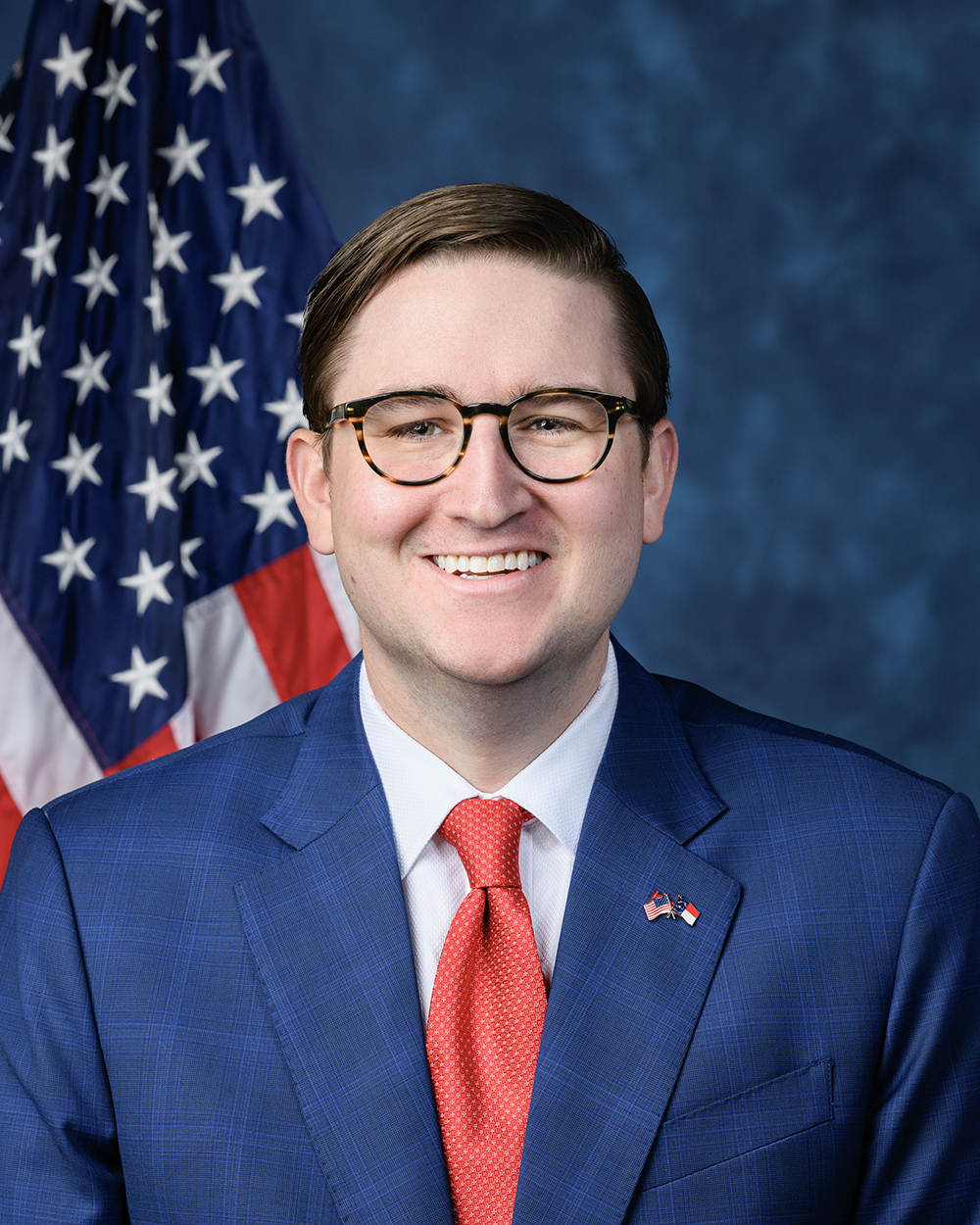
Rep. Addison P. McDowell
Sponsored bills
Maddy summaryThis bill creates a tax exclusion for landowners who sell certain property interests through the Defense Department's Readiness and Environmental Protection Integration (REPI) program. It excludes the gain from taxable income when selling "qualified real property interests" (including full ownership, remainder interests, or surface use restrictions) to a qualified organization under the REPI program, which protects military readiness areas while conserving environmentally sensitive lands. The exclusion does not apply if the property was purchased within three years prior to sale (except for family partnerships or family-owned entities). This policy change directly affects landowners participating in the REPI program by reducing tax liability on qualifying sales.
Fair Access to Banking Act This bill places restrictions on certain banks, credit unions, and payment card networks if they refuse to do business with a person who complies with the law. Restrictions include prohibiting the use of electronic funds transfer systems and lending programs, termination of an institution's depository insurance, and specified civil penalties. Banks and other specified financial institutions are allowed to deny financial services to a person only if the denial is justified by a documented failure of that person to meet quantitative, impartial, risk-based standards established in advance by the institution. This justification may not be based upon reputational risks to the institution. The bill establishes the right for a person to bring a civil action for a violation of this bill.
Maddy summaryHR 925, the "Dismantle DEI Act of 2025," would eliminate diversity, equity, and inclusion (DEI) programs across federal government operations. The bill requires federal agencies to close DEI offices, rescind related executive orders, and prohibit the use of federal funds for DEI training, offices, or initiatives. It defines "prohibited diversity, equity, or inclusion practice" as any activity that discriminates based on race, ethnicity, religion, biological sex, or national origin, or requires employees to complete training asserting that certain groups are inherently superior or inferior. The legislation also prohibits requiring employees to sign statements about race, ethnicity, or gender, and establishes private lawsuits for violations with potential damages of $1,000 per violation per day. This bill would directly affect federal agencies, contractors, grantees, and advisory committees receiving federal funding.
Maddy summaryHR 691 would rename Washington Dulles International Airport in Virginia as "Donald J. Trump International Airport" upon the bill's enactment. It requires all federal references in laws, documents, and maps to use the new name instead of the current designation. This is a purely ceremonial renaming bill with no impact on airport operations, funding, or policy.
Medicare Patient Access and Practice Stabilization Act of 2025 This bill increases certain payment adjustments under the Medicare physician fee schedule for services furnished between April 1, 2025, and January 1, 2026.
Drug Cartel Terrorist Designation Act This bill directs the Department of State to designate four specified drug cartels as foreign terrorist organizations. (Among other things, such a designation allows the Department of the Treasury to require U.S. financial institutions to block transactions involving the organization.) The four specified cartels in the bill are the Gulf Cartel, the Cartel Del Noreste, the Cartel de Sinaloa, and the Cartel de Jalisco Nueva Generacion. The bill also requires the State Department to submit a detailed report on those four cartels and any other cartels it may identify. Based on this report, the State Department must designate as a foreign terrorist organization any such identified cartel (or faction thereof) that meets certain criteria for designation as a foreign terrorist organization. The bill specifies that it may not be construed to expand eligibility for asylum.
Maddy summaryHCONRES 4 is a symbolic resolution expressing Congress's support for tax-exempt fraternal benefit societies (like mutual aid organizations). It recognizes these groups, which have over 7 million members nationwide, as historically and currently providing critical community benefits - including life/health insurance, charitable work, and volunteer services - valued at over $3.8 billion annually. The resolution affirms that their tax-exempt status under Section 501(c)(8) of the Internal Revenue Code remains beneficial and should continue to be promoted. This is a non-binding expression of congressional sentiment, not a policy change.
Maddy summaryThe Build the Wall Act of 2025 creates a new fund called the Southern Border Wall Construction Fund to finance physical barriers along the U.S. southern border. It requires all unspent funds from the Coronavirus State and Local Fiscal Recovery Funds (originally for pandemic relief) to be transferred immediately into this new account. The Secretary of Homeland Security would then use these redirected funds to construct and maintain border barriers. This bill changes how existing federal funds are allocated, shifting resources from pandemic recovery efforts to border security infrastructure.
Maddy summaryHR 735, the United States Reciprocal Trade Act, would give the President authority to impose tariffs on imports from countries that maintain higher tariffs on U.S. goods than the U.S. imposes on their goods, or that apply significant nontariff barriers. The bill requires the President to consider multiple factors before taking action, including tariff classifications, trade impacts, and competitive relationships, and mandates consultation with Congress before imposing new tariffs. It establishes a 3-year timeframe for these tariff actions with a potential 3-year extension, while providing Congress with a process to disapprove tariffs through a joint resolution requiring a two-thirds vote. The law aims to address perceived trade imbalances by promoting reciprocal trade practices between the U.S. and its trading partners.