

Debt Cancellation Accountability Act of 2022 This bill prohibits the Department of Education from providing class-based loan forgiveness unless funds have been specifically requested and appropriated for this purpose. Class-based loan forgiveness refers to the cancellation, waiver, assumption, discharge, reduction, or other forgiveness of any obligation due on Federal Family Education Loans, Federal Direct Loans, or Federal Perkins Loans (1) on a class-wide basis and for a class of two or more loan borrowers, and (2) that totals more than $1 million. The prohibition does not apply to targeted loan forgiveness programs established under the Higher Education Act of 1965 and in effect before the enactment of this bill if the loan forgiveness is granted for a single borrower on a case-by-case basis.
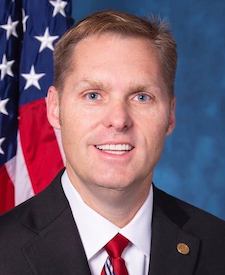
Rep. Michael Guest
Sponsored bills
DHS Restrictions on Confucius Institutes and Chinese Entities of Concern Act This bill restricts funding to an institution of higher education (IHE) that has a relationship with a Confucius Institute (a cultural institute directly or indirectly funded by the Chinese government). It also requires certain disclosures related to Chinese entities of concern (generally, universities or colleges involved in China's military, police, or intelligence activities). Specifically, the Department of Homeland Security (DHS) must ensure that an IHE that has awarded a contract to, entered into an agreement with, or received an in-kind donation or gift from a Confucius Institute is ineligible to receive specified funds from DHS, unless the IHE terminates the relationship. The IHE may regain eligibility for these funds upon termination of the relationship. DHS may waive this funding restriction, on a case-by-case basis and for a period of not more than one year, if it is in the national security interests of the United States. Additionally, an IHE that has a relationship with a Chinese entity of concern and is seeking to receive or receives specified DHS funds must notify DHS about the relationship. DHS must provide outreach and, upon request, technical assistance to IHEs related to compliance with this bill.
Taxpayers Support Life Act This bill prohibits the Department of Health and Human Services (HHS) from finalizing, implementing, administering, or enforcing a proposed rule (published on August 4, 2022) that implements the statutory ban on discrimination in federally funded health programs and activities. Further, HHS may not use federal funds to contravene the administration or enforcement of the existing nondiscrimination rule, which became effective on June 19, 2020.
Harriet Tubman Bicentennial Commemorative Coin Act This bill directs the Department of the Treasury to mint and issue 50,000 $5 gold coins, 400,000 $1 silver coins, and 750,000 half-dollar clad coins emblematic of the legacy of Harriet Tubman as an abolitionist. The Secretary may issue coins under this bill only during the period of January 1, 2024, through December 31, 2024. All surcharges received by Treasury from the sale of such coins must be paid equally to the National Underground Railroad Freedom Center in Cincinnati, Ohio, and The Harriet Tubman Home, Inc. in Auburn, New York, for the purpose of accomplishing and advancing their missions.
National World War II Memorial Commemorative Coin Act This bill directs the Department of the Treasury to mint and issue up to 50,000 $5 coins, 400,000 $1 silver coins, and 750,000 half-dollar clad coins in commemoration of the National World War II Memorial in the District of Columbia. The design of the coins shall be emblematic of the memorial and the service and sacrifice of American soldiers and civilians during World War II. All surcharges received from the sale of such coins shall be paid to the Friends of the National World War II Memorial to support the National Park Service in maintaining and repairing the memorial, and for educational and commemorative programs.
Securing and Enabling Commerce Using Remote and Electronic Notarization Act of 2022 or the SECURE Notarization Act of 2022 This bill allows a notary public commissioned under state law to remotely notarize electronic records and perform notarizations for remotely located individuals. The bill provides technical requirements for such notarizations, including the creation and retention of video and audio recordings and the use of communication technologies (i.e., video chat). Additionally, the bill requires U.S. courts and states to recognize notarizations—including remote notarizations of electronic records and notarizations of remotely-located individuals—that occur in or affect interstate commerce and are performed by a notary public commissioned under the laws of other states. The bill also allows a notary public to remotely notarize electronic records involving an individual located outside of the United States, subject to certain requirements.
This resolution expresses support for U.S. Border Patrol agents, denounces the politicization and falsification of claims against agents in Del Rio, Texas, and calls on the Biden administration to support front line agents.
Fairness for Responsible Borrowers Act This bill generally prohibits the Departments of Education, Justice, or the Treasury from taking any action to cancel or forgive the outstanding balances, or portion of balances, of covered loans. Covered loans refer to Federal Family Education Loans, Federal Direct Loans, Federal Perkins Loans, and loans under the Health Education Assistance Loan Program. The prohibition does not apply to targeted federal student loan forgiveness, cancellation, or repayment programs carried out under the Higher Education Act of 1965.
Standing with Moms Act This bill requires the Department of Health and Human Services (HHS) to disseminate information about pregnancy-related resources. Specifically, HHS must maintain a public website (life.gov) that lists such resources that are available through federal, state, and local governments and private entities. Additionally, HHS must maintain on its website a portal that provides a user, based on the user's responses to a series of questions, tailored information about pregnancy resources available in the user's zip code and risks related to abortion. HHS must develop a plan to conduct follow-up outreach to users of the portal (if the user consents to the outreach). States must recommend resources that meet criteria set by HHS for including through the portal. HHS may award grants to states to establish or support a system that aggregates resources to include on the portal. Further, the Health Resources and Services Administration must share information about life.gov and the portal through the Maternal Mental Health Hotline. HHS must also ensure that the life.gov website and hotline are available to families who speak languages other than English. The bill excludes from life.gov, the portal, and the hotline resources provided by entities that (1) perform, induce, refer for, or counsel in favor of abortions; or (2) financially support such entities. The bill also requires HHS to report on traffic to life.gov and the portal, gaps in services available to pregnant and postpartum individuals, and related matters.
This resolution congratulates the University of Mississippi baseball team for winning the 2022 National Collegiate Athletic Association Division I baseball championship.