Maddy summaryThis bill directs the Secret Service to use identical standards for determining protection levels for Presidents, Vice Presidents, and major presidential/vice presidential candidates. It requires the Secret Service Director to conduct a review within 180 days of enactment, reporting findings and recommendations to Congress on protection protocols for current and former leaders. The bill standardizes existing practices without increasing security resources, applying the same criteria currently used for sitting officials to candidates. It references the definition of "major candidates" from existing law (18 U.S.C. § 3056), ensuring consistency with current Secret Service procedures.
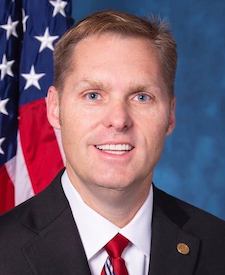
Rep. Michael Guest
Sponsored bills
Maddy summaryThis bill amends the Clean Air Act to modify ethanol waiver processes and fuel volatility standards. It adds a new provision allowing fuel to enter commerce if it meets Reid Vapor Pressure requirements through similarity to certified vehicles or existing waivers, and adjusts vapor pressure limits from 10% to 10-15% in several sections. Small refineries that retired credits for 2016-2018 compliance years may now have those credits returned or applied to future years if their petitions remained pending as of December 1, 2022. The changes directly affect fuel retailers, ethanol producers, and small refineries by altering compliance pathways for fuel standards and credit management under the renewable fuel program.
Maddy summaryHRES 1509 is a symbolic resolution designating the week beginning November 11, 2024, as "National Pregnancy Center Week." It recognizes community-supported pregnancy centers across the U.S. for providing services like pregnancy testing, counseling, ultrasounds, parenting education, and material support to individuals facing pregnancy decisions. The resolution highlights that these centers, which serve approximately 2 million people annually through volunteer and staff efforts, operate as local, nonprofit organizations. It does not create new laws or funding but formally acknowledges their role in offering support to women and men.
Maddy summaryThe Cyber PIVOTT Act creates the PIVOTT Program to build a cybersecurity workforce by providing full scholarships to students at community colleges and technical schools pursuing cyber or cyber-relevant associate's degree programs. The program covers tuition, fees, certification costs, and internship expenses, requiring participants to complete a two-year service obligation in a cyber role after graduation, with exceptions for military service. It mandates skills-based exercises like hackathons and labs, internship placements with government entities and critical infrastructure organizations, and maintains a database mapping training to job roles. The bill sets enrollment goals of 250 students in the first year, doubling annually until reaching 1,000 students, with a long-term target of 10,000 students annually. The program aims to address cybersecurity workforce gaps by creating direct pathways from education to government cyber positions.
Maddy summaryHR 9731, the Special Interest Alien Reporting Act of 2024, requires the Department of Homeland Security (DHS) to publish monthly reports on individuals classified as "special interest aliens" attempting unlawful entry into the U.S. These reports, due by the seventh day of each month, must detail the total number and nationalities of such individuals, broken down by geographic region and location of encounter (e.g., ports of entry, border areas, or interior). The reports must also identify if encounters involve individuals from "covered nations" (as defined in existing law). This bill mandates transparency for Congress and the public but does not change immigration law or enforcement practices.
Maddy summaryHR 5729 blocks federal funding for creating a "Homeland Intelligence Experts Group" at the Department of Homeland Security (DHS) and prohibits funding for any equivalent group, program, or activities. It prevents the DHS Secretary from using allocated funds to establish such a group or similar efforts starting from the bill's enactment date. This directly affects DHS budget planning and spending authority for intelligence-related initiatives.
Maddy summaryThe PATHS Act extends a pilot program for homeland security technology research and development through 2027, instead of 2024. It requires the Department of Homeland Security to notify Congress and provide a briefing within 72 hours when using contracts involving artificial intelligence technology. The bill also lowers the contract award threshold from $4 million to $1 million under the pilot program, allowing more small-scale projects to participate. This directly affects DHS contractors developing homeland security technologies and aims to increase transparency around AI-related acquisitions.
Maddy summaryHR 8683 requires the Secretaries of Defense and State to map global strategic ports critical to U.S. interests (military, economic, or diplomatic) and track China's efforts to build or buy such ports. Within 180 days of enactment, they must submit a strategy to counter Chinese port investments, including analyzing Chinese port capabilities, ongoing projects, and vulnerabilities like cyber attacks linked to China. The bill also mandates coordination with agencies like the Export-Import Bank to promote U.S. or allied alternatives to Chinese port investments. It directly affects federal agencies responsible for defense, diplomacy, and development finance, focusing on monitoring and strategic planning rather than immediate policy changes.
Maddy summaryHJRES 136 is a resolution seeking to block an Environmental Protection Agency (EPA) rule that would have set new emissions standards for light and medium-duty vehicles sold in 2027 and later model years. The EPA rule, published in April 2024, aimed to require vehicle manufacturers to meet stricter pollution limits for these vehicles. If passed, this resolution would cancel the rule, preventing the EPA from enforcing the new standards. It uses a congressional process that allows Congress to reject agency rules with a simple majority vote.
Maddy summaryHRES 1485 designates the third Friday of September each year as "National POW/MIA Recognition Day" to honor prisoners of war and missing-in-action military personnel. The resolution expresses the House's support for this designation and encourages Americans to observe the day through community commemorations, displaying the POW/MIA flag, and performing acts of service for families of those affected. It does not create new laws or alter existing policies but builds on the existing National POW/MIA Flag Act (Public Law 116-67) that requires the POW/MIA flag to be flown on federal properties. The resolution focuses on symbolic recognition and public engagement rather than substantive policy changes.