Maddy summaryThis bill amends Title 5 of the U.S. Code to eliminate "official time" for federal employees engaging in union activities. It requires employees to perform all union-related work during non-duty time (e.g., personal time, not paid work hours), directly affecting federal workers who are union members. The key provision changes Section 7131 to state that any labor organization business must occur when employees are in a non-duty status. This policy shift removes the previous allowance for using paid work time for union duties, making it a concrete change to federal employment rules.
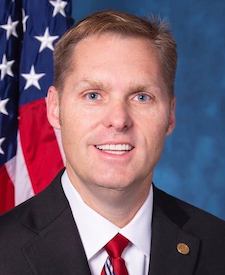
Rep. Michael Guest
Sponsored bills
Maddy summaryHRES 295 is a resolution expressing congressional support for the President's use of the Alien Enemies Act to remove members of Tren de Aragua (designated as a Foreign Terrorist Organization) from the United States. It references the deportation of noncitizens to El Salvador under a prior agreement and affirms the President's authority to detain or deport foreign terrorists. The resolution does not create new laws but endorses specific security actions taken under existing legal authority. It directly relates to the removal of Tren de Aragua members and their transfer to El Salvador's detention facility.
Maddy summaryThis bill, HR 2102 (Major Richard Star Act), allows veterans with combat-related disabilities to receive both full military retired pay and veterans' disability compensation simultaneously, without the previous offset that reduced retired pay. It directly affects veterans already eligible for both benefits due to combat-related injuries, removing the requirement that their retired pay be reduced by the disability compensation amount. The key provision amends Title 10 and Title 38 to eliminate the offset rule (sections 5304 and 5305 of Title 38) for these veterans. The change applies to payments starting after the bill’s enactment date, effective for all qualifying veterans. This is a policy change to increase financial support for affected veterans, not a new benefit.
Sanctioning Russia Act of 2025 This bill imposes penalties on certain persons (individuals and entities) if the President determines that the Russian government or a person acting at Russia's direction is involved with (1) refusing to negotiate a peace agreement with Ukraine; (2) violating a negotiated peace agreement; (3) initiating another invasion of Ukraine; or (4) overthrowing, dismantling, or seeking to subvert the Ukrainian government. If the President makes such a determination, the bill requires certain actions including the President must impose visa- and property-blocking sanctions on specified persons such as the Russian president, certain Russian military commanders, and any foreign person that knowingly provides defense items to the Russian armed forces; the President must increase the rate of duty on all goods and services imported from Russia into the United States to at least 500% relative to the value of such goods and services; the President must increase the rate of duty on all goods and services imported into the United States from countries that knowingly engage in the exchange of Russian-origin uranium and petroleum products to at least 500% relative to the value of such goods and services; the Department of the Treasury must impose property-blocking sanctions on any financial institution organized under Russian law and owned wholly or partly by Russia, and any financial institution that engages in transactions with those entities; and the Department of Commerce must prohibit the export, reexport, or in-country transfer to or in Russia of any U.S.-produced energy or energy product.
Maddy summaryThe Free Speech Fairness Act (HR 2501) would amend tax law to allow 501(c)(3) organizations, such as charities and educational nonprofits, to make political campaign statements as part of their regular activities without risking their tax-exempt status. The bill specifies that these statements must be made in the ordinary course of the organization's exempt purpose and result in only minimal additional costs. This change clarifies that routine political commentary by these groups does not violate their tax-exempt status under current rules. The provision would apply to tax years beginning after the bill's enactment.
Maddy summaryHR 1417 establishes a new program within the U.S. Department of Agriculture to provide tailored technical assistance to rural health care facilities. The program directly supports facilities like hospitals, clinics, and health centers in rural areas by helping them identify operational needs, improve financial management, and access USDA loan and grant programs. Key provisions include prioritizing facilities in medically underserved areas or facing financial vulnerability, with a $2 million annual funding limit for fiscal years 2026-2030. The program requires annual reports on outcomes and effectiveness to Congress, focusing on preventing facility closures and strengthening rural health care delivery.
Maddy summaryHJRES 82 disapproves the District of Columbia Council's approval of the Insurance Regulation Amendment Act of 2024 (D.C. Act 25-699), a local law that would have amended insurance regulations in Washington, D.C. This procedural resolution, submitted under the District of Columbia Home Rule Act, allows Congress to reject the District's legislative action. The bill itself does not change insurance regulations but formally expresses disapproval of the District's law, preventing it from taking effect.
Maddy summaryHRES 262 establishes a House Select Committee focused solely on investigating Mexican drug cartels and their international networks, including U.S. and Mexican government efforts to address them. The committee has no legislative authority but may hold public hearings, conduct investigations, and issue policy recommendations by December 2025, with final reports due by December 2026. This procedural resolution affects only House committee structure and processes, not direct policy changes for the public or government agencies.
Maddy summaryThe SHORT Act (HR 2395) redefines federal firearm definitions to exclude antique and collector firearms from being classified as firearms, and removes distinctions between short-barreled rifles and shotguns in federal regulations. It prevents state laws from imposing taxes or registration requirements on short-barreled rifles and shotguns, requiring state rules to align with federal compliance instead. The bill also mandates the federal government to destroy specific records related to these firearms within one year of enactment.
Maddy summaryThe Freedom from Unfair Gun Taxes Act of 2025 would prohibit states and local governments from imposing taxes on the sale of firearms, ammunition, or firearm parts during interstate or foreign commerce. This bill directly affects state tax policies and manufacturers or dealers selling these items across state lines. It explicitly states that the bill does not change the existing federal tax on firearms and ammunition that funds wildlife conservation programs. The key provision bans state-level taxes for these sales in interstate transactions while preserving current federal funding mechanisms.