Maddy summaryHR 4505 establishes a new 5-year Export Control Officer Program to address gaps in U.S. export enforcement. The bill requires the Commerce Department to station at least 20 export control officers at U.S. diplomatic posts within 90 days, significantly increasing the current count of 11 officers covering 60 countries. These officers will conduct end-use checks to verify that exported items comply with U.S. license rules, advise embassies on export policies, and coordinate with foreign governments to prevent unauthorized use of controlled technology. The program directly affects the Bureau of Industry and Security (BIS) and aims to strengthen enforcement by expanding on-the-ground oversight of U.S. exports globally.
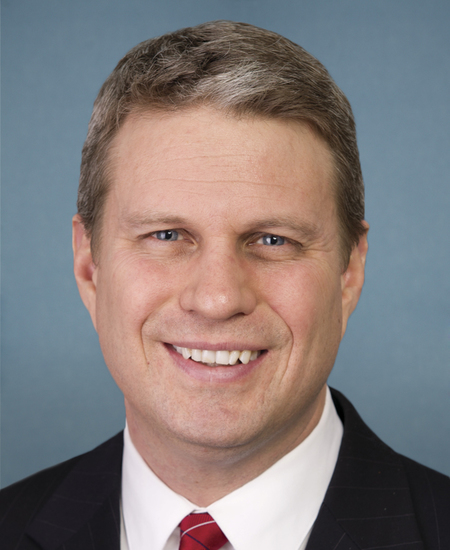
Rep. Bill Huizenga
Sponsored bills
Maddy summaryThe Guidelines for Use, Access, and Responsible Disclosure of Financial Data Act strengthens privacy protections for consumers by amending the Gramm-Leach-Bliley Act to require financial institutions to limit data collection to what is necessary, provide clearer privacy notices, and offer new rights for customers to access or delete their personal information. Key provisions include requiring explicit opt-in consent for sensitive data like biometric information, restricting how third parties can use consumer login credentials, and mandating that institutions disclose how they use artificial intelligence in processing financial data. The bill also establishes a right for former customers to request deletion of their data within 45 days and requires regulators to consider the impact of rules on smaller financial institutions with $15 billion or less in assets.
Maddy summaryThis House Resolution recognizes the efforts and public safety contributions of linemen and the important role they play in maintaining the nation's energy infrastructure. It expresses support for designating April 18, 2026, as "National Lineman Appreciation Day" and acknowledges linemen as first responders.
Maddy summaryThe DPA Modernization Act of 2026 updates the Defense Production Act of 1950 to strengthen national defense manufacturing and supply chain resilience. It creates a Defense Production Act Committee with specific roles, establishes a Defense Production Act Fund with a new Fund manager, and adds new provisions for critical minerals resilience. The bill increases funding limits for certain programs (e.g., raising caps from $10,000 to $100,000) and requires new reporting requirements to improve transparency. It also creates a Defense Production Act Dashboard for tracking activities and adds fraud risk management requirements. The bill affects Federal agencies that use the Defense Production Act authorities to support national defense manufacturing and supply chains.
Maddy summaryThe ALERT Act (HR 7613) requires the Federal Aviation Administration to improve aviation safety through several key measures. It mandates the evaluation and potential implementation of enhanced collision avoidance systems (ACAS-Xa) for commercial aircraft and ACAS-Xr for rotorcraft, with specific deadlines for rulemaking and installation. The bill establishes committees to develop recommendations for safety technology requirements, requires safety risk assessments for air traffic controllers, and addresses operational procedures at high-traffic airports like Ronald Reagan Washington National. These provisions affect air carriers, air traffic controllers, rotorcraft operators, and Department of Defense aircraft operations. The act aims to enhance situational awareness and reduce midair collision risks through technology upgrades and improved safety protocols.
Maddy summaryThe Empowering Shareholders Act of 2026 amends the Investment Advisers Act of 1940 to change how investment advisers vote proxies for shares held in passively managed funds. For non-routine matters, it mandates that advisers choose one of four methods: follow beneficial owner instructions (which can include selecting a published voting policy), vote with the issuer's board recommendations, abstain, or mirror other shareholders' votes. The bill provides a legal safe harbor for advisers adhering to these rules and requires them to disseminate information and options for beneficial owners to select a voting policy. This directly affects investment advisers and investors in passively managed funds by altering proxy voting procedures and increasing investor influence over how their shares are voted.
Maddy summaryThis resolution congratulates the University of Michigan Wolverines men's basketball team on winning the 2026 NCAA Division I Men's Basketball Championship. It recognizes the achievements of the student-athletes, coaches, and support staff who contributed to the team's victory, which marks the program's second national title in history. The resolution also invites the team to be honored at the United States Capitol Building and directs the House Clerk to provide copies of the resolution to University leadership for display.
Maddy summaryThis bill, titled the Protecting America's Orchardists and Nursery Tree Growers Act, amends the existing tree assistance program within the Agricultural Act of 2014 to expand financial support for fruit and tree growers facing tree loss. The key changes allow growers to receive assistance regardless of their production history or whether their trees have stopped producing economically viable crops, while also giving the Secretary discretion to adjust acreage limits for assistance. The bill requires recipients to replant their trees within two years of approval or sooner if necessary for tree survival, and permits replanting with alternative tree varieties, densities, or locations, though funding amounts remain capped at what would have been received for replanting with the original specifications. Additionally, the program mandates that the Secretary must approve or deny applications within 120 days and notify applicants of the decision. These provisions directly affect orchardists and nursery tree growers who lose trees due to disease, pests, or other causes and seek federal assistance for replanting.
Maddy summaryThe Tech Diplomacy Training Act requires all U.S. Foreign Service officers to complete mandatory training on science, technology, engineering, and mathematics topics, including artificial intelligence and emerging communications technologies. This training will be administered through the George P. Shultz National Foreign Affairs Training Center and must cover how these technologies impact diplomacy, how adversaries use them, and how the United States can leverage them as diplomatic tools. New officers must complete the full curriculum during their initial training, while existing officers have 18 months to finish the comprehensive program or 270 days to complete a condensed version. The requirement applies to all Foreign Service officers and operates alongside existing training requirements without replacing them.
Maddy summaryThis bill establishes a new Congressional Office for International Leadership within the legislative branch to foster connections between U.S. lawmakers and emerging leaders from eligible foreign countries through exchange programs and grassroots diplomacy. The office will be overseen by a 12-member Board of Trustees composed of congressional leaders, committee chairs, and private citizens, who will decide which foreign states qualify for participation and manage grant programs for hosting foreign leaders in the United States. The Executive Director, appointed by House and Senate leadership based on Board recommendations, will oversee daily operations and manage a grant program that can host up to 3,500 foreign participants annually for short-term visits, with funds used for travel, lodging, and administrative expenses. The office will operate without partisan bias, submit annual audited financial reports to congressional committees, and receive administrative support from the Library of Congress while managing its own trust fund for donations and appropriations.