

Improving Medicare Coverage Act This bill temporarily expands eligibility for Medicare. It also temporarily establishes a premium and cost-sharing assistance program for low-income beneficiaries. Specifically, the bill lowers the age of eligibility for Medicare from 65 to 60. The Centers for Medicare & Medicaid Services must establish procedures to provide for automatic enrollment of qualifying individuals. Enrollment must be completed within 11 months of the bill's enactment. The bill also establishes a program under Medicare to assist low-income Medicare beneficiaries with premiums, coinsurance, deductibles, and other costs. Currently, such assistance is provided through Medicare Savings Programs, which are administered by state Medicaid programs. The bill also establishes a related special enrollment period under Medicare, expands eligibility for assistance to beneficiaries with income up to 200% of the federal poverty line, and provides for joint eligibility determinations with respect to the bill's program and the low-income subsidy program under the Medicare prescription drug benefit. The bill's provisions generally take effect six months after the bill's enactment and terminate five years later.
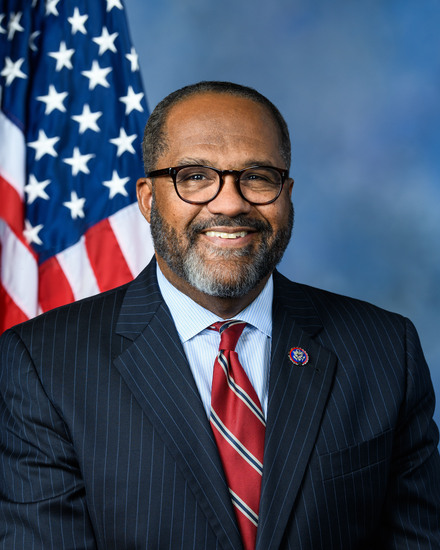
Rep. Troy A. Carter
Sponsored bills
Prohibition of Medicaid Funding for Conversion Therapy Act This bill prohibits state Medicaid programs from covering conversion therapy. The bill defines conversion therapy as any practice or treatment that seeks to change a person's sexual orientation or gender identity in exchange for monetary compensation.
This bill establishes Rosa Parks Day as a federal holiday.
Harlem Hellfighters Congressional Gold Medal Act This bill provides for the award of a Congressional Gold Medal to the 369th Infantry Regiment, commonly known as the Harlem Hellfighters, in recognition of their bravery and outstanding service during World War I.
Federal Disaster Housing Stability Act of 2021 This bill imposes limits on foreclosures and evictions in areas affected by a declared disaster or emergency. A servicer of certain federally backed residential mortgages for a property in such an area may not initiate the foreclosure process or take other foreclosure-related actions relating to that property unless the property is vacant or abandoned. These restrictions shall be in place for six months after the disaster or emergency is declared. Similarly, the landlord of a dwelling in such an area may not (1) initiate eviction proceedings against a tenant in that dwelling for nonpayment of rent or fees; (2) charge that tenant a penalty for nonpayment of rent; (3) increase the rent; (4) prevent a tenant who has temporarily relocated from returning; or (5) otherwise require the tenant to vacate the dwelling. Landlords must also provide notice to tenants regarding available federal assistance. These restrictions shall be in place for 90 days beginning (1) when the disaster or emergency is declared; or (2) in the case of a dwelling eligible for assistance, when such assistance is received or when eligibility for such assistance has expired.
Creative Economy Revitalization Act This bill requires the Department of Labor to award grants to government and nonprofit agencies to provide programs that employ individuals and provide public access to art or arts programming.
Beyond the Box for Higher Education Act of 2021 This bill requires the Department of Education to issue guidance and recommendations for institutions of higher education to remove criminal and juvenile justice questions from their admission applications.
This concurrent resolution recognizes the disparity in wages paid to Black women and its impact on women, families, and the nation, and reaffirms Congress' support for ensuring equal pay and closing the gender wage gap.
Medical Device Nonvisual Accessibility Act of 2021 This bill requires certain medical devices with a digital interface to meet nonvisual accessibility standards established by the Food and Drug Administration (FDA). Specifically, the FDA must establish regulations to require a Class II or Class III medical device with a digital interface to provide a blind or low-vision user access to the same services and information, and generally the same ease of use, as provided to a user who is not low-vision or blind. (The FDA classifies medical devices in three classes. Class I devices are low-risk, Class II devices are moderate-risk, and Class III devices are high-risk.) A Class II or Class III medical device that does not meet the nonvisual accessibility standards established under this bill may not be sold.
Communities and Environment First Act of 2021 This bill establishes the For Communities Trust Fund to be funded by specified environmental taxes for the purpose of awarding grants to states in cooperative agreements with the Environmental Protection Agency to (1) assist in relocation efforts for individuals or groups who live within five miles of facilities that are a major source or area source of certain emissions, or (2) protect or remediate areas affected by emissions of hazardous air pollutants or releases of hazardous substances from such facilities. The bill increases the excise tax on certain chemicals to adjust for inflation and removes tax exemptions related to crude oil and petroleum products imported into the United States.