Nutrition Counseling Aiding Recovery for Eating Disorders Act of 2021 or the Nutrition CARE Act of 2021 This bill provides for Medicare coverage of medical nutrition therapy services for individuals with eating disorders. Such services must be furnished by a registered dietitian or nutrition professional pursuant to a referral from a physician, psychologist, or other authorized mental health professional.
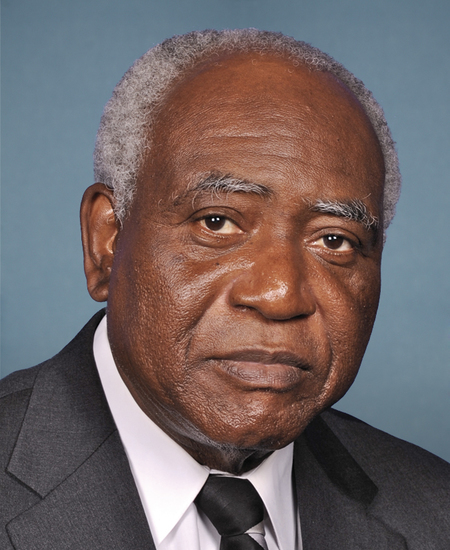
Rep. Danny K. Davis
Sponsored bills
Congressional Oversight of Unjust Policing Act This bill establishes the U.S. Commission on Unjust Policing to investigate law enforcement activities and decisions related to the security breach at the U.S. Capitol on January 6, 2021. Specifically, the commission must investigate decisions made by leadership of the U.S. Capitol Police (USCP), the Federal Bureau of Investigation, the U.S. Secret Service, and the Department of Homeland Security leading up to and during the siege at the Capitol, including an assessment of whether conscious and unconscious bias was a factor in the miscalculation of the risk posed by protesters to Members of Congress and their staff. The commission must also investigate whether current USCP officers have ties to white supremacist and other extremist groups, movements, and organizing efforts, and whether any USCP officers neglected their duty and colluded with protestors or other law enforcement entities. Further, the commission must recommend specific measures and reforms related to realigning (1) USCP priorities and practice to address disparate use of force and surveillance targets in and around the Capitol; and (2) USCP recruitment, hiring, and retention policies and practices to address conscious and unconscious biases.
Federal Death Penalty Prohibition Act This bill prohibits the imposition of a death penalty sentence for a violation of federal law. A person sentenced to death before enactment of this bill must be resentenced.
Preventing Future Pandemics Act of 2021 This bill establishes measures to address global public health risks posed by wildlife markets, which are commercial markets that sell or slaughter wildlife for human consumption as food or medicine in communities where alternative nutritional or protein sources are available. Specifically, the bill prohibits importing, exporting, purchasing, or selling live wild animals in the United States for human consumption as food or medicine. The Department of the Interior must hire, train, and deploy at least 50 new U.S. Fish and Wildlife Service law enforcement attachés around the world, and the U.S. Agency for International Development must increase specified activities to address the threats and causes of zoonotic (animal-to-human transmission) disease outbreaks. Additionally, the United States must work with other United Nations member states to urge a global ban on commercial wildlife markets and enforcement of laws to end wildlife trafficking. Further, the President may impose sanctions against a foreign country or foreign nationals that the Department of State has determined are taking certain actions that enable or facilitate commercial wildlife markets. Among other reports required by the bill, the National Academies of Sciences, Engineering, and Medicine must conduct a study and submit a report that includes an evaluation of (1) the impact that consumption of terrestrial wildlife as food or medicine has on the transmission of novel viral and other pathogens, (2) the role of consuming terrestrial wildlife as food or medicine in the transmission of microbes from animals to humans, and (3) the conditions at live wildlife markets that lead to this transmission.
Build America's Libraries Act This bill establishes and provides funds through FY2024 for the Build America's Libraries Fund, from which the Institute of Museum and Library Services (IMLS) must allocate funding to states and, through them, need-based grants to libraries to make long-term improvements to library facilities. The IMLS must also award grants to Indian tribes and organizations that primarily serve and represent Native Hawaiians. Specifically, the bill requires each state that receives an allocation, and each library that receives a grant, to carry out certain activities to improve library facilities. These activities include constructing and renovating library facilities, investing in infrastructure projects to improve internet access and connectivity, improving indoor air quality, and making facilities accessible to individuals with disabilities. The bill also outlines administrative and oversight provisions, including by requiring library projects to use iron and steel products that are produced in the United States.
Berta Caceres Human Rights in Honduras Act This bill prohibits U.S. assistance to the police or military of Honduras. The Department of the Treasury shall instruct U.S. representatives of multilateral development banks to vote against providing loans to the Honduran police or military. The prohibition shall be lifted if the Department of State certifies to Congress that various conditions have been met, including that the Honduran government has (1) pursued all legal avenues to reach verdicts in specified crimes, such as the killings of indigenous land-rights activist Berta Caceres and of 100 small-farmer activists in the Aguan Valley; (2) investigated and prosecuted members of the military and police who have violated human rights; and (3) taken effective steps to establish the rule of law.
Child Poverty Reduction Act of 2021 This bill requires the Department of Health and Human Services (HHS) and the Census Bureau to take certain actions with respect to poverty measures and data related to child poverty. It also requires the National Academy of Sciences to report annually on child poverty and study other issues, such as policies to reduce intergenerational poverty. Specifically, HHS must enter into an agreement with the Census Bureau to annually report an anchored supplemental poverty measure for individuals under the age of 18 and must otherwise collaborate with the bureau to, for example, correct income data to account for underreporting. Currently, the Census Bureau uses the official poverty measure (based on cash resources) and the supplemental poverty measure (based on both cash and certain noncash resources, such as nutrition assistance program benefits) to measure poverty. Anchoring the supplemental poverty measure fixes the poverty threshold at a given point in time and then adjusts it for inflation. HHS must publish resources on its website related to child poverty, and the Census Bureau must release certain economic and survey data at the same time it releases a specific report related to income, poverty, and health insurance coverage in the United States.
Alzheimer's Caregiver Support Act This bill authorizes grants to expand training and support services for families and caregivers of individuals living with Alzheimer's disease or a related dementia. The Department of Health and Human Services may award these grants to community organizations and health care and social service providers.
This bill requires the Joint Committee on the Library to obtain, and the Architect of the Capitol to permanently install in the U.S. Capitol or on the U.S. Capitol Grounds, a monument honoring Associate Justice of the Supreme Court Ruth Bader Ginsburg.
This bill redesignates the federal building located at 935 Pennsylvania Avenue, NW, in the District of Columbia (currently known as the J. Edgar Hoover Building) as the Federal Bureau of Investigation Building.