Maddy summaryHRES 880 is a symbolic House resolution recognizing the strategic U.S.-India partnership, not a bill with new policy or funding. It reaffirms longstanding cooperation on defense, counterterrorism, technology, and people-to-people ties, citing historical milestones like the 2008 nuclear agreement and recent Quad collaboration. The resolution has no binding effect but formally supports continued partnership through existing mechanisms like the U.S.-India Transforming Relationship Utilizing Strategic Technology initiative. It highlights shared priorities including Indo-Pacific stability and counterterrorism efforts, with no new legislative requirements or changes to law.
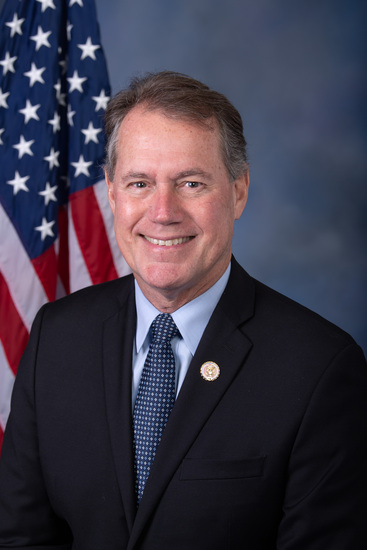
Rep. Ed Case
Sponsored bills
Maddy summaryHR 6056, the International Human Rights Defense Act of 2025, establishes a permanent Special Envoy at the State Department to lead U.S. foreign policy efforts addressing discrimination and violence against LGBTQI+ people globally. The bill requires the U.S. government to develop and update a biannual global strategy to prevent criminalization and violence against LGBTQI+ individuals, mandate detailed reporting on such abuses in annual country reports, and ensure all U.S. foreign assistance programs include inclusive nondiscrimination policies. This legislation directly affects U.S. foreign policy implementation, federal agencies receiving funding, and LGBTQI+ communities facing persecution worldwide. The bill aims to coordinate U.S. government efforts across departments and with international partners to advance LGBTQI+ rights globally through concrete policy mechanisms.
Maddy summaryThis bill expands veterans' benefits for Filipino veterans who served in the Philippine forces or Philippine Scouts during World War II. It updates eligibility rules to allow the VA to accept alternative documentation (beyond standard records) when verifying service, addressing historical barriers to claiming benefits. The law also requires the VA to annually report to Congress on the number of applications received and approvals granted under this provision. These changes directly affect Filipino veterans and their families seeking recognition and benefits for their military service. The bill takes effect 270 days after enactment, with no retroactive benefits.
Maddy summaryHRES 864 is a ceremonial resolution honoring U.S. veterans on Veterans Day 2025. It does not create new laws or policies but formally recognizes veterans' service and sacrifice, calling on all Americans to observe Veterans Day. The resolution references historical context about Veterans Day's origins (from Armistice Day to honoring all veterans) but contains no concrete policy changes. It directly addresses the general public, urging them to participate in the observance. As a non-binding resolution, it affects no specific individuals or groups through legislative action.
Maddy summaryHRES 865, the "Opening the People’s House Resolution," would amend House rules to allow any member to end a "district work period" (a time when members work in their districts instead of in Washington) by submitting a letter to the Clerk. If a majority of House members submit such letters, the current district work period would end within two days, and the Speaker could not schedule a new one for three weeks after the House reconvenes. The Clerk would publicly list all signers in the Congressional Record and online daily. This resolution directly affects House members and the Speaker by changing how district work periods are terminated.
Maddy summaryHR 5964, the Integrated Resource Planning Modernization Act, requires the Secretary of Energy to develop and publish federal guidelines for how electric utilities plan for future electricity needs. These guidelines mandate modern approaches to resource planning, including modeling capacity expansion with diverse options (like storage and distributed energy), integrating transmission planning, using probabilistic analysis for weather and reliability risks, and creating scorecards to weigh costs and benefits. The bill directly affects states, utility commissions, and electric utilities (including cooperatives and municipal systems) by requiring them to align their planning with these federal guidelines. To support implementation, the bill creates a grant program for states to update regulations or coordinate planning efforts, along with technical assistance and a requirement for states to report progress.
Maddy summaryThis bill maintains a $800 duty-free limit for small shipments (de minimis shipments) from specific U.S. territories into the mainland United States. It directly affects residents and businesses in the U.S. Virgin Islands, Guam, the Northern Mariana Islands, and American Samoa, allowing them to import goods valued under $800 per day without paying import duties or taxes. The law prohibits splitting orders to bypass the $800 limit and requires the Treasury Secretary to implement this rule consistently with pre-January 2025 practices. It also adds the Northern Mariana Islands to an existing exemption for bona fide gifts and mandates consultation on trade policies that could harm territory commerce.
Maddy summaryThis non-binding resolution (HRES 844) expresses the U.S. House of Representatives' support for designating October 2025 as "Crime Prevention Month." It encourages federal agencies to fund evidence-based crime prevention programs - like youth mentorship, mental health services, and neighborhood safety initiatives - and urges state/local governments to adopt strategies such as Crime Prevention Through Environmental Design. The resolution also commends community workers and calls on all citizens to participate in public safety activities during October. It has no legal effect but aims to raise awareness and foster collaboration across communities, government, and private sectors to reduce crime.
Maddy summaryHRES 822 is a non-binding resolution designating October 23, 2025, as "National Marine Sanctuary Day." It supports raising public awareness about the National Marine Sanctuary System, which protects ocean and Great Lakes areas for conservation, recreation, and cultural heritage. The resolution encourages responsible visits to sanctuaries and recognizes their economic benefits, including supporting jobs in tourism and fishing. It does not create new laws or funding but formally acknowledges the system’s role in preserving marine ecosystems and coastal communities. This symbolic gesture aims to foster public engagement with marine sanctuaries across the U.S.
Maddy summaryThe MARA Act of 2025 establishes a framework for developing sustainable offshore aquaculture (seafood farming in U.S. ocean waters beyond coastal zones). It creates an Office of Aquaculture within NOAA to coordinate research, permit demonstration projects, and develop environmental standards. The bill requires demonstration projects to use native species, minimize environmental impacts, and collaborate with educational institutions, while collecting socioeconomic data. It also creates Aquaculture Centers of Excellence to train workers and support workforce development in coastal communities, aiming to expand domestic seafood production and reduce the U.S. seafood trade deficit.