Maddy summaryThis bill, titled the Trump Accounts for All Generations Act, makes a specific program related to "Trump accounts" permanent and adjusts its contribution limits. It directly affects individuals who contribute to these accounts by altering their long-term availability and value. The legislation permanently extends the "Trump accounts" contribution program by removing its scheduled expiration date of January 1, 2029. Furthermore, it introduces an annual inflation adjustment for the program's $1,000 contribution amount, beginning in taxable years after 2028. The bill also removes the word "pilot" from the program's title and related sections of the tax code, formally establishing it as an ongoing program.
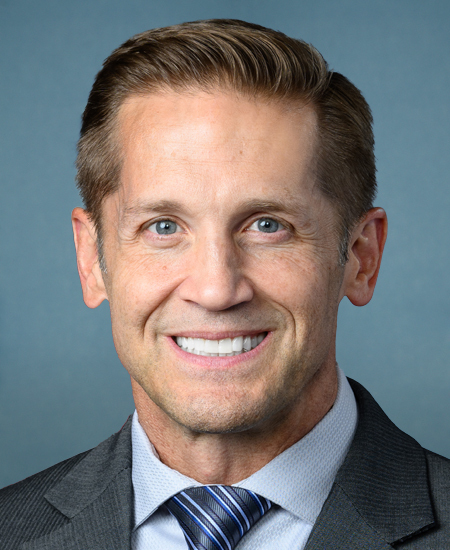
Rep. Richard McCormick
Sponsored bills
Maddy summaryThe ALERT Act (HR 7613) requires the Federal Aviation Administration to improve aviation safety through several key measures. It mandates the evaluation and potential implementation of enhanced collision avoidance systems (ACAS-Xa) for commercial aircraft and ACAS-Xr for rotorcraft, with specific deadlines for rulemaking and installation. The bill establishes committees to develop recommendations for safety technology requirements, requires safety risk assessments for air traffic controllers, and addresses operational procedures at high-traffic airports like Ronald Reagan Washington National. These provisions affect air carriers, air traffic controllers, rotorcraft operators, and Department of Defense aircraft operations. The act aims to enhance situational awareness and reduce midair collision risks through technology upgrades and improved safety protocols.
Maddy summaryThe CLEAR LABELS Act aims to increase transparency in the drug supply chain by requiring more detailed information on pharmaceutical labels. It mandates that finished drug products' labels, or linked electronic portals, include the name, location, and unique identifier of the manufacturer, packer, or distributor. Additionally, labels must identify the original manufacturer of both the finished drug product and each active pharmaceutical ingredient, with this information also available in paper form upon request. The bill further exempts finished drug products from standard customs country-of-origin marking if they comply with these new labeling requirements.
Maddy summaryThis bill, titled the "Biotechnology for All High School Students Act," aims to expand biotechnology education for secondary school students across the United States. It authorizes a competitive grant program for eligible entities, such as schools, colleges, and non-profit organizations, to support new and existing biotechnology education initiatives. Funds from these grants can be used for purposes like professional development for teachers, developing curricula, acquiring laboratory equipment, establishing partnerships, and creating transferable biotechnology credentials for students. The bill also establishes a National Biotechnology Education Consortium to provide support and recommendations for these programs, promoting coordination and resource sharing among various stakeholders.
Maddy summaryThe HBCU Research Capacity Act establishes a Federal Clearinghouse within the Department of Education, in coordination with several other federal agencies, to provide Historically Black Colleges and Universities (HBCUs) with comprehensive information on federal grant opportunities. This Clearinghouse will identify grants supporting research and development and institutional capacity building at HBCUs, while also sharing best practices for securing federal funding. The Department of Education will notify HBCUs and Congress about the Clearinghouse and offer quarterly updates to participating institutions. Additionally, several federal agencies, including Defense, Energy, and the National Science Foundation, are mandated to review their grant programs to align with the Clearinghouse's recommendations and report any identified funding gaps to Congress annually.
Maddy summaryThe FETCH Act of 2026 expands funding from federal Byrne grants to support police dog programs across the United States. This legislation allows law enforcement agencies to use these funds for acquiring, training, and caring for police dogs, including expenses for veterinary care, medications, food, equipment, and housing. The bill also permits funding for retired service dogs, covering post-service medical needs and administrative costs. Directly affected entities are police departments that operate K9 units and seek financial assistance for canine-related operational expenses. The act amends existing federal crime control statutes to explicitly include police dog programs as eligible uses of Byrne grant money.
Maddy summaryThis bill expresses support for designating March 26, 2026, as National Science Appreciation Day to recognize scientific achievements and encourage future STEM engagement. The resolution highlights the economic and societal contributions of science, technology, engineering, and mathematics across various government agencies and industries. It does not create new laws or funding but serves as a symbolic gesture to celebrate the role of science in improving daily life and national progress. The measure is non-binding and does not require further legislative action to implement.
Maddy summaryHR 7649, the Humanitarian Theft Enforcement Act, holds foreign individuals or entities liable for unauthorized diversion or destruction of U.S. humanitarian aid, including aid provided through international organizations. The Secretary of State determines responsibility and can recover the aid's value from the responsible party, with recovered funds credited to the State Department or transferred to other agencies if the aid was originally funded by them. The Secretary may also waive liability if deemed in the national interest. This bill creates a direct mechanism for the U.S. government to seek reimbursement for diverted humanitarian assistance.
Maddy summaryThis resolution formally recognizes the 100th anniversary of the Sporting Arms and Ammunition Manufacturers' Institute (SAAMI), a trade organization founded in 1926. The bill commends SAAMI for developing industry standards that ensure firearms and ammunition are safe, reliable, and interchangeable. It acknowledges the organization's work in coordinating with government bodies, international standards groups, and industry stakeholders to maintain consistent safety practices. This measure is a ceremonial resolution that does not change any laws or regulations but serves to honor SAAMI's century of leadership in the firearms industry.
Maddy summaryThis bill would change how the Department of Veterans Affairs pays healthcare providers under its Community Care Program by requiring payment rates to be based on the specific location where care is delivered rather than the provider's main headquarters. It mandates that the VA establish separate payment rates for different types of care sites, including hospital outpatient departments, ambulatory surgical centers, and physician offices, starting in 2027. The legislation also requires each care site to have a unique National Provider Identifier and ensures that claims for payment include this identifier to track where services were provided. Additionally, it clarifies how off-campus outpatient departments affiliated with larger providers should be treated and billed separately.