Protection of Women in Olympic and Amateur Sports Act This bill requires certified national governing bodies (NGBs) of amateur sports (e.g., USA Gymnastics) to prohibit a person whose sex is male from participating in an amateur athletic competition that is designated for females, women, or girls. Under the bill, male means an individual who has, had, will have—or would have, but for a developmental or genetic anomaly or historical accident—the reproductive system that at some point produces, transports, and utilizes sperm for fertilization.
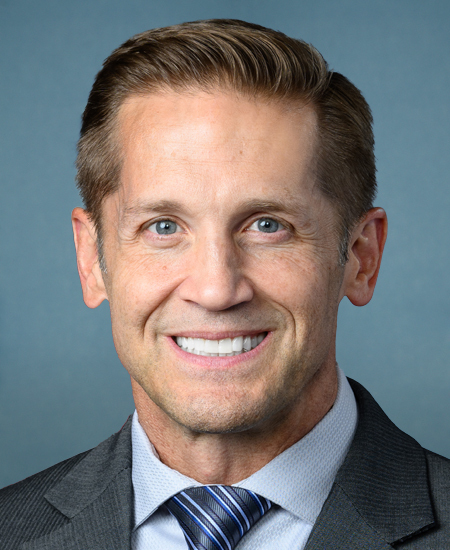
Rep. Richard McCormick
Sponsored bills
Maddy summaryThe Contract Our Veterans Act of 2026 establishes new federal contracting preferences for small businesses owned and controlled by veterans. It allows agencies to award contracts above the simplified acquisition threshold without competition to qualified veteran-owned businesses if they meet performance, pricing, and value criteria, and creates restricted competitions exclusively for these businesses. The bill sets a mandatory governmentwide goal of at least 5% of all federal prime and subcontract awards going to veteran-owned small businesses each fiscal year. It also amends reporting requirements to track these contracts separately across agencies, including through sole-source awards and restricted competitions. This directly affects veteran-owned small businesses seeking federal contracts and federal agencies responsible for procurement.
Maddy summaryThe No Tax Dollars for Terrorists Act requires the U.S. State Department to identify foreign countries and organizations receiving U.S. foreign aid that have provided financial or material support to the Taliban, including the amounts of aid they receive and the support they give to the Taliban. It mandates a strategy to use U.S. aid to discourage such support, with initial and follow-up reports to Congress on the strategy and its implementation. The bill also demands detailed reports on U.S. cash assistance programs in Afghanistan and the Afghan Fund, explaining how funds are transferred (including traditional money transfer systems) and how safeguards prevent Taliban access.
Maddy summaryThis bill modifies federal budget rules for unspent agency funds. It requires federal agencies to allocate 49% of unused funds to the next fiscal year, 49% toward paying the national debt, and 2% for retention bonuses (capped at 10% of an employee's base pay). Agencies must also limit future budget requests to the previous year's amount adjusted for inflation. The bill directly affects all executive branch agencies (excluding the Red Cross), altering how they manage leftover budget authority. It does not create new savings programs for individuals but changes government fiscal management procedures.
Maddy summaryThis bill requires Medicare plans (including Medicare Advantage and prescription drug plans) to base coverage decisions on medical necessity and evidence-based standards. It mandates that plans seek input from practicing physicians when creating or changing coverage rules, post all preauthorization requirements online in plain language, and publicly share statistics on approvals and denials. The bill also requires that adverse coverage decisions be made by licensed, board-certified physicians and prohibits denying coverage solely due to lack of evidence-based standards when none exist for a service. These changes aim to reduce unnecessary delays in care for Medicare beneficiaries by increasing transparency and clinical input in coverage decisions.
Maddy summaryHR 7270 creates a federal grant program administered by the Treasury Secretary to provide funding to states for developing secure digital identity systems. States would use these grants to create digital driver’s licenses and identity credentials that comply with NIST guidelines, prioritize protection against deepfake attacks, and replace vulnerable legacy systems. The bill requires states to use at least 10% of grant funds to assist individuals in obtaining digital identity services, while prohibiting states from forcing residents to use digital IDs or eliminating physical licenses. It aims to reduce identity theft fraud in government benefit programs and the financial system by enhancing digital identity security, with no requirement for states to develop digital credentials.
Maddy summaryHR 7235, the "Protecting Motherhood Act," requires all federal agencies to stop using the term "birthing person" in official documents and instead use specific terms like "female," "mother," "pregnant woman," or "woman." It directly affects federal agencies that produce regulations, forms, or communications, mandating the use of these defined terms when referring to individuals based on biological sex. The bill provides detailed definitions for terms like "female" (based on biological sex at conception) and "pregnant woman" (an adult human female carrying a child). The law takes effect 30 days after enactment. This is a procedural change focused solely on terminology in government documents, with no direct impact on healthcare access or services.
Maddy summaryThis resolution designates July 6, 2025, as "A Day of Compassion" to commemorate the 90th birthday of the Dalai Lama. It expresses congressional support for the Tibetan people's human rights, religious freedom, and cultural/linguistic protections. The resolution affirms that decisions about Tibetan Buddhist religious leadership - including the selection of a future Dalai Lama - must be made by Tibetan Buddhist authorities, not the Chinese government. It does not create new laws or policies but serves as a symbolic expression of support through congressional recognition.
Maddy summaryThe SAFE KIDS Act would void surrogacy contracts between U.S. surrogates and foreign nationals from designated "foreign entities of concern" (nations listed under 10 U.S.C. §4872(f)(2)), except for married couples where at least one prospective parent is a U.S. citizen or lawful permanent resident. It prohibits surrogacy brokers from facilitating such contracts, imposing fines or up to one year in prison for knowingly arranging these agreements. If a contract is voided, custody decisions for the child would be determined by state courts based solely on the child’s best interests, disregarding the invalid agreement. The bill aims to address what Congress identifies as a national security threat involving exploitation of U.S. surrogacy laws and potential human trafficking.
Maddy summaryHR 7095 bans the importation of energy products (like refined oil) classified under chapter 27 of the U.S. tariff system if they were produced using crude oil originating from Russia, even if processed outside Russia. This directly affects U.S. importers and companies handling such energy products. The bill amends existing law to prohibit these imports by requiring customs to block shipments tied to Russian crude oil, regardless of where refining occurred. It targets "laundered" Russian oil that might otherwise enter the U.S. market through third-country refineries. The policy change focuses on restricting the flow of Russian energy revenue through import channels.