

Maddy summaryThis House concurrent resolution supports designating the week of September 21 through September 25, 2026, as National Falls Prevention Awareness Week to highlight fall risks among adults over age 65. The bill cites statistics showing that falls are a leading cause of injury and death in this demographic, resulting in significant medical costs for Medicare, Medicaid, and private payors. It recognizes the effectiveness of cost-effective prevention strategies such as exercise programs, medication management, and home hazard reduction. Additionally, the resolution encourages federal investments in these programs and acknowledges the collaborative efforts of government agencies, health care providers, and community organizations to reduce fall risks.
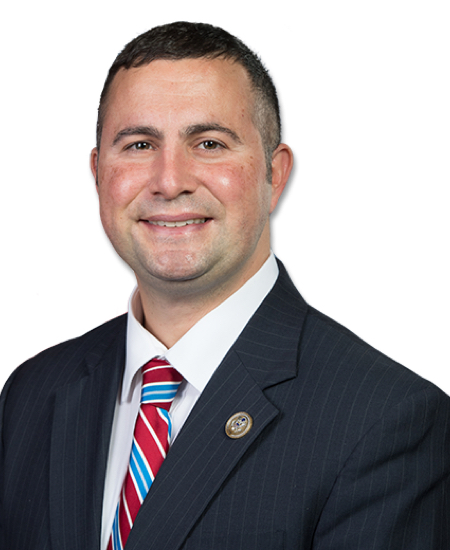
Rep. Darren Soto
Sponsored bills
Maddy summaryThis House resolution expresses support for designating September 22, 2026, as "National Hispanic Nurses Day" to honor the contributions of Hispanic nurses to the U.S. healthcare system. It specifically recognizes the National Association of Hispanic Nurses as the leading organization representing and advocating for this group of professionals. The bill encourages the public to observe the day with ceremonies and activities that highlight the role of these nurses in reducing health disparities and providing culturally competent care.
Maddy summaryThis House resolution expresses support for designating the week beginning September 14, 2026, as National Hispanic-Serving Institutions Week. It recognizes these colleges and universities, which enroll at least 25 percent Hispanic students, for their role in providing higher education access to low-income and underserved populations. The bill highlights that these institutions serve a significant portion of the nation's undergraduate students and contribute to economic mobility. It calls on the public and interested groups to observe the week with ceremonies and activities during Hispanic Heritage Month.
Maddy summaryThe Relief Without Delay Act ensures that FEMA can continue disaster relief operations and access its Disaster Relief Fund even if the government shuts down due to a lapse in appropriations. It requires FEMA to submit monthly public reports detailing how disaster funds are obligated and spent, while also mandating the Department of Housing and Urban Development to assess unmet housing needs after major disasters. Additionally, the bill directs NOAA and FEMA to improve tornado detection capabilities using new technologies like artificial intelligence and establishes a grant program for communities to build storm shelters and upgrade warning systems.
Maddy summaryThe Firefighter PFAS Injury Compensation Act of 2026 establishes a no-fault compensation program to provide financial awards to firefighters who have served for at least two years and developed specific health conditions linked to exposure to per- and polyfluoroalkyl substances (PFAS). Eligible claimants, including deceased firefighters' estates or heirs, can receive base payments of $250,000 for cancer diagnoses or $50,000 for other covered illnesses, with amounts adjusted by a multiplier based on the firefighter's years of service. The program is funded through a new PFAS Trust Fed, which receives revenue from two new excise taxes: a 10 percent tax on the sale of products containing PFAS and a 10 percent tax on payments made in PFAS-related litigation settlements or court orders that do not involve personal injury claims.
Maddy summaryThe Memory Chip Competitiveness Assessment Act of 2026 directs the Secretary of Commerce to conduct a comprehensive study on the market for advanced memory technology, including demand, supply constraints, and impacts on consumer costs. The study must examine capital investment cycles, supply chain dependencies on non-U.S. suppliers, and legal or regulatory barriers that limit domestic supply. The Secretary is required to consult with federal agencies and industry stakeholders, such as manufacturers and major customers, before publishing the findings. A final report must be submitted to congressional committees and made public within 270 days of enactment, following a period for public comment.
Maddy summaryThis bill would require Medicare to cover early detection screening tests for Alzheimer's disease and related dementias starting January 1, 2028. It defines eligible tests as FDA-cleared genomic blood tests, blood product analyses, or equivalent medical imaging methods (like protein expression or whole genome sequencing) that detect pre-symptomatic or early-stage conditions. Medicare beneficiaries would receive this coverage without cost-sharing for these specific screenings. The bill amends Medicare coverage rules to explicitly include these tests under Section 1861(nnn) of the Social Security Act.
Maddy summaryThe Data BRIDGE Act requires the Federal Communications Commission (FCC) to update its national broadband map within 180 days of enactment by adding agricultural areas as a dedicated layer. This change will directly affect the FCC, USDA, state governments, and broadband providers by incorporating agricultural land data into the map used to identify broadband coverage gaps. The bill mandates the FCC to consult with the USDA, Commerce Department, states, and other stakeholders to integrate existing agricultural data into the map. The goal is to improve accuracy in identifying broadband needs in rural farming communities, though it does not directly fund infrastructure.
Maddy summaryThe TRAPS Act establishes a federal Task Force on Payment Scams, chaired by the Treasury Secretary, to coordinate efforts across agencies like the FTC, Federal Reserve, and consumer groups. The Task Force will study current scam tactics (such as fake text messages or fraudulent payment platforms), evaluate prevention strategies, and develop recommendations to help consumers avoid and report scams. It must submit an initial report within one year and annual updates, focusing on improving federal-state coordination and education programs. This bill directly affects government agencies and stakeholders participating in the Task Force, with the goal of protecting consumers from evolving payment scams.
Maddy summaryHR 2004, titled "Tyler’s Law," requires the Secretary of Health and Human Services to study how often hospital emergency departments test for fentanyl during overdose cases (beyond standard drug tests), including associated costs, patient benefits/risks, and impacts on privacy and patient-physician relationships. The study must be completed within one year of the bill's enactment. Based on the study results, the Secretary must issue guidance within six months on whether emergency departments should routinely test for fentanyl, how to inform clinicians about test contents, and how such testing may affect future overdose risks and health outcomes. This bill directly affects hospital emergency departments and patients experiencing overdoses by shaping future testing protocols.