

Maddy summaryThe Protecting Kids from Creeps Act prohibits surrogacy agencies, their employees, and sex offenders from participating in surrogacy agreements, directly affecting fertility clinics, staff, and individuals required to register as sex offenders. The bill mandates severe criminal penalties, including fines and prison sentences of at least 10 to 20 years, for knowingly or recklessly facilitating such agreements, while also stripping convicted agencies of their tax-exempt status and eligibility for federal grants. Any surrogacy agreement formed in violation of these rules is declared legally void and unenforceable, meaning it cannot be used to establish parental rights. In cases where a child is born from an illegal agreement, custody decisions will be made solely based on the best interests of the child under the laws of the state where the surrogate lives, ignoring any prior contracts. Additionally, the Attorney General can pursue civil penalties equal to the compensation received or offered for prohibited conduct.
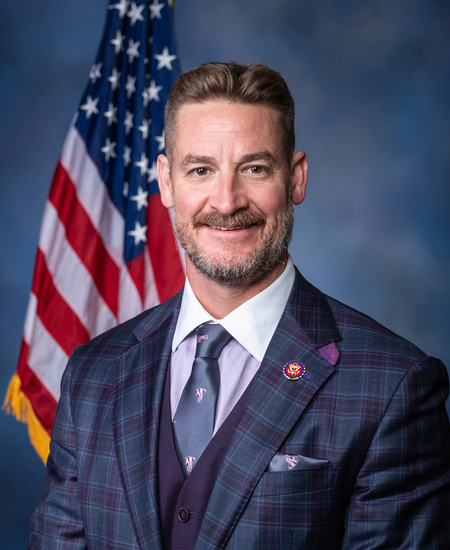
Rep. W. Gregory Steube
Sponsored bills
Maddy summaryHR 3831, the Florida Safe Seas Act of 2025, amends an existing federal law to specifically include Florida in a prohibition against feeding sharks within the exclusive economic zone off the Florida coast. The bill modifies Section 317 of the Magnuson-Stevens Fishery Conservation and Management Act to replace "the State" with "the States" and add "and Florida" after Hawaii, ensuring Florida is explicitly covered under the current rule. This is a technical correction to clarify that Florida's waters are included in the existing federal ban on shark feeding, which already applied to Hawaii. The bill does not create new restrictions but formally extends the existing prohibition to Florida's exclusive economic zone. It directly affects activities involving shark feeding by vessels operating in Florida's offshore waters under federal jurisdiction.
Maddy summaryThe Merit Restoration Act prohibits federal research agencies and grant recipients from using specific diversity, equity, and inclusion practices in their work. This law targets requirements that mandate employees or researchers sign statements or complete training asserting that certain races, sexes, or national origins are inherently superior or inferior. If a recipient is found to have violated these rules, the agency must freeze their funding and may require them to repay any money used during the violation. The restrictions apply to grants awarded on or after the bill becomes law, affecting scientific and medical research funded by the federal government.
Maddy summaryHR 1041, the Veterans 2nd Amendment Protection Act, prevents the Department of Veterans Affairs (VA) from automatically sending veterans' personal information to the national background check system (NICS) solely because a court has appointed a fiduciary (like a guardian) to manage their benefits. This directly affects veterans who have a fiduciary appointed due to mental health or cognitive challenges but are not deemed a danger to themselves or others. The bill requires a court order finding the veteran poses a danger before any such information can be shared with the NICS. It changes VA procedures to block unnecessary barriers to firearm ownership for veterans who qualify for fiduciary support without a judicial determination of danger.
Maddy summaryThe LEASH Act of 2026 requires law enforcement agencies seeking federal Byrne Justice Assistance Grants to report data on felony animal cruelty convictions, including the names of those convicted. To qualify for these grants, local governments must submit information on such crimes to the Attorney General and join a specific category of jurisdictions that provide this data. The bill also mandates the creation of a publicly accessible database by the Attorney General to store and periodically update these animal cruelty records. These changes directly affect law enforcement agencies and local governments that apply for federal crime prevention funding.
Medal of Sacrifice Act of 2025 This act directs the President to issue a medal of sacrifice for eligible law enforcement officers and first responders who are killed in the line of duty. The act also directs the President to establish a commission on the medal of sacrifice and appoint its members. The act sets forth responsibilities of the commission, including to advise on the design of the medal and determine how the medal will be presented. Under the act, eligible law enforcement officers and first responders include federal, state, local, tribal, or territorial law enforcement officers or first responders who are not subject to an official act of wrongdoing (e.g., a determination that the officer or first responder acted outside the scope of their duties or in a manner that was not in accordance with official policies or procedures). A law enforcement officer or first responder who is subject to an official act of wrongdoing is generally not eligible for the medal of sacrifice. However, in the case of such an officer or first responder, the act requires the commission to investigate the circumstances surrounding the officer or first responder's cause of death and issue a final determination on their eligibility.
Maddy summaryH.Res. 1320 is a non-binding resolution that calls on all Americans to honor military personnel who died while serving in the pursuit of freedom and peace on Memorial Day 2026. The bill does not create new laws or change any policies; instead, it serves as a formal expression of gratitude and remembrance from the House of Representatives. Because it is a commemorative resolution rather than a procedural or funding measure, it has no direct legal effect on individuals or government operations.
Maddy summaryHRES 1314, the America 250 Commemorative Flag Act, designates a special flag featuring the number 250 within the circle of stars as an official United States flag for the 250th anniversary of the Declaration of Independence. This resolution authorizes the America 250 flag to be flown alongside the national flag and POW/MIA flags at all government buildings, embassies, and official U.S. locations worldwide during the commemoration year. The bill serves as a ceremonial measure to honor the nation's history and the sacrifices made by patriots, without altering any existing laws or policies.
Maddy summaryThe Semiconductor Superiority Act expands the advanced manufacturing investment credit to include semiconductor facilities located in outer space, specifically low-Earth orbit. This provision allows companies to claim tax credits for equipment used in space-based manufacturing, even if some components are not physically located in orbit or are used for transporting crew and supplies. The bill also clarifies that flight control, crew habitation, and repair activities in space count as manufacturing functions for the purpose of this credit. Additionally, the law excludes rockets and launch vehicles from qualifying as eligible property under this new rule. These changes apply only to facilities and equipment placed in service after the act is enacted.
Maddy summaryThis bill would add pharmacist services to Medicare Part B coverage for beneficiaries, specifically covering pharmacist-led testing and treatment for illnesses like flu, COVID-19, or strep throat during public health emergencies. It defines covered services as those performed under state law, often requiring collaboration with a physician, and sets payment at 80% of the lesser of the actual charge or 85% of physician payment rates. Pharmacists would be prohibited from balance billing for these services, ensuring Medicare beneficiaries pay only their standard copayment. The changes would take effect January 1, 2026.