Maddy summaryThe Stop Climate Shakedowns Act of 2026 prohibits state and local governments from suing energy companies for damages related to climate change or greenhouse gas emissions. This bill declares that regulating emissions is exclusively a federal responsibility and voids any state laws that hold energy businesses liable for alleged climate harms. Consequently, all pending lawsuits of this nature against energy producers must be dismissed immediately, preventing states from imposing retroactive penalties for past lawful operations. The legislation directly affects companies involved in the production, refinement, and sale of oil, gas, and coal by shielding them from civil liability in both state and federal courts.
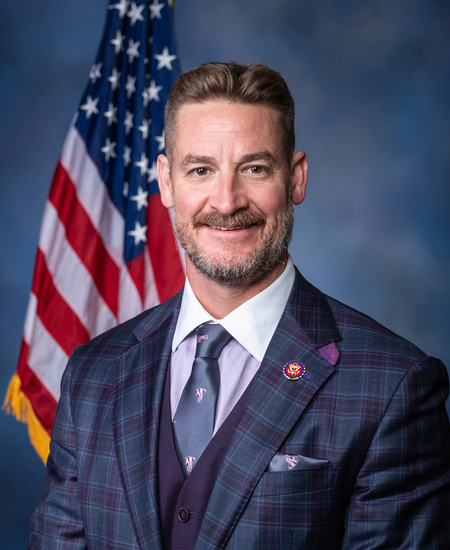
Rep. W. Gregory Steube
Sponsored bills
Maddy summaryThe OPTIONS Act establishes a new type of employer-sponsored benefit arrangement called a Qualified Benefit Options Plan (QBOP), affecting employers and their employees. Under a QBOP, employees can choose how their employer's contributions are allocated among various pre-tax qualified benefits, such as contributions to retirement plans, health savings accounts, or educational assistance programs. A key distinction is that employees cannot opt to receive cash or other taxable benefits instead of these qualified benefits. Employer contributions made through a QBOP are excluded from an employee's taxable income, offering a tax-advantaged way for employers to provide flexible benefit options. The bill includes rules to ensure benefits are not disproportionately skewed towards highly compensated employees and applies to taxable years beginning after December 31, 2025.
Maddy summaryHR 8295, the Protecting Families from Fertility Fraud Act of 2026, creates a new federal crime for knowingly misrepresenting the nature or source of DNA used in assisted reproductive technology or assisted insemination. This directly affects fertility clinics, practitioners, and patients undergoing such procedures. Individuals found guilty could face up to 10 years in prison, a fine, or both. The bill defines federal jurisdiction for these offenses, primarily involving interstate commerce, and extends the statute of limitations to 10 years after identification through DNA testing. It also adds this new crime to the list of "racketeering activities" under federal law.
Maddy summaryThe SEPTIC Act proposes to make financial assistance received by homeowners from state or local governments for certain wastewater management improvements tax-free. It would amend current tax law to exclude from taxable income any direct or indirect subsidy provided to a resident for the purchase or installation of wastewater management measures on their primary residence. These measures are defined as installations or modifications primarily designed to manage wastewater, such as septic tanks and cesspools. This change means homeowners would not have to pay federal income tax on such financial aid.
Maddy summaryThis bill prohibits the issuance of U.S. visas to individuals who have committed particularly severe violations of religious freedom, either while serving as foreign government officials or while acting outside the United States. It directly affects foreign nationals by adding them to the list of inadmissible aliens under U.S. immigration law if they meet specific criteria related to religious persecution. The law requires the Secretary of State to publish the names and locations of these individuals on a public website, though the Secretary retains discretion to withhold identities if doing so would harm U.S. foreign policy interests. This measure expands existing immigration restrictions to specifically target those responsible for religious freedom violations, creating a new ground for visa denial.
Maddy summaryThis bill creates a publicly accessible database to track private vendors that supply, support, or maintain components of election systems used in federal elections. It requires states and local election officials to submit information about these vendors within 30 days after each federal election, including vendor identity, contract terms, and ownership details such as parent companies and foreign interests. The legislation prohibits federal funding for election administration in any state that fails to comply with these reporting requirements. The database aims to increase transparency by making vendor information available to the public, with provisions to withhold certain details for security reasons. These changes would take effect for federal elections held in 2026 and subsequent years.
Maddy summaryThis bill, titled the Fair Treatment of Religious Organizations Act of 2026, establishes rules for how religious organizations are treated under federal tax law and financial assistance programs. It directs the IRS to determine whether an organization's purpose is religious without considering its specific beliefs about marriage, sexuality, or gender identity, even if those beliefs conflict with current laws. The legislation also prohibits federal agencies from discriminating against religious employers that receive federal funding if those employers hire staff based on their religious standards. These protections apply to religious corporations, associations, educational institutions, and societies, ensuring they can maintain employment practices aligned with their faith when receiving government support.
Maddy summaryHR 7464, the TEMP Act, requires the Federal Crop Insurance Corporation to research and develop index-based insurance for specific crops (like tomatoes, citrus, and strawberries) against frost or cold weather damage. This research must evaluate risk management tools and aim to create policies covering either production or revenue loss from such events. The Corporation must report its findings and recommendations to Congress within one year of the bill's enactment. The bill directly affects farmers growing these frost-vulnerable crops by initiating a process to potentially expand their insurance options.
Maddy summaryThe CLEAR Act amends federal law to establish new criminal penalties for obstructing Federal law enforcement officers operating in or on their vehicles. This legislation directly affects individuals who forcibly assault, resist, or interfere with officers from the Department of Homeland Security or Department of Justice while they are performing official duties in a law enforcement vehicle. The bill introduces enhanced penalties of up to 20 years in prison or a fine for such obstruction, expanding existing protections for officers engaged in vehicle operations. These provisions apply specifically to interactions involving Federal law enforcement vehicles and do not alter penalties for other types of obstruction.
Maddy summaryThis bill directs the U.S. Trade Representative to investigate whether Canada's Online Streaming Act unfairly targets American streaming companies by imposing discriminatory taxes and content requirements. It authorizes the Trade Representative to consult with affected U.S. businesses and trade partners, then potentially take retaliatory trade actions if Canada does not amend the measures. The legislation also requires regular reporting to Congress on Canada's implementation of these policies and extends similar investigative powers to other countries with comparable digital trade restrictions.