

Maddy summaryThe National Infrastructure Investment Corporation Act of 2023 establishes a new government corporation to provide low-cost loans and loan guarantees for infrastructure projects that exceed the financing capabilities of state and local governments, directly affecting cities, states, and project applicants seeking funding. The Corporation will be funded by borrowing up to $5 billion annually from pension funds at 3-4% interest rates, targeting transportation, energy, environment, and telecommunications projects through a structured application process requiring detailed project plans and environmental assessments. It will be governed by a 7-member Board appointed by the President and congressional leaders, with mandatory annual audits, reports to Congress, and consultation requirements with affected congressional representatives before approvals. The bill focuses on creating a dedicated funding mechanism for infrastructure gaps identified in prior reports, without specifying new tax or spending obligations.
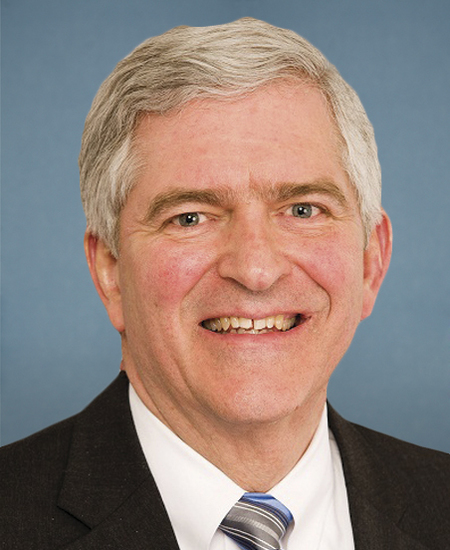
Rep. Daniel Webster
Sponsored bills
Maddy summaryHRES 399 is a symbolic resolution expressing the U.S. House of Representatives' support for designating the week of May 7-13, 2023, as "National Correctional Officers Week." It honors correctional officers for their service in maintaining safety and dignity within correctional facilities, recognizing their role in protecting public safety and managing inmate care. The resolution does not create new laws or policies but formally acknowledges the contributions of correctional officers across the United States. It directly affects correctional officers by providing a nationally recognized day of appreciation for their work.
Maddy summaryThe FIGHT Act (HR 2742) amends the Animal Welfare Act to specifically target animal fighting events, such as cockfighting, by defining "rooster" as any male chicken over six months old and banning the live broadcasting (simulcasting) of such events. It prohibits using the postal service or interstate transport to move roosters for animal fighting purposes and adds civil enforcement tools allowing citizens to sue violators after a 60-day notice period. Fines up to $5,000 per violation may be imposed, and property used in animal fighting ventures can be seized. These changes strengthen enforcement against animal fighting by expanding legal remedies for the public and authorities.
Maddy summaryThis bill, HR 3232 (Respect for Grieving Military Families Act), requires the military to automatically forgive overpayments of retired pay sent to a joint account after a service member’s death but before the end of the month of death. It directly affects military retirees’ families who have joint accounts with designated beneficiaries, preventing them from having to repay these accidental payments. The bill also adjusts Survivor Benefit Plan payments: if forgiveness doesn’t occur, the first 12 monthly annuity payments to the beneficiary will each be reduced by one-twelfth of the overpayment amount. This ensures grieving families aren’t burdened with repaying funds they weren’t meant to receive.
Maddy summaryThe Pay Our Correctional Officers Fairly Act adjusts pay for Bureau of Prisons employees currently assigned to the "Rest of U.S." pay locality. It directs that if an employee's worksite is within 200 miles of another pay locality, they will be paid according to the nearest locality with the highest pay rate - replacing the lower "Rest of U.S." rate. This applies to correctional officers and other Bureau of Prisons staff, but excludes employees whose worksite is more than 200 miles from any other locality. The change takes effect 180 days after the bill is enacted.
Maddy summaryThis bill modifies how federal clean water funds are distributed to states, Indian tribes, and U.S. territories for fiscal years 2024-2028. It sets minimum funding levels: 2% for tribes, 1.5% for territories, and 0.1% for oversight activities, with states receiving base funding from 2023 plus population-based additional amounts. Starting in 2029, funding will shift to a new formula based on the latest "clean watersheds needs survey" to reflect current infrastructure priorities. The bill ensures states receive at least 1% of funds annually and requires the Administrator to update the formula after each new survey.
Maddy summaryHR 1750 sets a new minimum standard for pasteurized orange juice, requiring finished products to contain at least 10.0% orange juice soluble solids (excluding any added sweeteners) by weight. This rule directly affects manufacturers producing and selling pasteurized orange juice in the U.S. market. The bill revises existing federal regulations to enforce this minimum juice content level, ensuring a more consistent product definition. It does not change the Secretary of Health and Human Services' existing authority to further adjust these standards.
This resolution urges transatlantic unity on a robust deterrence policy to maintain peace and stability across the Taiwan Strait. The resolution also (1) encourages NATO allies to work with their partners in the Indo-Pacific to address shared global security challenges; and (2) commends the people of Taiwan for their commitment to democracy, civil liberties, and human rights.
Maddy summaryHR 2370, the Access to AEDs Act, authorizes $25 million in federal funding (2024-2028) to help public elementary and secondary schools improve access to automated external defibrillators (AEDs) and CPR training. The bill directs the Secretary of Health and Human Services to award grants to school districts and partners for developing AED programs, training staff and students, purchasing and maintaining AEDs, and creating cardiac emergency response plans. It specifically targets schools to address sudden cardiac arrest (SCA), which is a leading cause of death among student athletes and youth, with 90% of SCA victims dying without immediate CPR and defibrillation. The law requires grantees to report on their activities and establishes a clearinghouse to collect data on school AED access and costs.
Maddy summaryHR 734, the Protection of Women and Girls in Sports Act of 2023, amends Title IX to prohibit federally funded schools and athletic programs from allowing individuals assigned male at birth to participate in women's or girls' sports teams. The bill defines "sex" for this purpose as "reproductive biology and genetics at birth," making it a violation of federal law to permit such participation in designated women's or girls' programs. It allows males to train with women's teams only if no female is deprived of a roster spot, competition opportunity, scholarship, or other benefit tied to the team. This law directly affects public and private schools receiving federal financial assistance that operate athletic programs.