End the Threat of Default Act This bill repeals the public debt limit, which applies to most debt held by the federal government.
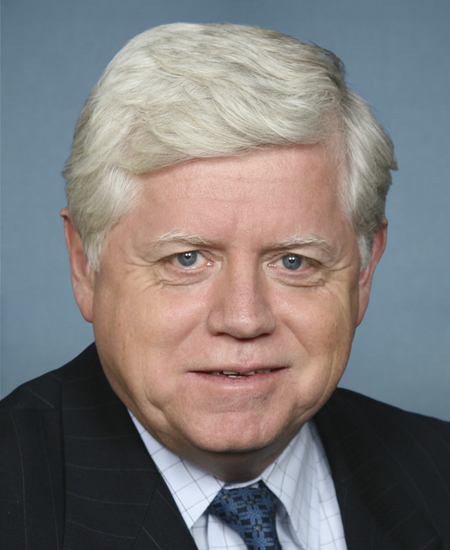
Rep. John B. Larson
Sponsored bills
Credit for Caring Act of 2021 This bill allows an eligible caregiver a tax credit of up to $5,000 for 30% of the cost of long-term care expenses that exceed $2,000 in a taxable year. The bill defines eligible caregiver as an individual who has earned income for the taxable year in excess of $7,500 and pays or incurs expenses for providing care to a spouse or other dependent relative with long-term care needs.
Institutional Grants for New Infrastructure, Technology, and Education for HBCU Excellence Act or the IGNITE HBCU Excellence Act This bill establishes a grant program to support long-term improvements of historically Black colleges and universities (HBCUs) and graduate programs at HBCUs. Specifically, the bill requires the Department of Education (ED) to award grants to HBCUs to improve campus facilities. A recipient must use grant funds for certain activities, such as constructing or renovating facilities, carrying out major repairs, and strengthening the safety and security of a campus. Any new construction, modernization, or renovation projects must meet building code and energy and water conservation requirements. Further, HBCUs must seek to procure contracts from certain small businesses, including those owned and controlled by veterans and service-disabled veterans. The bill prohibits the use of grant funds for specified activities, including for the payment of routine and predictable maintenance costs, minor repairs, and utility bills. The Government Accountability Office must study the implementation of the grant program. The bill also requires ED to repay the outstanding balance of principal, interest, fees, and costs and any related reimbursements for certain capital financing loans.
Transportation Equity Act This bill directs the Department of Transportation (DOT) to reestablish the Transportation Equity Committee. The committee must provide independent advice and recommendations to DOT on transportation equity issues. The committee must also evaluate the work of DOT in connecting people to economic and related forms of opportunity and carrying out its strategic, research, technological, regulatory, community engagement, and economic policy activities related to transportation and opportunity. In addition, DOT must appoint a full-time federal employee to serve as coordinator and act as the designated federal officer for the committee.
Protect Drinking Water from PFAS Act of 2021 This bill requires the Environmental Protection Agency (EPA) to address the level of perfluoroalkyl and polyfluoroalkyl substances (PFAS) in drinking water. PFAS are man-made and may have adverse human health effects. A variety of products contain PFAS, such as nonstick cookware or weatherproof clothing. In addition, the EPA must publish a maximum contaminant level goal (MCLG) and promulgate a national primary drinking water regulation for PFAS. The MCLG and regulation must be protective of the health of subpopulations that may be at greater risk than the general population of adverse health effects from exposure to PFAS in drinking water.
Lori Jackson Domestic Violence Survivor Protection Act This bill makes changes to the federal statutory framework that prohibits the shipment, transport, receipt, or possession of firearms or ammunition by an individual who is subject to a qualifying domestic violence court order. Under current law, a qualifying domestic violence court order must meet certain criteria, including to (1) be issued after a hearing of which the individual had notice and an opportunity to participate; and (2) restrain the individual from harassing, stalking, or threatening an intimate partner (i.e., a current or former spouse, a co-parent of a child, or a current or former cohabitant) or the child of an intimate partner. This bill expands the scope of qualifying domestic violence court orders to include an order that is issued after an ex parte hearing (i.e., a hearing with only one party present); restrains the individual from harassing, stalking, or threatening a dating partner or former dating partner; or restrains the individual from intimidating a witness. Current law also prohibits an individual who is convicted of a misdemeanor crime of domestic violence from shipping, transporting, receiving, or possessing firearms or ammunition. These restrictions generally only apply to spouses, co-parents, and cohabitants, and to offenses that involve physical force or deadly weapons. This bill expands the scope of these restrictions to include dating partners and offenses that involve stalking.
COVID - 19 Hate Crimes Act This bill requires a designated officer or employee of the Department of Justice (DOJ) to facilitate the expedited review of COVID-19 (i.e., coronavirus disease 2019) hate crimes and reports of COVID-19 hate crimes. It defines COVID-19 hate crime as a violent crime that is motivated by two things: (1) the actual or perceived characteristic (e.g., race or ethnicity) of any person, and (2) the actual or perceived relationship to the spread of COVID-19 of any person because of that characteristic. The bill requires DOJ to issue guidance for state and local law enforcement agencies on (1) the establishment of online hate crime reporting processes and the availability of online reporting in multiple languages, and (2) the expansion of culturally competent education campaigns. Additionally, DOJ and the Department of Health and Human Services must issue guidance on best practices for mitigating racially discriminatory language in describing the COVID-19 pandemic.
Journalism Competition and Preservation Act of 2021 This bill creates a four-year safe harbor from antitrust laws for print, broadcast, or digital news companies to collectively negotiate with online content distributors (e.g., social media companies) regarding the terms on which the news companies' content may be distributed by online content distributors.
Resources for Victims of Gun Violence Act of 2021 This bill establishes the Advisory Council to Support Victims of Gun Violence. Among other things, the advisory council must assess the needs of victims of gun violence and disseminate information about helpful resources.
George Floyd Law Enforcement Trust and Integrity Act of 2021 This bill requires the Department of Justice (DOJ) to take specified steps to address accreditation standards, management operations, and misconduct of law enforcement. Specifically, it requires DOJ to develop uniform accreditation standards for law enforcement agencies and adopt policies and procedures to encourage law enforcement agencies to pursue accreditation. It authorizes DOJ to make grants to law enforcement agencies to obtain accreditation from certified organizations. The bill authorizes DOJ to make grants for studying law enforcement agency management and operations standards and developing pilot programs to address law enforcement misconduct. DOJ must study the prevalence and effect of any law, rule, or procedure that allows a law enforcement officer to delay the investigation and prosecution of complaints of law enforcement misconduct. The bill also establishes the Task Force on Law Enforcement Oversight to coordinate the detection and referral of complaints of alleged law enforcement misconduct. Law enforcement agencies must report data regarding practices on traffic violation stops, pedestrian stops, frisk and body searches, and use of deadly force. Finally, DOJ must create a medallion for survivors of each law enforcement officer killed in the line of duty and memorialized on the wall of the National Law Enforcement Officers Memorial.