Medical Nutrition Therapy Act of 2021 This bill expands Medicare coverage of medical nutrition therapy services. Currently, Medicare covers such services for individuals with diabetes or kidney disease under certain circumstances; such services must also be provided by a registered dietitian or nutrition professional pursuant to a physician referral. The bill extends coverage to individuals with other diseases and conditions, including obesity, eating disorders, cancer, and HIV/AIDS; such services may also be referred by a physician assistant, nurse practitioner, clinical nurse specialist, or (for eating disorders) a clinical psychologist.
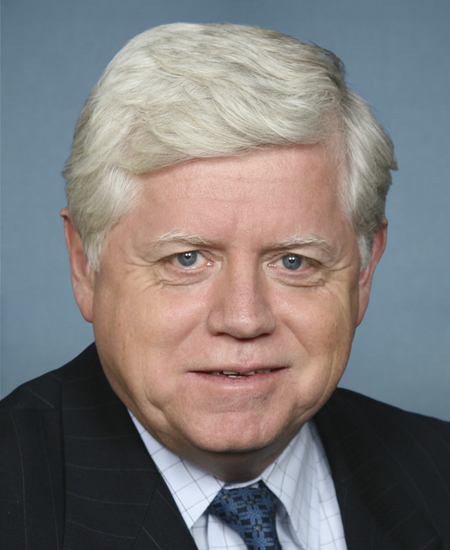
Rep. John B. Larson
Sponsored bills
Equity in Neuroscience and Alzheimer's Clinical Trials Act of 2021 or the ENACT Act of 2021 This bill sets out activities and requirements to increase the participation of underrepresented populations in research and clinical trials for Alzheimer's disease and related dementias. Specifically, the National Institute on Aging (NIA) must establish and provide technical assistance to Alzheimer's research centers located in areas with higher concentrations of minority groups. These centers must establish diagnostic and treatment clinics designed to serve minority, rural, and other underserved populations; operate clinical trials; and carry out public outreach to encourage members of minority populations to participate in clinical trials and research. Additionally, the NIA must disseminate information to members of minority populations about participating in clinical trials and take other actions to enhance diversity with respect to the Alzheimer's research that it conducts or supports. The bill also directs the NIA to increase diversity among Alzheimer's researchers by encouraging the participation of individuals who are from groups that are underrepresented in clinical, behavioral, and social sciences.
Helping to Encourage Real Opportunities (HERO) for Youth Act of 2021 This bill modifies the work opportunity tax credit to (1) change the credit for summer youth employees to a credit for youth employees who will be employed for not more than 20 hours per week during any period between September 16 and April 30 in which the youth employee is attending any secondary school, (2) increase the amount of the credit for youth employees, and (3) expand the credit to include disconnected youth. The bill defines disconnected youth to include any individual who (1) is certified as having attained age 16 but not age 25 on the hiring date; and (2) has self-certified as not having regularly attended any secondary, technical, or post-secondary school during the 6-month period preceding the hiring date, has not been regularly employed during such period, and is not readily employable due to a lack of basic skills. The term also includes individuals who have been certified (1) as having attained age 16 but not age 21 on the hiring date, and (2) as eligible foster children in foster care during the 12-month period ending on the hiring date.
Foster Youth Mentoring Act of 20 21 This bill directs the Department of Health and Human Services to award grants for programs that provide mentoring for children in foster care and children with experience in foster care.
Zero-Percent Student Loan Refinancing Act This bill establishes a temporary program through which the Department of Education (ED) must make interest-free refinancing loans to borrowers of federal student loans from August 1, 2021, through December 31, 2024. The bill requires ED to automatically refinance Federal Direct Loans and notify each borrower of the refinancing. Borrowers who have other types of eligible loans (i.e., Federal Family Education Loans, Federal Perkins Loans, and certain health profession and nursing loans) must apply for refinancing. ED and the Consumer Financial Protection Bureau must carry out a campaign to notify borrowers of these types of loans that they are eligible to apply for refinancing under the program.
Connecting America's Active Transportation System Act This bill directs the Department of Transportation (DOT) to carry out an active transportation investment program to provide competitive grants to state, local, and regional government entities, and Indian tribes to construct projects that connect walking and bicycling infrastructure within and between communities, metropolitan regions, or states. The bill sets forth various limitations on the use of funds by DOT, including that it must obligate at least 30% of funds to projects that connect people with public transportation, businesses, workplaces, schools, residences, recreation areas, and other community activity centers; set aside at least $3 million to provide planning grants for eligible entities; and set aside at least $2 million to cover the costs of administration, research, technical assistance, communications, and training activities under the program. The federal share of grants must not exceed 80% of the total project cost. However, DOT may increase the federal share to 100% for disadvantaged communities with a poverty rate of over 40%.
Savings Access For Escaping and Rebuilding Act of 2021 or the SAFER Act This bill allows penalty-free distributions from tax-exempt retirement plans for domestic abuse victims.
Transform, Heal, and Renew by Investing in a Vibrant Economy Act or the THRIVE Act This bill establishes a program to address the economy, racial justice, and climate change. The President must establish a board to advise the President and the heads of federal departments and agencies regarding the implementation of this bill. The President, in consultation with the board, must establish a 10-year plan to create a society that enables and supports greater racial, Indigenous, gender, environmental, and economic justice; work opportunities; healthy communities; a stable climate; and healthy ecosystems. In addition, the President, in consultation with the board, must implement a program that provides support to public or private entities that carry out qualified programs. The programs must meet certain labor, equity, and environmental conditions and support infrastructure, including to expand access to pollution-free, renewable, and affordable energy; care workers and social infrastructure (e.g., health care infrastructure); expanded access to housing; efforts to protect and restore biodiversity or natural habitats and efforts to remediate pollution in communities harmed by environmental, economic, or socioeconomic injustice; agriculture, including agricultural workers; or the development and transformation of the U.S. industrial base, including by expanding manufacturing of clean technologies.
Retirement Parity for Student Loans Act of 2021 This bill allows certain employer-sponsored retirement plans to make matching contributions for an employee's student loan payments as if the loan payments were salary reduction contributions to the retirement plan.
Creating Opportunities Now for Necessary and Effective Care Technologies (CONNECT) for Health Act of 2021 or the CONNECT for Health Act of 2021 This bill expands coverage of telehealth services under Medicare. Among other provisions, the bill allows the Centers for Medicare & Medicaid Services (CMS) to waive certain restrictions, such as restrictions on the types of technology that may be used; permanently removes geographic restrictions on originating sites (i.e., the location of the beneficiary) and allows the home of the beneficiary to serve as the originating site for all services; permanently allows federally qualified health centers and rural health clinics to serve as the distant site (i.e., the location of the health care practitioner); and allows the CMS to generally waive coverage restrictions during any public health emergency. Additionally, the CMS must report on the effects of expanded telehealth services during the COVID-19 public health emergency, including with respect to the utilization, quality, and outcomes of services. The Center for Medicare and Medicaid Innovation may also test alternative payment models relating to expanded telehealth services.