

National Strategic and Critical Minerals Production Act of 2021 This bill sets forth environmental review requirements for the mine permitting process and limits the review to 30 months. Under the bill, projects that provide minerals vital to job creation, energy infrastructure, coastal resilience and restoration, economic competitiveness, and national security must be considered to be infrastructure projects as described in Executive Order 13807, titled Establishing Discipline and Accountability in the Environmental Review and Permitting Process for Infrastructure Projects and dated August 15, 2017.This order directed agencies to ensure that the environmental review and permitting process for infrastructure is coordinated, predictable, and transparent. The Bureau of Land Management (BLM)or the Forest Service must appoint a project lead for the mine permitting process to coordinate with other agencies to ensure that the agencies minimize delays, set and adhere to timelines for completion of the permitting process, set clear permitting goals, and track progress against goals. The project lead must also determine the amount of financial assurance required for reclamation of a mineral exploration or mining site. The bill considers the requirements of the National Environmental Policy Act of 1969to be satisfied if the BLM or the Forest Service determines that the agency issuing the permit will address specified factors, such as environmental impacts of the permit or alternatives to issuance of the permit. Additionally, the bill exempts projects on National Forest System land from regulations that prohibit timber tree cutting and road construction in areas without roads.
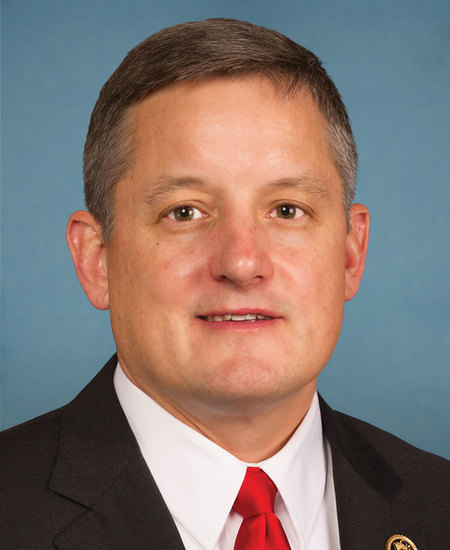
Rep. Bruce Westerman
Sponsored bills
Manufacturing API, Drugs, and Excipients in America Act or the MADE in America Act This bill establishes a tax credit for taxpayers engaged in medical production activities in certain areas and contains other provisions related to pharmaceuticals. An eligible taxpayer may claim a tax credit equal to 25% of qualified expenditures related to the production of pharmaceuticals, medical devices, or other related items in a designated qualified opportunity zone with a poverty rate higher than 30%. The bill provides for increases to this tax credit in certain situations, such as if a substantial portion of the employees reside in areas with certain poverty levels. In addition, the Food and Drug Administration (FDA) must continue programs to facilitate the development and review of new drug or biological products that are manufactured using certain advanced manufacturing technologies. The bill imposes various requirements on these programs, including deadlines for evaluating such a technology. Furthermore, the Department of Health and Human Services must ensure timely and effective internal coordination and alignment between FDA field investigators and the staff of the Center for Drug Evaluation and Research's Office of Compliance and Drug Shortage Program regarding reports and feedback related to facility inspections.
Reopening to address Every COmplete Record request for Devoted Servicemembers Act of 2021 or the RECORDS Act of 2021 This bill directs the Office of the Archivist of the United States to take specified steps to address record request backlogs. Specifically, the office must take actions to ensure that (1) the number of individuals employed by the National Personnel Records Center is equal to or exceeds the number of such individuals employed on March 2, 2020, and (2) the percentage of such individuals regularly reporting to work in person is equal to or exceeds the percentage of such individuals regularly reporting to work in person on that date. The office shall submit to specified congressional committees a report that provides a comprehensive plan to address the record request backlog of the National Personnel Records Center and improve the efficiency and responsiveness of operations at the center, identifies measurable goals with respect to the comprehensive plan and metrics for tracking progress toward such goals, and describes strategies to prevent future record request backlogs.
Toxic Exposure in the American Military Act or the TEAM Act This bill requires the Department of Veterans Affairs (VA) to expand health care, benefits, and resources for veterans with conditions related to exposure to toxic substances. Specifically, the bill expands eligibility for VA hospital care, medical services, and nursing home care to include veterans who (1) were exposed to toxic substances, radiation, or other conditions, and were awarded certain medals (e.g., the Armed Forces Service Medal); (2) are eligible for inclusion in the Airborne Hazards and Open Burn Pit Registry; or (3) have been identified by the Department of Defense to have been possibly exposed during service to an open burn pit, toxic substance, or specified hazardous sites. (A burn pit is an area used for burning solid waste in open air without equipment.) The bill establishes a presumption of service-connection for diseases associated with exposure to certain toxic substances and that become manifest within a certain time period; the VA must specify such diseases and requirements through regulations. Under a presumption of service-connection, specific conditions diagnosed in certain veterans are presumed to have been caused by the circumstances of their military service. Health care benefits and disability compensation may then be awarded. The bill also requires the VA to take specified actions to (1) evaluate scientific evidence regarding associations between diseases and exposure to toxic substances; (2) train its health care personnel on identifying, treating, and assessing illnesses related to such exposure; and (3) provide resources to veterans exposed to toxic substances.
Trillion Trees Act This bills establishes a variety of requirements and incentives to plant trees and conduct other land management practices for the purposes of capturing and storing carbon in domestic and international trees and forests. Additionally, the bill provides incentives to research or develop other carbon sequestration tools. Specifically, the bill directs the Department of Agriculture (USDA) to set targets to increase forest carbon stock through January 1, 2100, for the purposes of sequestering and storing carbon in U.S. forests. It also establishes and provides funding for the Trillion Trees Challenge Fund to provide grants to nonfederal entities for activities related to reforestation efforts on public or private lands. In addition, it raises the cap on the Reforestation Trust Fund to enhance forest health in the National Forest System and requires the USDA to establish a Tree City USA Grant Program. The bill also allows the U.S. Agency for International Development to enter into an agreement with a nonprofit organization to establish an International Forest Foundation to promote reforestation and prevent deforestation. Additionally, it establishes requirements and incentives to address seedling shortages and support nurseries. Finally, the bill provides market incentives to research or develop other carbon sequestration tools relating to biochar, sustainable building practices, biochemical and bioplastic products, and biomass energy.
Biochar Innovations and Opportunities for Conservation, Health, and Advancements in Research Act of 2021 or the BIOCHAR Act of 2021 This bill establishes two temporary programs to encourage research, development, and commercialization of biochar. This is carbonized biomass produced by converting plant matter through reductive thermal processing for nonfuel uses. First, the Department of Agriculture (USDA) and the Department of Energy (DOE) must fund biochar demonstration projects through state, tribal, or local governments; land-grant colleges or universities; or private, nonprofit, or cooperative entities. In selecting projects, the departments must prioritize, for example, projects that (1) have the greatest potential for carbon sequestration; and (2) create new jobs and economic benefits, particularly in rural areas. Projects may use funds for various activities, including developing commercially and technologically viable biochar production units and demonstrating cost-effective market opportunities for biochar and biochar-based products. At least 50% of the plant matter used in a project must come from forest thinning and management activities on National Forest System land. In addition, USDA and DOE must conduct research related to the biochar produced from the projects. Second, USDA must establish a grant program for land-grant colleges and universities to conduct applied research on environmental and economic benefits of biochar. For the duration of the two programs, USDA and DOE must periodically report to Congress about issues related to commercialization of biochar and the status of the programs. The programs terminate after 10 years.
Forestry Improvements to Restore the Environment Act of 2021 or the FIRE Act of 2021 This bill provides for salvage activities after a wildfire is contained on certain National Forest System lands. No later than 60 days after a wildfire is contained on such lands (1) the Forest Service, to the maximum extent practicable, shall complete a survey of the lands that were impacted by such wildfire; and (2) the Department of Agriculture (USDA) shall convert the timber sales applicable to such lands that were impacted by such wildfire to salvage sales. The bill designates a categorical exclusion for forest management activities where the primary purpose of the activity is for roadside salvage activities that allow for the removal of hazard trees that are within 200 feet of a roadway center line. Activities carried out pursuant to this bill shall be subject to judicial review in the same manner as authorized hazardous fuels reduction projects. A court may not order a preliminary injunction enjoining the USDA from proceeding with timber sales authorized under this bill.
Flexible Financing for Rural America Act This bill allows rural utility service providers to submit to the Department of Agriculture (USDA) a request to adjust the interest rate or modify the terms of certain loans. The request shall include a report summarizing how the adjustment or modification will assist the borrower in providing critical utility services to a rural community. Specifically, on receipt of a request, USDA or the Department of the Treasury (in the case of a loan owned by the Federal Financing Bank) must adjust the interest rate on the loan to match certain interest rates for obligations of comparable maturity to the term remaining on the loan (or a higher rate requested by the borrower), and make modifications to the loan terms as necessary to address changes in the financial position of the borrower due to the COVID-19 public health emergency and to promote the financial sustainability of the borrower. In carrying out the adjustments or modifications, USDA or Treasury shall not impose or collect any fee from, or impose any penalty on, a borrower. The bill also provides funding to implement the adjustments and modifications and for the liquidation of residual intragovernmental amounts owed by the Federal Financing Bank in connection with certain loans.
This resolution expresses support for the goals and ideals of PCOS Awareness Month. Polycystic ovary syndrome (PCOS) is caused by a hormone imbalance. Symptoms can include infertility, weight gain, excess hair growth, and acne.
Solving Our Shortages for Seedlings Act or the SOS for Seedlings Act This bill requires various activities to alleviate a shortage of tree seedlings. Specifically, the Forest Service must implement a national strategy to address the shortage by expanding the capacity of governmental and private nurseries. In addition, the Department of Agriculture (USDA) must carry out a loan program for state, tribal, or local governments; or private, nonprofit, or cooperative organizations to establish or expand facilities that grow, store, extract, or monitor tree seedlings. The bill also reauthorizes through FY2030 a program that permits USDA to establish and operate nurseries, purchase tree seeds or seedlings, plant trees, and otherwise support reforestation.