Maddy summaryThis bill modifies federal regulations for commercial driver's license (CDL) testing. It requires the Transportation Secretary to update two rules within 90 days: first, to set new standards for examiners (requiring valid certification, specific training, and instruction units); second, to allow any state to administer skills tests to CDL applicants regardless of where the applicant lives or received training. The bill directly affects CDL applicants, states administering tests, and third-party examiners. Key changes simplify examiner qualifications and remove geographic restrictions on skills testing locations.
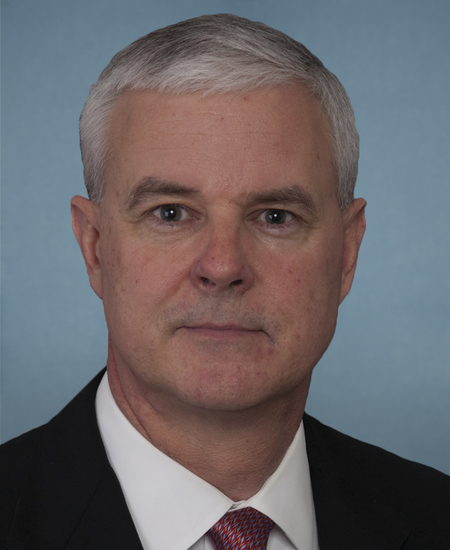
Rep. Steve Womack
Sponsored bills
Maddy summaryHR 7438 directs the U.S. Treasury to mint commemorative coins for the 2026 FIFA World Cup, including 100,000 $5 gold coins, 500,000 $1 silver coins, and 750,000 half-dollar coins. The coins will be sold to the public at face value plus surcharges ($35, $10, and $5 per coin, respectively), with all surcharge revenue paid to FWC2026 US, Inc. for U.S. soccer programs. These funds must support soccer initiatives, particularly in underserved communities and youth development, as specified in the bill. The coins are legal tender but will only be issued during 2026, with no net cost to the U.S. government.
Maddy summaryThe Grant Transparency Act of 2023 requires federal agencies to clearly disclose how they evaluate competitive grant applications in their funding notices. Specifically, agencies must describe their rating systems, explain any weighted scoring methods (including how much each criterion is weighted), and detail other merit-based evaluation approaches. The law also mandates standardized reporting of basic application data, including the number of applications received and the city/state locations of all submitting organizations. This applies only to future notices of funding opportunity issued after the law takes effect (120 days post-enactment), does not create new funding, and does not override existing legal requirements for specific grant programs.
Maddy summaryThis bill allows livestock producers and their employees to take black vultures (Coragyps atratus) that are harming or threatening livestock, bypassing the usual protections under the Migratory Bird Treaty Act. It directly affects ranchers and farm workers in areas where black vultures cause livestock deaths or injuries. The key provision requires annual reporting to the U.S. Fish and Wildlife Service about any vultures taken, using a simplified form similar to existing reporting for permitted bird take. This creates a specific, limited exception to federal bird protections for livestock protection, with no new restrictions on vulture populations.
Maddy summaryHR 6751 authorizes the U.S. Mint to produce commemorative coins honoring Roberto Clemente, a Hall of Fame baseball player and humanitarian, including 50,000 $5 gold coins, 400,000 $1 silver coins, and 750,000 half-dollar coins. The coins must feature Clemente's image and inscriptions like "Roberto Clemente" and "2027," with all sales including a surcharge ($5-$35 per coin) paid to the Roberto Clemente Foundation. The foundation, which supports youth sports, education, and disaster relief programs, will use these funds for its mission, while the U.S. Treasury must recover all production costs. The coins will be sold exclusively in 2027, with no net cost to the government.
Maddy summaryHR 915 requires businesses that contract with motor carriers (like shippers, brokers, or freight forwarders) to verify three safety and compliance details before shipping goods: 1) the carrier's valid registration, 2) minimum required insurance coverage, and 3) that the carrier is not disqualified for safety reasons by the Federal Motor Carrier Safety Administration (FMCSA) or a state. This verification must occur 45 days before shipment. The bill creates a temporary standard that expires when new FMCSA regulations are issued within 18 months of enactment. It does not change carrier safety rules but sets a new requirement for businesses selecting carriers.
Maddy summaryThe Working Dog Commemorative Coin Act (HR 807) directs the U.S. Treasury to mint three types of commemorative coins honoring working dogs' service: $5 gold coins, $1 silver coins, and half-dollar coins with specific weight and composition requirements. Each coin will carry a surcharge ($35 for $5 coins, $10 for $1 coins, $5 for half-dollars) that will be paid directly to America's VetDogs to support their programs providing service dogs for veterans, the disabled, and others. The coins will be issued in 2027 with designs reflecting working dogs' roles in military, detection, therapy, and assistance work. The legislation specifies that all surcharge revenue must fund America's VetDogs' operations without creating new government programs. This is a commemorative measure focused on honoring working dogs' contributions through coin sales, with all surcharge funds going to a specific nonprofit organization.
Maddy summaryHJRES 136 is a resolution seeking to block an Environmental Protection Agency (EPA) rule that would have set new emissions standards for light and medium-duty vehicles sold in 2027 and later model years. The EPA rule, published in April 2024, aimed to require vehicle manufacturers to meet stricter pollution limits for these vehicles. If passed, this resolution would cancel the rule, preventing the EPA from enforcing the new standards. It uses a congressional process that allows Congress to reject agency rules with a simple majority vote.
Maddy summaryThis bill provides $2.29 billion for veterans' compensation and pensions and $597 million for readjustment benefits to address funding shortfalls. It requires the VA Secretary to submit reports on budget forecasting improvements and to regularly update Congress on fund usage through 2026. The bill mandates an Inspector General review of the causes behind the 2024 Veterans Benefits Administration funding shortfall and the expected 2025 Veterans Health Administration shortfall. These provisions focus on improving financial accountability and preventing future funding gaps for veterans' programs. The bill is focused on funding and oversight rather than changing benefit eligibility or amounts.
Maddy summaryHJRES 144 is a congressional disapproval resolution targeting a specific rule issued by the Bureau of Alcohol, Tobacco, Firearms, and Explosives (ATF) on April 19, 2024. The resolution seeks to block the ATF's rule that redefined the term "engaged in the business" for firearm dealers, which would have affected how federal licensing requirements apply to certain sellers. If enacted, this resolution would nullify the rule, preventing it from taking effect under procedures in Title 5 of the U.S. Code. The bill directly impacts firearm dealers operating under the current regulatory framework and the ATF's enforcement authority.