Maddy summaryThis bill, known as TREY's Law, aims to make nondisclosure clauses in contracts void and unenforceable if they prevent the reporting of sexual abuse involving minors. It directly affects victims of such abuse, their families, and anyone with knowledge of the abuse by allowing them to disclose these incidents without fear of civil liability. The law applies retroactively to agreements made before or after its passage and overrides any state laws that allow the enforcement of these specific clauses. While it invalidates clauses that silence abuse details, it permits parties to keep confidential other settlement terms like payment amounts, provided this does not stop the disclosure of the abuse itself.
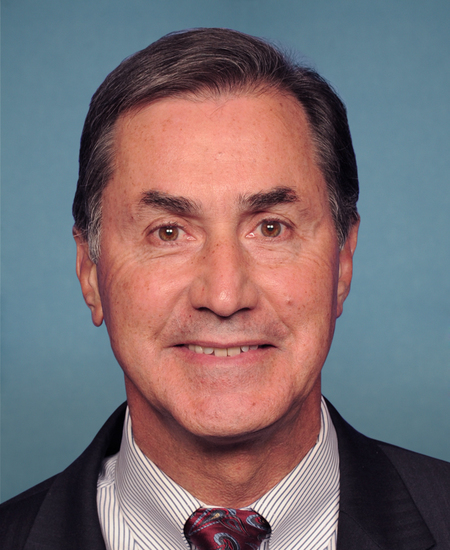
Rep. Gary J. Palmer
Sponsored bills
Maddy summaryHR 6373 modifies the Clean Air Act to create new permitting flexibility for specific facilities. It allows the President to waive certain emission offset requirements for new or modified semiconductor manufacturing facilities or critical mineral facilities (like those processing lithium or cobalt) if deemed necessary for national security. States can also permit these facilities to use alternative offset methods - such as paying an emissions fee capped at 1.5 times local control costs - if all standard offsets are exhausted, with fees required to fund further emissions reductions in the area. The bill directly affects advanced manufacturing and critical mineral operations seeking streamlined permitting.
New Source Review Permitting Improvement Act This bill modifies terminology for purposes of the New Source Review (NSR) permitting program of the Environmental Protection Agency (EPA). In order for a change to a stationary source to be a modification (a change to a stationary source that increases the air pollutant emissions or results in new pollutants) for purposes of the NSR permitting program, the maximum hourly emission rate achievable by such source must be higher than the maximum hourly rate achievable by such source during any hour in the 10-year period preceding the change. A change at a stationary source is not considered to be a modification under the bill if it is designed to (1) reduce the amount of any air pollutant emitted; or (2) restore, maintain, or improve the reliability of operations at, or safety of, the source. However, such changes are not excepted if the EPA determines the increase in the maximum achievable hourly emission rate from such change would cause an adverse effect on human health or the environment. Construction , in connection with a major emitting facility (a type of stationary source), does not include a change at such a facility that does not result in a significant emissions increase or a significant net emissions increase. In relation to major emitting facilities in nonattainment areas, the terms modifications and modified do not include changes at such facilities that do not result in a significant emissions increase or a significant net emissions increase.
Maddy summaryThis bill, HR 8403, amends the Food and Nutrition Act of 2008 to modify the definition of eligible food items for the Supplemental Nutrition Assistance Program (SNAP). It directly affects SNAP recipients by expanding the types of food they can purchase with their benefits. The key provision explicitly adds "hot rotisserie chicken" to the list of items considered SNAP-eligible food. This change would allow individuals using SNAP to buy prepared hot rotisserie chickens from authorized retailers.
Equal Representation Act This bill requires that the statement sent by the President to Congress after the decennial census indicating the number of persons in each state exclude noncitizens. (This statement is the basis for reapportionment of U.S. Representatives.) The bill also requires any questionnaire used in the decennial census to include a checkbox or other similar option for respondents to indicate whether the respondent and each household member is (1) a U.S. citizen, (2) a U.S. national but not a citizen, (3) a non-U.S. national ( alien under federal law) lawfully residing in the United States, or (4) a non-U.S. national unlawfully residing in the United States. The Department of Commerce must make public the number of persons in each state, disaggregated by each of these four categories.
Maddy summaryThe Stop Climate Shakedowns Act of 2026 prohibits state and local governments from suing energy companies for damages related to climate change or greenhouse gas emissions. This bill declares that regulating emissions is exclusively a federal responsibility and voids any state laws that hold energy businesses liable for alleged climate harms. Consequently, all pending lawsuits of this nature against energy producers must be dismissed immediately, preventing states from imposing retroactive penalties for past lawful operations. The legislation directly affects companies involved in the production, refinement, and sale of oil, gas, and coal by shielding them from civil liability in both state and federal courts.
Lulu’s Law This bill requires the Federal Communications Commission to issue an order explicitly permitting the transmission of wireless emergency alerts to mobile phones in the event of a shark attack. (Under current regulations, authorized government authorities are permitted to send wireless emergency alerts regarding public safety emergencies, including severe weather, missing children, and other threats to life or property.)
Maddy summaryThis bill amends the Federal Funding Accountability and Transparency Act of 2006 to require faster public access to information about federal awards. It directly affects government agencies that issue federal funding and the public seeking transparency on how those funds are used. The key provision changes the posting deadline from 30 days after an award is given to just 3 days, ensuring more immediate public availability of award data. This change aims to improve real-time transparency without altering the underlying funding process or eligibility requirements. The bill focuses solely on accelerating the timing of information disclosure rather than changing how awards are distributed or managed.
Maddy summaryThis bill requires federal agencies to create public online databases containing information about significant settlement agreements they enter into. It directly affects federal agencies that resolve legal disputes through settlements, particularly those involving large financial obligations or government entities. The key provision mandates that agencies publish searchable lists of covered settlements, including details like payment amounts, violation types, and agreement durations, while allowing exemptions for confidential or legally protected information. The Office of Management and Budget will issue guidance to standardize how agencies format and maintain these databases, ensuring consistent public access to settlement data.
Maddy summaryHR 7678, the Gun Owner Registration Information Protection Act, prohibits federal funding for state or local databases that track lawfully owned firearms or their owners. The bill allows federal funding for databases recording lost or stolen firearms but bans it for databases listing legal gun ownership. This means states cannot use federal money to create or maintain systems that compile information about legally owned guns. The bill directly affects state and local governments that rely on federal funds for firearm ownership databases.