

This Act requires that meetings of the Board of Trustees for the University of Delaware, Delaware State University, and Delaware Technical and Community College must be livestreamed using technology that permits the public to hear all participants contemporaneously. This Act also requires that recordings of the livestreamed meetings must be maintained on a public website. This Act also makes technical corrections to conform existing law to the standards of the Delaware Legislative Drafting Manual. This Act requires a greater than majority vote for passage because § 1 of Article IX of the Delaware Constitution requires the affirmative vote of two-thirds of the members elected to each house of the General Assembly to amend a charter issued to a corporation for educational purposes sustained in whole or part by the State, including the University of Delaware and Delaware State University.
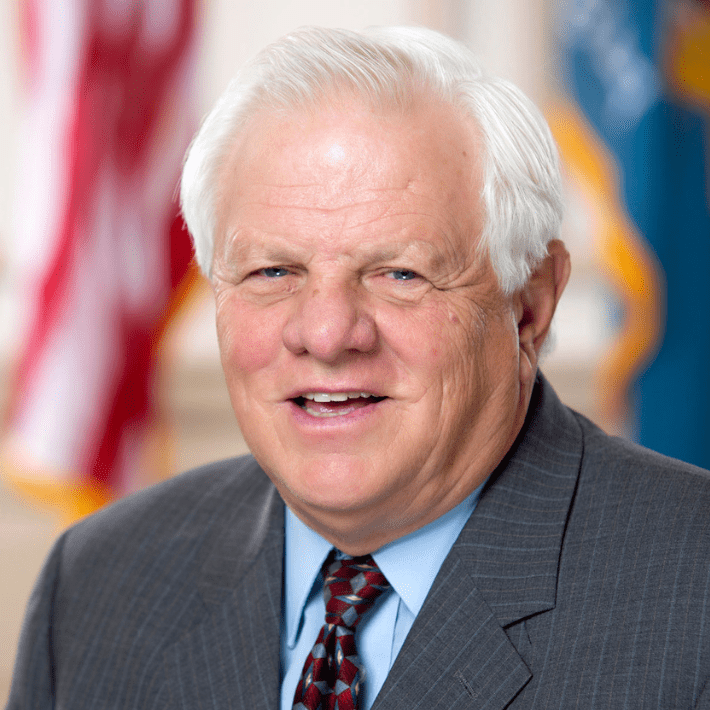
Sen. Gerald Hocker
Sponsored bills
An opioid antagonist is a medication approved by the United States Food and Drug Administration (FDA) for emergency reversal of a known or suspected opioid overdose. Currently, naloxone is the only FDA-approved opioid antagonist, however, the FDA is expected to approve at least 1 new, more powerful opioid antagonist in 2022. The current naloxone program allows public safety personnel and trained lay people to receive and administer naloxone to individuals suspected of experiencing an opioid overdose. This Act allows the Department of Health and Social Services to expand the current program to include additional opioid antagonists. This Act also makes technical corrections to reflect that advance practice registered nurses have the authority to prescribe medication and to conform existing law to the standards of the Delaware Legislative Drafting Manual as follows: 1. Reorganizing the current Chapter 30G of Title 16 from a single Code section to a chapter with several Code sections so that similar provisions are grouped together. 2. Using consistent phrases and terminology.
This bill facilitates the expansion of the private flood insurance market through the adoption of the National Council of Insurance Legislators’ Model Private Primary Residential Flood Insurance Model. This Model has been used to facilitate increased consumer choice and access to flood insurance.
At least 36 states allow for the medical use of marijuana. However, federal firearm laws have not kept pace and currently prohibit an individual who is “an unlawful user of or addicted to any controlled substance” from possessing or purchasing a firearm. It is still unlawful under federal law to use or possess marijuana. This Act makes clear that an individual is not disqualified under Delaware law from possessing a firearm because the individual is a registered qualifying patient under the Delaware Medical Marijuana Act, if the registered qualifying patient is not a person prohibited under § 1448 of Title 11 of the Delaware Code. This Act makes also clear that a registered qualifying patient may engage in a firearm transaction between unlicensed persons under § 1448B of Title 11 if the transaction is exempt under § 1448B(c) of Title 11 and the registered qualifying patient is not otherwise a person prohibited under § 1448 of Title 11. A registered qualifying patient’s purchase of a firearm through a federal firearms licensee (“FFL”) is still prohibited under federal law. This Act also makes technical corrections to conform existing law to the standards of the Delaware Legislative Drafting Manual.
This Act caps the amount that an individual, group, or State employee plan may charge for diabetes equipment and supplies, other than insulin, at $35 per month. This cap does not apply to accident-only, specified disease, hospital indemnity, Medicare supplement, long-term care, disability income, or other limited benefit health insurance policies.
House Bill 373, passed by the 151st General Assembly, clarified that persons 14 and 15 years of age can be employed in such places where alcoholic beverages are served, but cannot be involved in the sale or service of alcoholic beverages. Currently, the Department of Labor (DOL) has a robust process for youth (those not yet 18) to apply for a work permit. Youth may not work in the state unless they have a DOL-issued work permit which is required to be kept on file with the employer. The OABCC statute requires an additional work permit. Youth must obtain two, separate work permits after going through two separate processes to obtain one job. This legislation will streamline that process for our youth, requiring them to obtain just one work permit from the Department of Labor. Additionally, this legislation will permit employees in the Office of the Alcoholic Beverage and Control Commissioner (“OABCC”) to work in any of the three counties. Sussex County is experiencing an increase in growth. The OABCC has just one licensing inspector who is responsible for performing licensing inspections for the entire state. With this change, the OABCC could create a more efficient operation to serve all three counties for those who are licensed to sell and serve alcoholic beverages in the state.
House Bill No. 293 requires that meetings of public bodies that are open to the public must provide an opportunity for public comment. Meetings of a public body of the General Assembly are excluded from the requirement to provide an opportunity for public comment because under § 9 of Art. II of the Delaware Constitution, the rules of proceedings for legislative meetings are established by the Senate and House of Representatives of each General Assembly. House Substitute No. 1 for House Bill No. 293 differs from House Bill No. 293 by revising the limitations a public body may impose on public comment as follows: 1. It requires that the time for public comment provide a meaningful opportunity for the public to engage with the public body. 2. Allows a public body to impose reasonable time, place, and manner restrictions on the length of the public comment period and the amount of time allotted for each person providing public comment. This Act also makes technical corrections to conform existing law to the standards of the Delaware Legislative Drafting Manual and requires a greater than majority vote for passage because § 1 of Article IX of the Delaware Constitution requires the affirmative vote of two-thirds of the members elected to each house of the General Assembly to amend a charter issued to a municipal corporation.
Delaware’s Motor Vehicle Statutes contemplate for vehicle obstructing traffic enforcement by law enforcement agencies. It is not always possible for law enforcement officers to enforce the right-of-way regulations in areas effectively due to a number of considerations, including officer availability and safety. This bill would enable the state and municipal authorities to enforce right-of-way regulations in identified areas more effectively. This bill only imposes civil penalties for violations and does not impose points on an individual’s driver’s license.
This Act amends the Millsboro Charter to require the town auditor to make and deliver the annual audit report to the Town Council by the date of the Council's regular meeting in January after the end of the fiscal year. If the Town receives 100% principal loan forgiveness from a federal, state, or local government, a special election is not required for the project. Additionally any portion of principal forgiveness value granted shall not count toward the Town's aggregate limit of any borrowing authorization previously approved by a special election vote for the proposed loan.
This bill makes needed changes to the Lyme Disease Oversight Board by adding 2 members including an infectious disease epidemiologist and a licensed veterinarian or entomology specialist.