

This Act creates a Transportation Appeals Board (“Board”) within the Delaware Department of Transportation (“DelDOT”). The Board is a quasi-judicial body that hears appeals of DelDOT actions such as grants or denials of transportation-related permits. The Board consists of 7 members (2 from each county and a Chair) who are appointed by the Governor for terms of up to 3 years. The Governor is initially permitted to appoint members for less than 3 years to ensure that terms expire on a staggered basis. A Board member can serve no more than 2 consecutive full terms. This Act also adds the newly created Board to the list of agencies to which Chapter 101 of Title 29, regarding administrative procedures, applies. In creating the Transportation Appeals Board, which is modeled on and intended to function like the Environmental Appeals Board in Title 7, this Act gives businesses and members of the public who are substantially affected by DelDOT actions a process by which they can appeal those actions. Under that process, a party aggrieved by a DelDOT decision has 20 days from receipt or publication of the decision to appeal to the Board. Within 30 days of receiving that appeal, the Board must schedule a hearing on the matter, which must be conducted within 180 days following the receipt of the appeal, and must be conducted in accordance with Chapter 101 of Title 29. The Board then has 90 days to give a written decision. If the aggrieved party disagrees with the Board’s decision, that party may, within 30 days of the Board’s decision, make an appeal to the Superior Court.
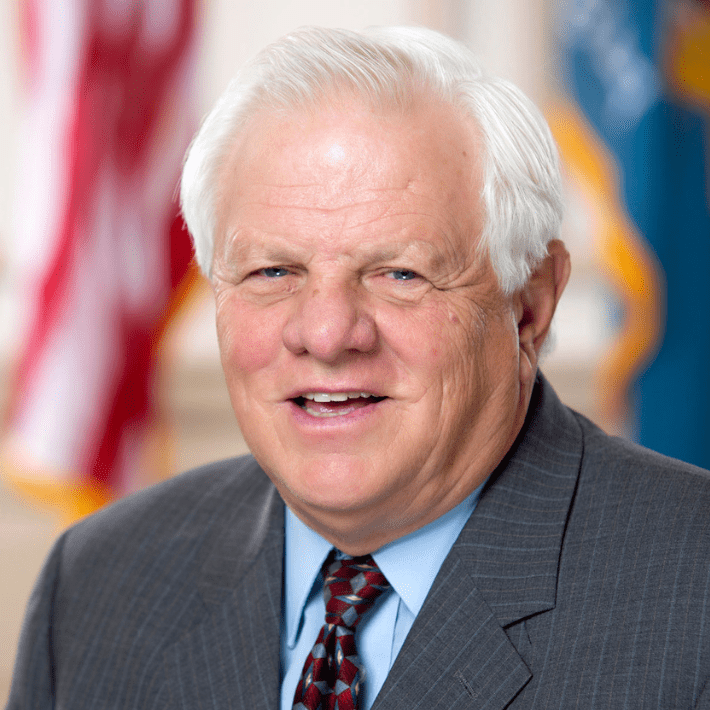
Sen. Gerald Hocker
Sponsored bills
Maddy summarySenate Concurrent Resolution 78 proclaims May 2025 as "Cystic Fibrosis Awareness Month" in the State of Delaware. This resolution aims to raise awareness about cystic fibrosis among the state's residents.
This Act removes Delaware from the Regional Greenhouse Gas Initiative (“RGGI”) as the state has already exceeded its CO2 reduction goals, cutting emissions by 45%. Despite this progress, Delaware faces high electricity costs and slow economic growth, ranking 46th in GDP growth. RGGI compliance costs are passed on to consumers, making energy more expensive for families and businesses. States outside RGGI have maintained lower energy prices while still reducing emissions. Exiting the program will allow Delaware to pursue policies that support both economic growth and energy affordability.
This Act amends the Charter of the Town of Millsboro to give the Town Council the authority to impose and collect a lodging tax. This Act requires a greater than majority vote for passage because § 1 of Article IX of the Delaware Constitution requires the affirmative vote of two-thirds of the members elected to each house of the General Assembly to amend a charter issued to a municipal corporation.
This Act amends the Charter of the Town of Millville to restore the authority of the Town Council to impose and collect a lodging tax. This authority to impose and collect a lodging tax was enacted under Senate Bill No. 162 (150th) in 2019 but was inadvertently repealed under House Bill No. 138 (151st) in 2021. This Act requires a greater than majority vote for passage because § 1 of Article IX of the Delaware Constitution requires the affirmative vote of two-thirds of the members elected to each house of the General Assembly to amend a charter issued to a municipal corporation.
Maddy summaryThis bill officially designates October 2024 as "Depression Awareness Month" throughout the State of Delaware. It directly affects residents by encouraging the state to promote understanding of depression as a treatable medical condition rather than a personal weakness. The resolution includes a general encouragement for expanded efforts to inform Delawareans about depression awareness, but it does not create new funding, mandate specific programs, or alter existing laws.
Maddy summaryThis Senate Concurrent Resolution commemorates the 30th anniversary of the Delaware Center for the Inland Bays, an organization established in 1994 to protect and restore the state's Inland Bays watershed. The bill formally recognizes the center's three decades of work with partners to preserve water quality, restore shorelines, and educate the public about local ecosystems. It does not create new laws or alter existing policies but serves as a ceremonial acknowledgment of the center's contributions to environmental conservation in Delaware.
Maddy summaryThis bill designates November 2024 as Autoimmune Disease Awareness Month in Delaware to highlight the prevalence and challenges of conditions where the immune system attacks healthy body tissues. The resolution aims to educate the public about autoimmune diseases, which affect over 23.5 million Americans and include conditions like lupus, rheumatoid arthritis, and multiple sclerosis. By recognizing this month, the state intends to draw attention to the need for improved research funding, standardized diagnostic testing, and effective treatments for these chronic illnesses.
Maddy summaryThis bill officially designates May 2024 as Cystic Fibrosis Awareness Month in Delaware to highlight the disease and support research efforts. It does not change laws or require any new funding, but instead serves as a symbolic gesture to raise public understanding of cystic fibrosis, which affects the lungs and digestive systems of thousands of people. The resolution directs that a copy of the proclamation be given to the Cystic Fibrosis Foundation, aligning with the national theme of fostering community unity around the disease.
This Senate Concurrent Resolution proclaims Monday, October 28, 2024, as “National First Responders Day” in the State of Delaware.