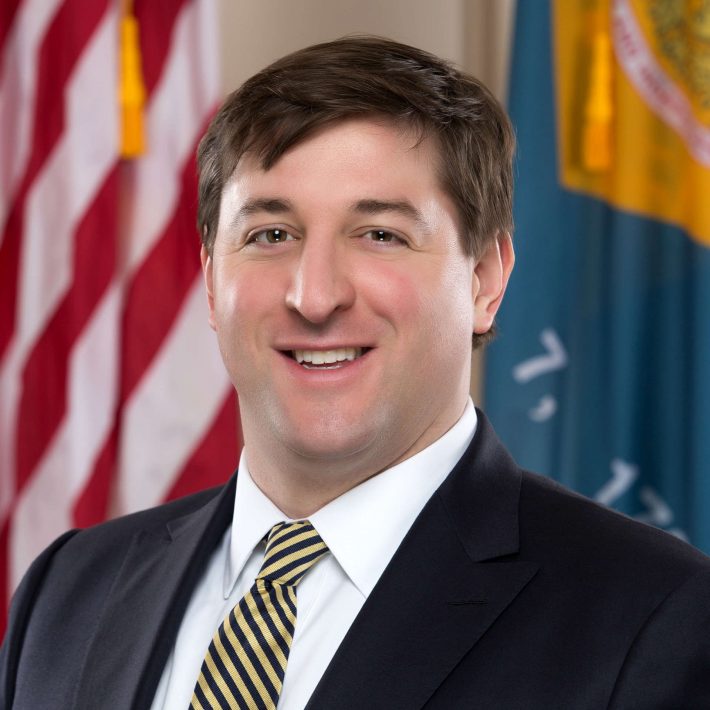
Photo of Bryan Townsend
D Delaware Senate · District 11

Sen. Bryan Townsend

Compare
Total votes
4,080
all sessions
Attendance
97%
117 missed
Higher than 75% of chamber peers
With party
99%
of cast votes
Near the chamber average
Bipartisan score
0%
crosses aisle rarely
Near the chamber average
Sponsored
1,725
bills & resolutions
Near the chamber average
Committees
8
assignments
1,725 bills and resolutions

Sponsored bills

Total
1,725
Primary
1,235
Co-sponsor
490
This page
1,725
matching current filters
Primary HB 92
Passed · Delaware House · Lead sponsor
AN ACT TO AMEND TITLE 29 OF THE DELAWARE CODE RELATING TO FINANCIAL DISCLOSURE.

This bill provides that every member of the General Assembly or person elected to state office shall disclose as part of their financial disclosure if they have received more than $10,000 in the last 10 years due to the sale of land, development rights, an agricultural conservation easement, a forest preservation easement or any other type of easement to the State of Delaware, any county, any municipality, any public instrumentality, or any government agency or organization.

Passed Apr 19, 2018 0 co-sponsors
Co-sponsor HB 174
Signed into law · Delaware House · Co-sponsor
AN ACT TO AMEND TITLE 11 RELATING TO ILLEGAL PURCHASES OF FIREARMS.

This Act raises the first offense of purchasing or obtaining a firearm for someone not legally qualified to own, possess or purchase one from a Class F to a Class E Felony. This change is to deter such "straw purchases" by making jail time more likely for the offender, and consequently, to reduce the number of people who cannot legally possess firearms but obtain them in this manner.

Signed into law Apr 18, 2018 1 co-sponsor
Primary SB 143
Signed into law · Delaware Senate · Lead sponsor
AN ACT TO AMEND TITLE 16 OF THE DELAWARE CODE RELATING TO THE ESTABLISHMENT OF THE BEHAVIORAL HEALTH CONSORTIUM.

This Bill amends the membership of the Behavioral Health Consortium to include two members of both the House and Senate, a member from the Ability Network of Delaware, and the Mental Health Association in Delaware. The Bill also extends the date the first report is due from March 1, 2018 to April 16, 2018.

Signed into law Apr 5, 2018 0 co-sponsors
Co-sponsor HB 330
Passed · Delaware House · Co-sponsor
AN ACT TO AMEND TITLE 11 OF THE DELAWARE CODE RELATING TO FIREARMS.

This bill changes the age of a person to whom another person can sell, give or transfer a firearm or ammunition for a firearm from 18 to 21. However, this bill permits a person to sell, give or transfer a firearm or ammunition for a firearm to a person under 21 years of age if the person under 21 is an active member of the United States Armed Forces or a law-enforcement officer or possesses a license to carry a concealed deadly weapon. The prohibition against the sale or transfer of a firearm to a person under 21 does not apply if that person is over 18 and the firearm is a shotgun or muzzle-loading rifle or if the ammunition is for such weapons. This bill does permit the transfer of a firearm or ammunition to a person under 21 so long as such transfer is without compensation and the person transferring is the parent or guardian of the person under 21 or has the permission of the parent or guardian. This bill increases the age from 18-21 for the person who must directly supervise a child under the age of 16 who is in possession of a firearm, BB, air, or spear gun.

Passed Mar 29, 2018 1 co-sponsor
Primary HB 126
Signed into law · Delaware House · Lead sponsor
AN ACT TO AMEND TITLE 31 OF THE DELAWARE CODE RELATING TO CHILD CARE ASSISTANCE.

The Child Care and Development Block Grant Act of 2014 mandated that states allow families that receive child care assistance to continue receiving that assistance for at least 90 days after losing their job provided they are seeking employment during that time. The federal law did not expressly stipulate that states must allow families to qualify for and begin receiving assistance so that they could search for a job, however 14 states have enacted policies to expand eligibility to those families. This legislation codifies the federal intent that families be eligible to continue receiving assistance for 90 non-consecutive days in a year, and extends that eligibility to families who want to start receiving assistance in order to seek employment for up to 90 days.

Signed into law Mar 29, 2018 0 co-sponsors
Primary HB 270
In committee · Delaware House · Lead sponsor
AN ACT TO AMEND THE DELAWARE CODE RELATING TO CLEAN WATER FOR DELAWARE.

This Act establishes a framework for assessing needs, planning and implementing projects, and providing a funding source to enhance and accelerate Delaware’s efforts in cleaning up its contaminated water resources, ensuring that all our citizens have safe drinking water, reducing flooding, and protecting jobs in agriculture and tourism. Most of the State’s waters do not meet water quality standards to support their designated uses, such as for drinking, swimming or supporting aquatic life. This Act increases the level and reliability of funding available to restore Delaware’s streams, rivers, bays, and groundwater through construction of much needed wastewater, drinking water, and drainage projects and increased use of agricultural best practices. Over the next 5 years, more than $500 million in water and wastewater system upgrades are needed statewide, including systems for underserved communities and numerous at-risk systems currently operated by homeowner’s associations in Sussex County. More than $150 million in stormwater upgrades are needed throughout the State along with more than $75 million for removing toxic pollutants from various waterways. In addition, demand for agriculture cost-share funds used to reduce pollution from nutrients far surpasses available resources. This Act creates a Clean Water Trust, supported by dedicating several existing revenue sources and a proposed new dedicated Clean Water Surcharge that will be levied on personal income tax payments and business license fees. The surcharge will be capped at $40 for individual tax filers, $80 for individuals filing a joint return, and $45 for business licenses. The Clean Water Surcharge will be used for capital projects, not to grow government; the allowance for administrative expenses is capped at 10% after the first 2 years and companion legislation creating a constitutionally protected “lock box” is being introduced to provide permanent protection against the fee being diverted for operating expenses. Total revenues from the surcharge are estimated to be approximately $20 million annually. The dedicated Clean Water Surcharge could leverage as much as $50 million in total financing annually for clean water investments and support more than 800 direct and indirect jobs per year. The Trust will be managed by a 5-member Board comprised of the Secretary of the Department of Natural Resources and Environmental Control, the Secretary of Finance, the Secretary of Agriculture, the Secretary of Health and Social Services, and an appointed member with financial expertise. The Trust is authorized to issue Clean Water Revenue Bonds for projects approved by the General Assembly and will administer the funds through the already existing Water Infrastructure Advisory Council with the goal of assisting municipal and county governments and others in implementing more affordable water quality projects through low-interest loans, grants, and public-private partnerships. The Trust and the Council are required to develop a Clean Water Plan with an annually updated 5-year Strategic Plan. The Trust is required to undergo an audit each year and to report annually to the General Assembly on its activities and its progress toward meeting the goals of the Clean Water Plan.

In committee Mar 28, 2018 0 co-sponsors
Showing 1,591 to 1,600 of 1,725 bills