

This Act establishes the position of a Title IX Coordinator in the Department of Education, whose purpose is statewide support, guidance, and oversight related to and providing for the enforcement of compliance with Title IX as it pertains to athletics in Delaware’s public schools serving grades 6 through 12. The Title IX Coordinator must do the following: 1) Offer annual Title IX training for school district and charter school Title IX coordinators, administrators, athletic directors, and coaches. 2) Provide non-legal technical Title IX assistance to school districts, schools, and charter schools, including model policies and best practices. 3) Collect and analyze data from school districts and charter schools to evaluate compliance with Title IX. 4) Identify, create, and maintain model Title IX policies and procedures. 5) Act as a liaison between public schools and federal agencies on updated rules and guidance. 6) Prepare a written report by December 1 of each year summarizing activities, findings, and recommendations for improving Title IX compliance and submit it to the Governor, General Assembly, and post publicly on the Department of Education website. This Act requires school districts and charter schools to annually post and report to the Department of Education the following information: 1) participation rates by sex in interscholastic and intramural athletics; 2) budget and expenditure information for boys’ and girls’ sports programs; and 3) other information determined necessary by the Coordinator to evaluate compliance. The Coordinator may issue systemic or school-specific non-legal guidance or request a school district, school, or charter school to engage in a strategic plan for improvement to address Title IX compliance. The Department of Education, in collaboration with the Delaware Interscholastic Athletic Association, will establish rules and regulations to implement and enforce the Act. The Act provides that the Department of Education must request sufficient funding to support the Coordinator position and necessary upgrades to the Department’s data system to enable collection and analysis of athletics budget and expenditure data disaggregated by sex.
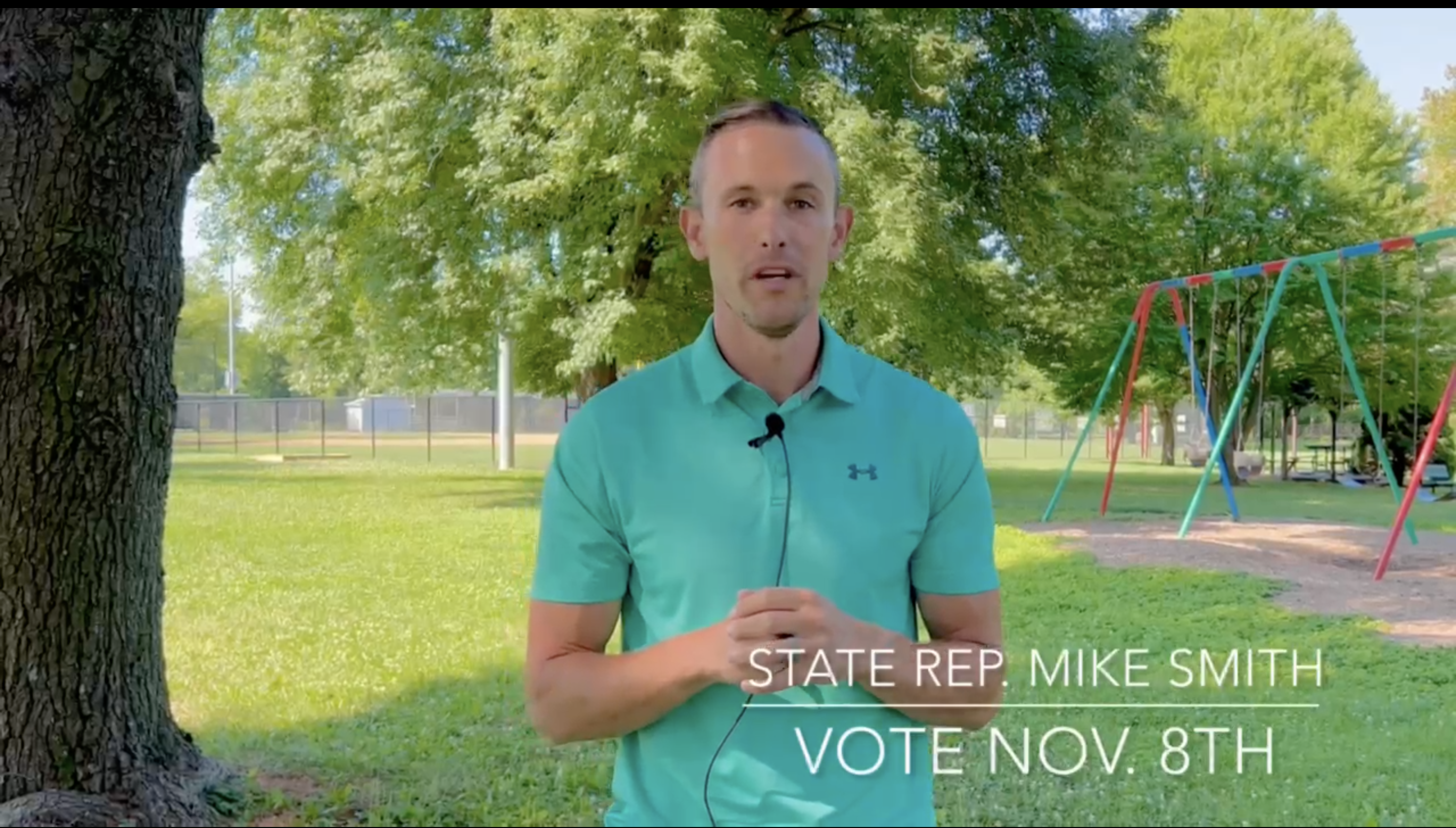
Rep. Mike Smith
Sponsored bills
This Act creates a privilege for confidential communications between a victim and a victim advocate. The victim can waive the privilege with a signed waiver. The privilege may also be overcome in certain circumstances, including mandated reporting of child abuse, communications relating to the intent to commit a violent crime, and in state custody and child abuse cases. This Act defines a victim advocate as an employee of a victim services agency, or formal volunteer under the supervision of an employee of a victim services agency who has completed a minimum of 20 hours of advocacy training. This substitute bill incorporates the change from HA1 to House Bill No. 213 regarding the exception for child abuse and state custody cases. It also explicitly excludes law-enforcement agencies and the Department of Justice from the definition of victim services agency. It clarifies that the victim advocate may claim the privilege but only on behalf of the victim. Finally, it adds a process and criteria for a defendant in a criminal case to overcome the privilege in certain circumstances. This is intended to mirror the exception to the therapist-client privilege articulated in Burns v. State, 968 A.2d 1012 (2009).
This House Concurrent Resolution establishes a Property Tax Relief and Modernization Working Group to examine potential long-term reforms to Delaware’s property tax system following statewide reassessment efforts completed in 2024 and 2025. The Working Group will evaluate policy approaches utilized in other states, including homestead exemptions, circuit breaker programs, property tax stabilization measures, differentiated taxation approaches, assessment caps, and other taxpayer protection mechanisms, while considering impacts on local government and school district fiscal stability. The Working Group will examine the fiscal, legal, administrative, and economic implications of such reforms and produce recommendations and draft legislative language for consideration by the 154th General Assembly.
Maddy summaryThis bill designates October 6, 2026, as "National Coaches Day" within the state of Delaware. It serves as a commemorative resolution that officially recognizes the contributions of coaches but does not create new laws or alter existing policies. The measure affects only the state's official calendar and does not provide funding or mandate specific actions for schools or organizations.
This Act requires modifications to exemptions from county taxation to reasonably reflect changes in property value and inflation. This Act also requires New Castle County to use the same eligibility criteria and calculation formula for exemption from school taxes that it used for county taxes in the fiscal year that began July 1, 2025.
This House Concurrent Resolution establishes a statewide Property Assessment Working Group ("Working Group") to examine the statutory and regulatory frameworks for states that have adopted IAAO standards to inform Delaware's own quality benchmarks and operational requirements. The Working Group shall produce recommendations, ready for introduction in the 154th General Assembly, to establish State standards governing property assessment practices in Delaware.
In Delaware, there are 44 event venues that host events like weddings and receptions. To host events where alcohol is served, event venues must have a bottle club license. Under § 101 of Title 4, a bottle club is defined as a business where customers “enter on the premises for the purpose of consuming alcoholic liquors” brought by the customers. This definition can make the pathway for licensure unclear for event venues with customers that enter on the premises for the purpose of hosting and attending private events that sometimes include alcohol. Only 8 of the event venues in Delaware have a bottle club license. Adding a license that allows venues to host events with alcohol would reduce regulatory confusion by creating a clear pathway for event venues to apply for licensure. Also, event venues or the venues’ customers often hire caterers to provide food and alcohol to event guests, but Delaware grants licenses to purchase and resell alcohol only to caterers with at least 60% of their gross receipts resulting from the sale of food. In practice, this requirement limits flexibility, raises costs, and complicates event planning. So long as a reasonable selection of food is available, allowing the Commissioner to grant a license to caterers to serve alcohol at private, invitation-only events without the requirement to serve food would provide more flexibility for event planners and event venues, help with collaboration, and saves on costs. Adding a private event license and granting caterer licenses to provide alcohol at private events without requiring the caterer to also provide food would help eliminate gray areas in licensing and bring more events under the legal oversight of the Alcoholic Beverage Control Commissioner (“Commissioner”). These licensing changes would encourage economic activity in Delaware’s small business, event, and hospitality sections while ensuring public safety and maintaining accountability. This Act adds a private event license under § 512I of Title 4 to replace the current bottle club license for private social gatherings under § 515A(c)(2) of Title 4. Bottle club licenses granted under § 515A(c)(2) of Title 4 prior to the Act’s enactment may be retained and transferred, as allowed by the Commissioner. A “private event venue” means an establishment operated for profit or pecuniary gain used for private events. A “private event” means an invitation-only event with up to 1,000 guests, like weddings, dinners, benefits, and banquets. The private event license allows the person in charge of a private event or the owner, lessor, or person in charge of a private event venue to hold a private event at which alcoholic liquors are provided for consumption on the licensed premises. The alcoholic liquors may be provided by an off-site caterer licensed under § 512(g) of Title 4 or the customer, the customer’s invited guests, or both. The private event license does not allow a licensee to receive, keep, or sell alcoholic liquors. A private event licensee is also subject to limitations on the hours when alcohol may be sold or consumed on the premises and how long alcohol may be on the premises before and after a private event. Also, private event licensees have certain requirements, including maintaining liability insurance; making sure that if a licensed off-site caterer is hired, only that licensed off-site caterer provides alcohol; not providing alcohol to an individual under the age of 21 years; and making sure that there is an adequate selection of food, as determined by the Commissioner, at each private event. There are 2 types of private event licenses. A person may apply for a single event license that is valid only for the date and location specified in the application or a biennial premises license valid for any private event held on the licensed premises within a 2-year period. The fee for a single event license is $50 and the fee for a biennial premises license is $1,000. A private event licensee holding a biennial premises license must report each private event to the Commissioner at least 10 business days before the private event. The report must include the private event’s time and date, the number of guests invited, if the alcohol will be provided by an off-site caterer or the customer, and any other information required by the Commissioner. This Act also allows the Commissioner to grant licenses to caterers and off-site caterers under § 512(g) of Title 4, without the requirement to sell food, only if caterers or off-site caterers provide alcohol at a private event held on licensed premises. At each private event, an adequate selection of food, as determined by the Commissioner, must be available while alcoholic liquors are sold, served, or consumed. The food may be provided by another person, including a private event licensee, another caterer, another off-site caterer, or the customer. If the caterer or off-site caterer is hired to provide alcoholic liquors at a private event, all alcoholic liquors sold, served, or consumed must be provided by that caterer or off-site caterer. And the caterer or off-site caterer must report each private event, as required by the Commissioner. This Act also makes technical corrections to conform existing law to the standards of the Delaware Legislative Drafting Manual. This Act takes effect on enactment and is to be implemented the earlier of the following: 1. Six months from the date of the Act’s enactment. 2. Notice by the Commissioner in the Register of Regulations that final regulations to implement this Act have been adopted. This Act requires a greater than majority vote for passage because § 11 of Article VIII of the Delaware Constitution requires the affirmative vote of three-fifths of the members elected to each house of the General Assembly to impose or levy a tax or license fee.
This Concurrent Resolution recognizes September 24, 2026 as Firefighter Suicide Awareness Day, September 25, 2026 as Emergency Medical Services Suicide Awareness Day, September 26, 2026 as Law Enforcement Officer Suicide Awareness Day, and September 27, 2026 as Telecommunications Suicide Awareness Day in Delaware.
This resolution recognizes June 2026 as Alzheimer's and Brain Awareness Month and urges all Delawareans to wear purple to help spread awareness of Alzheimer's and all other dementia.
Maddy summaryThis Senate Concurrent Resolution, titled "Celebrating the Spirit of America 250," is a ceremonial measure designed to honor a specific anniversary or theme. It does not create new laws, change existing policies, or allocate any funding. The bill's primary effect is to formally recognize the "Spirit of America 250" within the legislative body.