Issue · Environment

Environment

Every environment bill, vote, and legislator stance in Delaware, automatically classified by Maddy, our AI policy reader.

Total bills
107
119th Congress
Top supporter
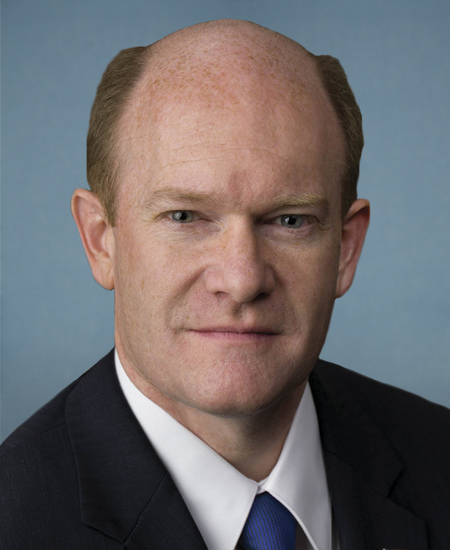
Christopher A. Coons
79% support rate
Top opponent
-
no data yet
Ranked legislators
3
3 support · 0 oppose
Key legislators

Who's moving environment in Delaware

Legislators moving environment in Delaware
Legislator Party Stance Support rate Votes
Christopher A. Coons
Christopher A. Coons Senate
D
Support
79% 229
Lisa Blunt Rochester
Lisa Blunt Rochester Senate
D
Support
76% 235
Sarah McBride
Sarah McBride House · District At-Large
D
Support
64% 304
Showing 1–10 of 107 bills

All environment bills

in committee · United States · House Sep 10, 2026

HRES 1524: Expressing support for the designation of the week of September 19 through September 26, 2026, as "National Estuaries Week".

This House resolution expresses support for designating the week of September 19 through September 26, 2026, as National Estuaries Week to raise public awareness about the importance of these coastal ecosystems. The bill highlights that estuaries support a significant portion of the U.S. population and economy while providing critical services such as flood control, water filtration, and habitat for fish and wildlife. It acknowledges ongoing threats to estuary health, including pollution and sea level changes, and recognizes the efforts of government agencies, organizations, and individuals working to protect and restore these areas.
in committee · United States · Senate Jul 23, 2026

S 5115: Farmers Lifeline Options for Overcoming Disasters (FLOOD) Act

The FLOOD Act amends the Food Security Act to incorporate specific emergency watershed protection measures from the Agricultural Credit Act of 1978. This change directly affects farmers and agricultural operations by integrating existing disaster response protocols into the broader food security framework. The bill does not create new programs but rather expands the scope of current emergency measures to include watershed protection. By linking these two statutes, the legislation ensures that watershed safeguards are formally recognized as part of the emergency response options available to the agricultural sector.
Sub-Topics Coastal & Flood Protection Natural Disasters Water Quality Tags Agriculture Emergency Management
in committee · United States · Senate Jul 29, 2026

S 5170: Carbon Dioxide Removal Leadership Act of 2026

The Carbon Dioxide Removal Leadership Act of 2026 directs the Department of Energy to remove specific quantities of carbon dioxide from the atmosphere each year through 2036 and beyond, with targets increasing from 50,000 to 10 million metric tons annually. The bill defines eligible technologies as those that capture CO2 directly from the air or seawater and store it durably, while excluding methods like enhanced oil recovery or natural photosynthesis. To ensure accuracy, the law requires independent third parties to measure, monitor, and verify removals, with costs included in the price of removal, which must drop from $750 per ton in 2026 to $150 per ton by 2037. The Secretary of Energy must prioritize projects that create domestic jobs, source materials locally, and benefit communities historically dependent on fossil fuels, while reserving at least 20 percent of removals for smaller projects. Additionally, the act mandates regular reports to Congress on progress and authorizes funding to carry out these removal obligations.
Sub-Topics Oil & Gas
in committee · United States · Senate Jul 20, 2026

S 5035: National Coordination on Resilience for Security Act of 2026

The National Coordination on Resilience for Security Act of 2026 creates a new Chief Resilience Officer within the National Security Council to lead federal efforts in preparing for natural hazards and enhancing national security. This official will establish interagency working groups and a Partners Council on Resilience that includes representatives from state, local, tribal, and private sector entities to coordinate strategies and identify funding gaps. The bill requires the development of a National Resilience Strategy that outlines how federal agencies will collaborate with non-federal partners to improve infrastructure, reduce waste, and support vulnerable communities. Additionally, the act mandates the creation of a public clearinghouse to share resilience data and technical assistance, with all provisions set to expire after ten years or following a third independent assessment.
Sub-Topics Natural Disasters
in committee · United States · Senate Jul 22, 2026

S 5063: FIRST Act

The FIRST Act establishes a new program within the Department of State to promote the international deployment of American small modular reactor technology. Managed by the Under Secretary for Arms Control and International Security, the program will advocate for U.S. nuclear exports, ensure high safety and security standards, and provide support for project development and workforce training abroad. The legislation requires the program to submit detailed reports and briefings to Congress every 120 days regarding its activities and funding, and it is set to expire in 2034.
Sub-Topics Nuclear
in committee · United States · Senate Jun 24, 2026

S 4911: Investing in State Energy Act of 2026

The Investing in State Energy Act of 2026 requires the federal government to provide application guidance and publish funding allocations for state energy programs within 60 days of funds becoming available. Additionally, the bill mandates that financial assistance payments be sent to states and tribes within 30 days after they submit complete conservation plans. This legislation also increases funding for state energy initiatives by adding $100 million for each of the fiscal years from 2027 through 2031. These changes aim to streamline the process for states and tribes to receive and utilize federal energy conservation funds more quickly.
in committee · United States · House Jun 24, 2026

HR 9250: Great American Outdoors Act 250

This bill redesignates the existing National Parks and Public Land Legacy Restoration Fund as the America's Legacy Restoration Fund to address deferred maintenance on federal lands. It directs revenue from recreation fees and a portion of energy development income into the fund, which must be used primarily for repairing critical infrastructure like roads, trails, and buildings managed by agencies such as the National Park Service and the Forest Service. The legislation establishes strict rules requiring that most funds go toward non-transportation projects, mandates transparency through public dashboards tracking project status, and sets aside a small percentage for matching private donations. Additionally, the bill increases entrance fees for foreign visitors to ensure they contribute to the fund, while prohibiting the use of these specific funds for land acquisition or employee bonuses.
in committee · United States · Senate Jun 9, 2026

SRES 762: A resolution supporting the designation of the second Friday in June as "National Service and Conservation Corps Day".

This resolution supports designating the second Friday in June as National Service and Conservation Corps Day to honor the work of over 140 organizations that engage young adults and veterans in community service projects. These programs, which are descendants of the historic Civilian Conservation Corps, help participants gain skills, earn education awards, and contribute to conservation, disaster response, and infrastructure improvements. The Senate's action calls on citizens to recognize the value of national service and encourages the continued expansion of these existing nonprofit and government-run initiatives.
Sub-Topics Conservation
in committee · United States · Senate Jun 2, 2026

S 4664: Safer Choice Program Authorization Act of 2026

The Safer Choice Program Authorization Act of 2026 authorizes the Environmental Protection Agency to continue its voluntary Safer Choice program, which helps consumers and businesses identify products containing safer chemical ingredients. The bill establishes specific criteria for certification, requiring that products be safe for human health and the environment while maintaining performance, and mandates full disclosure of intentionally added ingredients. To support these evaluations, the legislation creates a framework for using independent third-party experts to review complex products while protecting confidential business information. Additionally, the act requires the EPA to publish annual reports on program progress and maintain a public database of certified products, with funding authorized through fiscal year 2034.
in committee · United States · Senate Jul 27, 2026

S 4610: Pacific POWER Act

The Pacific POWER Act directs the U.S. State Department to launch an international program aimed at expanding geothermal energy use in Indo-Pacific allies to strengthen national security ties and reduce reliance on Chinese energy technology. This initiative involves selecting at least five partner countries, including several in the Indo-Pacific region, to collaborate on developing geothermal resources and next-generation technologies like enhanced geothermal systems. The bill authorizes the creation of public-private partnerships, financial tools, and technical assistance to help these partners build geothermal capacity while establishing standards for community engagement and environmental safety. To oversee this effort, the legislation requires the Secretary of State to submit detailed reports to Congress outlining the strategy, resource needs, and progress of the program over a five-year funding period.
Showing 1 to 10 of 107 bills
1 2 3 11 Next