Issue · Budget & Taxes

Budget & Taxes (Property Tax)

Every budget & taxes bill, vote, and legislator stance in Delaware, automatically classified by Maddy, our AI policy reader.

Total bills
14
153rd General Assembly (2025-2026)
Top supporter
Kim Williams
100% support rate
Top opponent
Shannon Morris
25% support rate
Ranked legislators
10
5 support · 5 oppose
Key legislators

Who's moving property tax in Delaware

Legislators moving property tax in Delaware
Legislator Party Stance Support rate Votes
Kim Williams
Kim Williams House · District 19
D
Strong +
100% 4
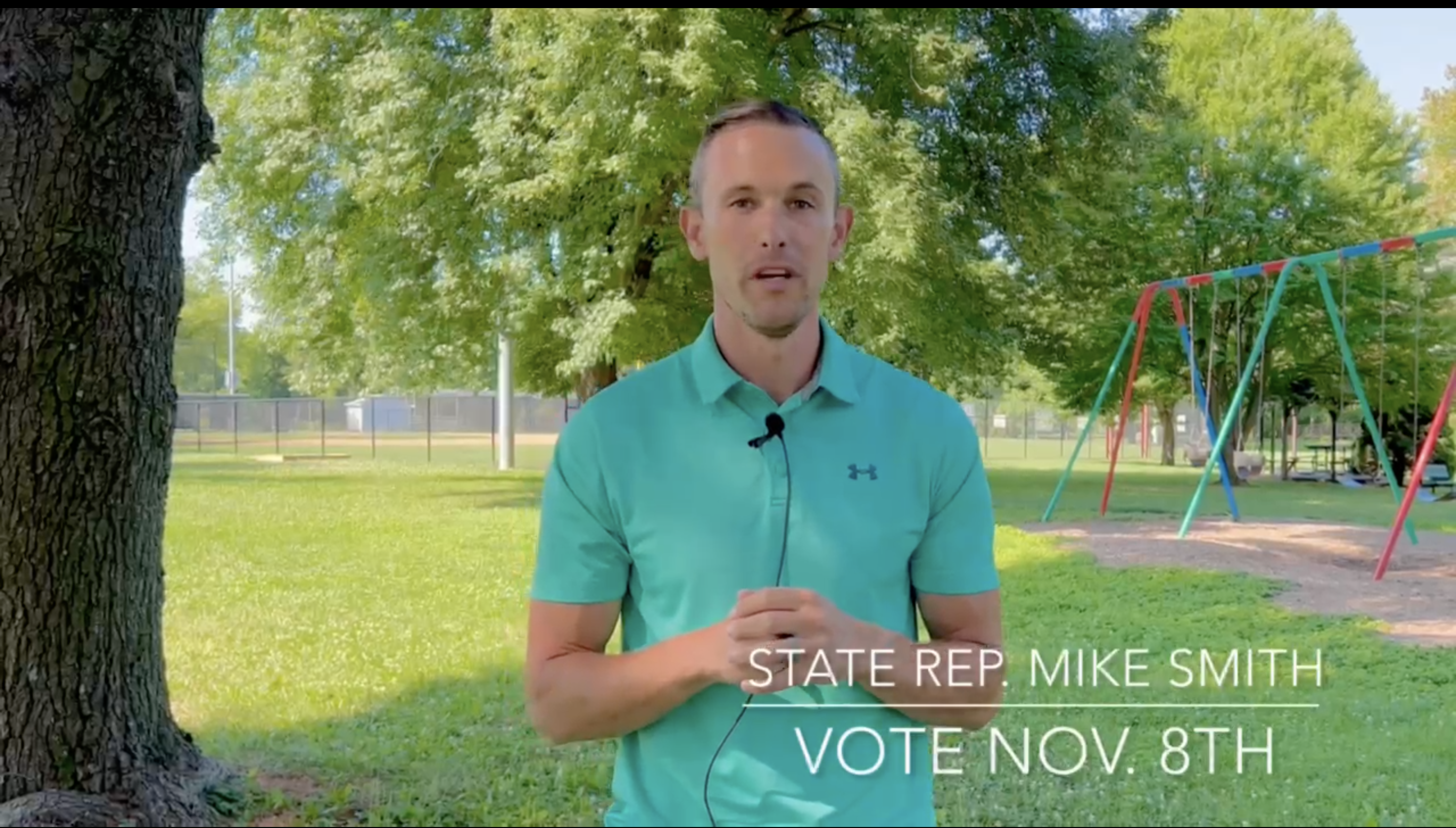
Mike Smith
Mike Smith House · District 22
R
Strong +
80% 5
Sean Lynn
Sean Lynn House · District 31
D
Strong +
80% 5
Valerie Giltner
Valerie Giltner House · District 37
R
Strong +
80% 5
Claire Snyder-Hall
Claire Snyder-Hall House · District 14
D
Support
75% 4
Shannon Morris
Shannon Morris House · District 30
R
Oppose
25% 4
Jeff Hilovsky
Jeff Hilovsky House · District 4
R
Oppose
40% 5
Jesse Vanderwende
Jesse Vanderwende House · District 35
R
Oppose
40% 5
Madinah Wilson-Anton
Madinah Wilson-Anton House · District 26
D
Oppose
40% 5
Rich Collins
Rich Collins House · District 41
R
Oppose
40% 5
Showing 1–10 of 14 bills

All budget & taxes bills

passed both · Delaware · House Jun 18, 2026

HCR 151: HOUSE CONCURRENT RESOLUTION ESTABLISHING A WORKING GROUP TO EXAMINE LONG-TERM PROPERTY TAX RELIEF AND MODERNIZATION STRATEGIES FOLLOWING STATEWIDE REASSESSMENT.

This House Concurrent Resolution establishes a Property Tax Relief and Modernization Working Group to examine potential long-term reforms to Delaware’s property tax system following statewide reassessment efforts completed in 2024 and 2025. The Working Group will evaluate policy approaches utilized in other states, including homestead exemptions, circuit breaker programs, property tax stabilization measures, differentiated taxation approaches, assessment caps, and other taxpayer protection mechanisms, while considering impacts on local government and school district fiscal stability. The Working Group will examine the fiscal, legal, administrative, and economic implications of such reforms and produce recommendations and draft legislative language for consideration by the 154th General Assembly.
Sub-Topics Property Tax
passed both · Delaware · House Aug 5, 2026

HB 462: AN ACT TO AMEND TITLE 14 OF THE DELAWARE CODE RELATING TO SCHOOL TAXES.

In 2025, the General Assembly passed House Bill No. 242 (now found at Chapter 135, Volume 85 of the Laws of Delaware), allowing school districts located entirely in New Castle County to use different tax rates for residential and non-residential properties. This Act amends the Delaware Code to continue the authority for non-vocational technical school districts in New Castle County to utilize a residential and non-residential tax rate for school tax purposes. Such a split rate may be established or adjusted in the year after a general reassessment or as part of a referendum. The rate must be uniform for each class of property. Under this Act, the non-residential rate must be at least equal to the residential rate and may be no more than 1.85 times the residential rate. For purposes of the split tax rate, a school district must follow the classifications of the county in which the district is located. Under the transition provisions of this Act, a district that initially established split tax rates under the authority of House Bill No. 242, may continue to use those split rates at the same or a lower ratio between residential and non-residential tax rates established in the 2025-2026 tax year. But if a district’s non-residential tax rate for the 2025-2026 tax year was more than 1.85 times the residential tax rate, it must adjust its rates to meet the 1.85 maximum ratio permitted under this Act. The New Castle County Vocational Technical District may not continue the use of different tax rates past the 2025-2026 tax year. The Act also changes the amount a school district must add to its tax rate to account for delinquencies and late payments to “up to 10%” rather than requiring that a school district must add exactly 10% to its tax rate for this purpose. This Act also makes technical corrections to conform this chapter of the Delaware Code to the Delaware Legislative Drafting Manual and strikes references to the City of Wilmington School District, which no longer exists. It also revises § 1913 of Title 14 to reflect current practice. It strikes an outdated requirement in § 1918 of Title 14 that the school districts deliver a copy of the assessment list to the County along with their tax warrant. This is inconsistent with the role of the school districts and with current practice.
signed · Delaware · Senate Jul 23, 2026

SB 322: ACT TO AMEND TITLE 14 OF THE DELAWARE CODE RELATING TO LOCAL SCHOOL TAXES.

This Act repeals the ability of school districts to increase tax rates by up to 10% when recalculating the district’s rate of taxation after a general reassessment. This Act does not repeal the requirement under § 1916(b) of Title 14 that a school district recalculate the district’s rate of taxation after a general reassessment, but instead of the 10% maximum, limits the amount of money a district can collect as a result of increases in the fair market value of real property to an amount that is equal to or less than the sum of all of the following: 1. The actual operating revenue derived by the tax levied in the fiscal year immediately preceding the general reassessment. 2. A percentage that is equal to the average growth rate in taxable property in the district since the previous reassessment. This Act also allows school districts to increase a tax approved in a referendum election under Chapter 19 of Title 14 by up to 2% annually without a referendum if the district’s operational reserve balance is not more than 10% of the district’s annual revenue and it is not the same fiscal year that the rate of taxation is recalculated after a general reassessment. This authority will allow school districts to maintain services for students by gradually adjusting to challenges such as inflation, enrollment changes, and increased student needs. Under this Act, the new recalculation equation under § 1916(b) of Title 14 applies beginning for the fiscal year following the next general reassessment and a school district cannot begin to increase tax rates by no more than 2% without a referendum until after the next general reassessment or for fiscal year 2031, whichever is earlier. This Act does not do any of the following: • Allow school districts to levy an additional tax that is more than 2% without an approved referendum. • Change the differences under current law for tax rates for vocational-technical districts. Under current law and this Act, vocational-technical districts are required to use the same calculations as other school districts when recalculating the rate of taxation after a general reassessment. However, the tax authority for vocational-technical districts is under Chapter 26 of Title 14, not Chapter 19, so the authority to annually increase a tax rate by 2% does not apply to vocational-technical districts. This Act also makes the following corresponding and technical changes to Chapter 19 of Title 14: • Revises the definitions in § 1901 by adding “general reassessment” and “reassessed” as defined terms and updates the definition of “district” to reflect current school district boundaries. • Clarifies that if Chapter 26 applies to a school district, the ability of a district to levy an additional tax under § 1902(a) does not apply to that district. • Technical corrections to conform existing law to the standards of the Delaware Legislative Drafting Manual.
Sub-Topics Property Tax
passed both · Delaware · House Jul 1, 2026

HB 376: AN ACT TO AMEND THE CHARTER OF THE TOWN OF MILLVILLE.

This Substitute for House Bill No. 376 removes provisions in the existing Town of Millville Charter that have been preempted or otherwise regulated by State law and makes technical changes. The original Bill reorganizes the Town Charter’s sections into corresponding articles, adds a preamble, and modernizes wording. Also, the Bill removes sections related to a Town-only assessment process, given the Town’s use of county assessments and adds a property tax cap of 3% of the total assessed value in the Town. The municipal election process is amended to include an ultimate tie-breaking mechanism.
Sub-Topics Property Tax
signed · Delaware · House Jun 13, 2025

HB 159: AN ACT TO AMEND TITLE 14 OF THE DELAWARE CODE RELATING TO SCHOOL PROPERTY TAX EXEMPTIONS.

This Act gives a county, upon a county-wide reassessment of real property under § 8306(b) of Title 9, the authority to adopt an ordinance modifying the school property tax exemption amounts that were put in place on or before January 1, 1998. In doing so, this Act protects seniors and individuals with disabilities from significant school tax increases related to county-wide reassessments of property values.
signed · Delaware · House Aug 12, 2025

HB 241: AN ACT TO AMEND TITLE 9 AND TITLE 14 OF THE DELAWARE CODE RELATING TO PROPERTY TAX COLLECTION.

This Act requires the tax collecting authority of each county, in the first tax year following a general reassessment, to allow the payment of school taxes under a payment plan of at least 3 equal installments for a residential taxpayer, in a primary residence, whose tax bill increases by $300 or more over the prior year. No late fees, interest, or penalties may be assessed to a taxpayer who enters and complies with a payment plan. The Act also reduces late payment penalties for school taxes in New Castle County to 1% per month, the current penalty for late payment in Kent and Sussex. This Act sunsets 3 years after its enactment into law.
Sub-Topics Property Tax
in committee · Delaware · House Mar 25, 2026

HB 246: AN ACT TO AMEND TITLE 14 OF THE DELAWARE CODE RELATING TO LIMITATION ON PUBLIC SCHOOLS' TAX RATE AFTER GENERAL REASSESSMENT.

HB 246 limits Delaware public schools' annual property tax revenue increases to 2% per year for five years following a full property value reassessment. This caps the standard 10% post-reassessment tax increase, spreading it out over five years instead of allowing a larger single-year jump. The bill directly affects Delaware public schools and their local taxing authorities by restricting how much school tax revenue can grow annually after reassessment. This change provides predictable, gradual funding adjustments rather than potential larger annual increases.
Sub-Topics Property Tax Revenue
in committee · Delaware · House Aug 7, 2025

HB 247: AN ACT RELATING TO THE COLLECTION OF TAXES FOR REAL PROPERTY IN THE 2025-2026 TAX YEAR.

This Act is a short-term response to the recent tax reassessment that protects homeowners, who have received substantially increased property and school tax bills for the 2025-2026 tax year, from legal action while the General Assembly and New Castle County explore long-term solutions. Many Delaware homeowners have raised several troubling questions and concerns about the property reassessment process. After the reassessment, the tax burden has drastically shifted to homeowners, which has hit vulnerable groups the hardest, including seniors, low-income families, and long-term residents. This Act requires the tax collecting authority for New Castle County (“County”) to offer payment plans to all taxpayers to pay county property and school taxes assessed to residential properties for the 2025-2026 tax year. After offering the payment plan, the County must give a taxpayer at least 30 days from the date of the offer to enter into the payment plan. If a taxpayer enters into a payment plan and makes payments in compliance with the payment plan, the County may not collect the taxes owed out of the taxpayer’s real or personal property, including by filing a civil action to collect the taxes or by seizing or selling the taxpayer’s property. Additionally, the County may not charge fees, penalties, or interest on taxes owed by taxpayers who make payments in compliance with the payment plan. This Act sunsets on December 31, 2026, unless otherwise provided by a subsequent Act of the General Assembly. But the prohibitions on collecting taxes out of the taxpayer’s real or personal property and on charging fees, penalties, or interest on taxes continue to apply to payment plans that extend on or beyond December 31, 2026, so long as the taxpayer remain in compliance with the payment plan.
Sub-Topics Property Tax
in committee · Delaware · House Aug 7, 2025

HB 249: AN ACT RELATING TO TAXES IN THE 2025-2026 TAX YEAR.

This Act requires counties to void all tax bills already issued to taxpayers in the county for the 2025-2026 tax year and to reissue property and school tax bills for the 2025-2026 tax year using the previously assessed value of the real property for all property subject to county taxation under Part V of Title 9 and all property subject to the local school tax under Chapter 19 of Title 14. This requirement does not apply to tax bills for new construction completed during the 2025-2026 tax year. Within 10 days of enactment of this Act, school districts must deliver a new tax collection warrant to the county calculated using the previously assessed value of the real property for school tax, so tax bills for the 2025-2026 tax year can be reissued. The deadline for payment of the reissued tax bills is extended to October 30, 2025, and counties must refund or credit overpayments of taxes for the 2025-2026 tax year to taxpayers who submit payment in accordance with previous tax bill. A school district may request and borrow from State Division I funds in the event of a cash flow shortfall of local school funds due to the extension of the deadline for tax payments for the 2026 fiscal year.
in committee · Delaware · House Mar 25, 2026

HCR 78: DIRECTING THE PUBLIC EDUCATION FUNDING COMMISSION TO SUBMIT A REPORT WITH RECOMMENDATIONS FOR THE EQUITABLE COLLECTION AND DISTRIBUTION OF PROPERTY TAX REVENUE IN DELAWARE.

This Concurrent Resolution directs the Public Education Funding Commission (Commission) to make findings and recommendations to achieve the equitable collection and distribution of property tax revenue to support the needs of public schools, and submit a report with the recommendations no later than January 1, 2026. This Concurrent Resolution provides that the House and Senate Education committees will hold a joint meeting in January 2026 where the Commission will present for discussion the recommendations that are due October 1, 2025, and from this Concurrent Resolution.
Showing 1 to 10 of 14 bills
1 2 Next