

Maddy summaryThe Increasing Mental Health Options Act of 2026 expands Medicare coverage and oversight rules to include clinical psychologists in rural and underserved areas. Starting in 2026, clinical psychologists working in designated health professional shortage areas will receive an additional 10 percent payment for services provided to Medicare beneficiaries. The bill also removes certain federal restrictions that previously limited the types of care clinical psychologists could provide in outpatient rehabilitation, skilled nursing, partial hospitalization, home health, and inpatient psychiatric settings. These changes allow psychologists to supervise or provide care directly in these facilities as long as state laws permit it, while maintaining existing requirements for consultation with physicians.
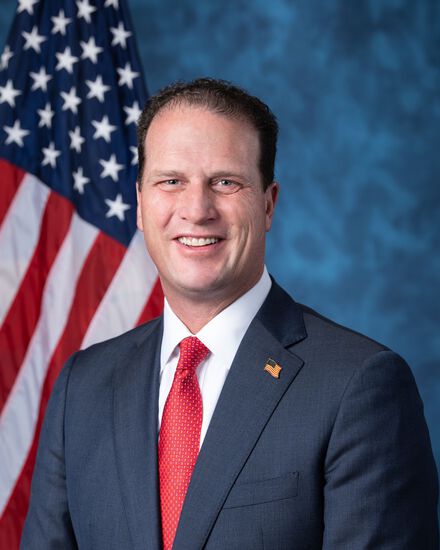
Rep. August Pfluger
Sponsored bills
Maddy summaryThe RESCUE Act of 2026 updates how the federal government reimburses ground and air ambulance services by changing the payment schedule and data collection rules. Starting in 2028, the Secretary of Health and Human Services will adjust payment rates every three years based on new data regarding costs, labor, and uncompensated care, while years in between will see payments increase only by the standard inflation rate. The bill also requires air ambulance providers to submit cost information to the government at least once every three years, aligning this process with existing rules for ground ambulance services. Additionally, the law mandates a review by 2029 to gather expert recommendations on whether further changes are needed to ensure ambulance providers are paid appropriately. These changes directly affect ambulance companies and the federal programs that fund emergency medical transport.
Maddy summaryThe Stop EU Overreach Act directs the United States Trade Representative to initiate a formal investigation within 30 days of enactment to determine if specific European Union environmental and sustainability regulations unfairly burden American commerce. These targeted measures include rules on corporate sustainability due diligence, reporting, deforestation traceability, and carbon border adjustments that apply to US companies based on their operations or supply chains outside the EU. If the investigation concludes that these foreign practices are unreasonable or discriminatory, the USTR is authorized to take retaliatory actions such as imposing duties on imports from EU member states or suspending trade agreement benefits. The bill includes a sunset provision that terminates its requirements for any specific EU measure once the USTR certifies that the European Union has repealed the rule or entered into a binding agreement to exempt US persons from its extraterritorial obligations.
Maddy summaryThe STRATA Act of 2026 establishes a new program within the Department of State to foster international partnerships focused on advancing critical minerals technologies, aiming to strengthen U.S. supply chains and national security. This initiative allows the Secretary of State to form alliances with allied and partner nations, universities, and private companies while explicitly prohibiting collaborations with designated countries of concern such as China and Russia. Key provisions include the creation of International Centers of Excellence for research and training, the development of a digital platform to connect stakeholders with funding opportunities, and the establishment of clear guidelines for intellectual property and data security within these partnerships. The program authorizes the use of specific funding sources to support joint projects in extraction, recycling, and manufacturing, with a requirement that all activities conclude within ten years of the bill's enactment.
Maddy summaryThis bill, known as the STOP Nitazenes Act, directs the federal government to permanently classify nitazenes and related synthetic opioids as Schedule I controlled substances, placing them in the same legal category as heroin and fentanyl. The legislation specifically targets a broad range of chemical compounds, including etonitazene and other variants, by defining them as 2-benzylbenzimidazole opioids and requiring the Attorney General to publish a list of qualifying substances. Under the bill, any nitazene substance temporarily scheduled under emergency provisions would be made permanently scheduled upon enactment, ensuring long-term federal control. The law also mandates that the Attorney General issue implementing rules within one year, allowing for immediate interim enforcement while providing opportunities for public comment before final regulations are established.
Maddy summaryThe SAFE CATTLE Act requires the U.S. Departments of Agriculture and Interior to coordinate federal efforts to prevent, monitor, and eradicate New World screwworm - a pest that attacks livestock and wildlife - across federal lands managed by agencies like the National Park Service and Fish and Wildlife Service. It mandates joint surveillance protocols, outbreak response plans with state officials, and science-based strategies to protect livestock industries and food supply chains. The bill also requires annual reports to Congress detailing interagency progress, outbreak responses, and recommendations for improving pest control until screwworm is contained south of Panama. This legislation directly affects federal land managers, livestock producers, and the broader agricultural economy by establishing a formal federal framework for addressing this specific animal health threat.
Maddy summaryHR 6213, the Heat Workforce Standards Act of 2025, prohibits the U.S. Department of Labor from finalizing, implementing, or enforcing OSHA's proposed "Heat Injury and Illness Prevention" standard (published August 30, 2024). This bill directly blocks the specific regulatory proposal targeting heat safety in both outdoor and indoor work settings. It does not create new requirements or affect workers; it solely prevents the implementation of the existing OSHA proposal. The bill is procedural, focusing on halting a regulatory action rather than establishing new policy.
Maddy summaryThis resolution supports designating July 20, 2026, as "National Moon Landing Day" to honor the historic Apollo 11 mission and the ongoing Artemis program. The bill encourages Americans to celebrate the achievements of NASA astronauts, engineers, and scientists while honoring those who lost their lives during space exploration efforts. It also aims to inspire young people to pursue careers in STEM fields and promote public awareness of the economic and scientific benefits of human spaceflight.
Maddy summaryThis resolution honors the late Senator Lindsey Graham and condemns Omar Suleiman for publicly celebrating Graham's death. It also acknowledges that House Democrats invited Suleiman to serve as a guest chaplain in 2019 and highlights his past statements and affiliations. The measure expresses support for the House Republicans' Sharia-Free America Caucus, which aims to protect constitutional principles from what it describes as an ideology incompatible with American life.
Maddy summaryThis bill, known as the Daughters of the American Revolution Membership Integrity Act, amends federal law to explicitly limit membership in the Daughters of the American Revolution to adult human females. It defines a female as someone who naturally possesses or would have the reproductive system capable of producing ova for fertilization, regardless of any congenital anomalies or medical disruptions. By adding this specific definition to the organization's governing code, the legislation clarifies the genealogical and biological requirements for joining the group. The change directly affects the organization's eligibility rules but does not alter its internal operations or funding.