Daylight Act This bill allows states to observe daylight savings time year-round. (States may already choose to observe standard time year-round.)
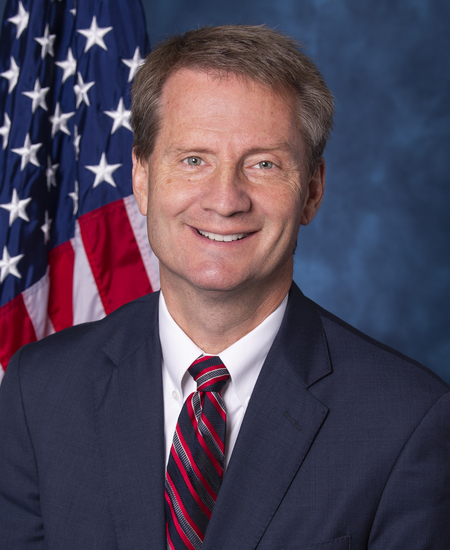
Rep. Tim Burchett
Sponsored bills
This bill establishes in the legislative branch the Election Integrity Commission. The commission must (1) study the integrity and administration of the November 2020 general election; and (2) make recommendations to Congress on improving the security, integrity, and administration of federal elections. The commission terminates 30 days after the submission of its final report.
Student Empowerment Act This bill allows tax-exempt distributions from qualified tuition programs (known as 529 plans) to be used for additional educational expenses in connection with enrollment or attendance at an elementary or secondary school. (Under current law, distributions in connection with an elementary or secondary school are limited to tuition for a public, private, or religious school.) The bill allows the distributions to be used for additional educational expenses, including curriculum and curricular materials, books or other instructional materials, online educational materials, tutoring or educational classes outside the home, testing fees, fees for dual enrollment in an institution of higher education, and educational therapies for students with disabilities. Distributions may also be used for tuition and the purposes above in connection with a homeschool (whether treated as a homeschool or a private school under state law).
Responsible Climate Action and American Competitiveness Act This bill requires the President to notify Congress at least 30 days before submitting to the other parties of the Paris Agreement the climate change-related actions the United States will take. (The agreement refers to these planned actions as nationally determined contributions.) The notification to Congress must contain certain information including (1) a detailed economic justification of the planned actions, (2) a cost-benefit analysis of the actions, and (3) a description of how the actions will support U.S. efforts to counter the malign influence of the Chinese and Russian governments over energy supply chains. The Paris Agreement requires each party to periodically submit its planned actions for addressing climate change, such as a plan to reduce its greenhouse gas emissions by a certain level.
This concurrent resolution authorizes the use of the rotunda of the Capitol to honor, upon death, the last surviving Medal of Honor recipient for acts performed during World War II, at the election of the individual or their next of kin.
Access Technology Affordability Act of 2021 This bill allows a refundable tax credit equal to the amounts paid for qualified access technology for use by a blind individual who is the taxpayer, the taxpayer's spouse, or a dependent of the taxpayer. Qualified access technology is hardware, software, or other information technology with the primary function of converting or adapting information that is visually represented into forms or formats useable by blind individuals. The credit is limited to (1) costs that are not compensated by insurance or otherwise, and (2) an aggregate amount of $2,000 per blind individual in any period of three consecutive taxable years. The credit must be adjusted for inflation after 2021 and terminates after 2026.
No Taxpayer-Funded Art in Embassies Act This bill prohibits the purchase, installation, insurance, or transport of art for display in a U.S. embassy or consulate.
Palestinian International Terrorism Support Prevention Act of 2021 This bill imposes sanctions targeting Hamas, the Palestinian Islamic Jihad, and any affiliate or successor groups. The President shall periodically report to Congress a list of each foreign person or instrumentality that knowingly assists, provides significant support or services to, or is involved in a significant transaction with a senior member or supporter of any of the targeted groups. The President shall impose two or more sanctions on the named persons. Specifically, the person may be (1) denied credit and services from the Export-Import Bank, (2) barred from purchasing certain controlled defense articles, (3) denied exports of items on the U.S. Munitions List, (4) prevented from receiving exports of certain goods or technology controlled for national security reasons, (5) prohibited from receiving financing of more than $10 million from any U.S. financial institution, or (6) subject to property-blocking restrictions. The President shall periodically report to Congress a list of foreign governments that have repeatedly provided material support for the targeted groups' terrorist activities. The President shall bar these governments from receiving for one year (1) U.S. assistance, or (2) exports of controlled munitions. The Department of Treasury shall instruct U.S. leadership of international financial institutions to oppose the provision of assistance to an identified government for one year. The bill provides for certain exceptions and waivers, such as for transactions that would serve U.S. national interests. The President shall report to Congress and periodically provide briefings on other specified topics related to the targeted groups, such as where these groups secure financing and surveillance equipment.
Federal Reserve Transparency Act of 2021 This bill establishes requirements regarding audits of certain financial agencies performed by the Government Accountability Office (GAO). Specifically, the bill directs the GAO to complete, within 12 months, an audit of the Federal Reserve Board and Federal Reserve banks. In addition, the bill allows the GAO to audit the Federal Reserve Board and Federal Reserve banks with respect to (1) international financial transactions; (2) deliberations, decisions, or actions on monetary policy matters; (3) transactions made under the direction of the Federal Open Market Committee; and (4) discussions or communications among Federal Reserve officers, board members, and employees regarding any of these matters.